Newsletter
Power Mad
A weekly review of the rogues and scoundrels of American politics

The Only Debt Ceiling Deal Is No Deal at All

Biden made a vow never to repeat the Obama administration’s worst mistake. His resolve is now being put to a test.

House Speaker Kevin McCarthy speaks to the media after meeting with President Biden.
Chip Somodevilla/Getty Images
House Speaker Kevin McCarthy speaks to the media after meeting with President Biden.

Days of relative calm were few and far between during President Trump’s chaotic reign, but there was one matter about which no one had to fret: For four years, whenever the debt ceiling needed to be raised, Congress made it happen in a fuss-free manner and without worrisome talk about the catastrophic economic impacts of a debt limit breach. But with Republicans in charge of the House of Representatives, the bad old days are here again. On Wednesday, President Biden and House Speaker Kevin McCarthy commenced budget negotiations with a debt limit “X Day” looming.

As CNN reported, Wednesday’s talks were something of a nonevent—precisely what political wags anticipated in the run-up to the meeting. McCarthy emerged from the White House confab with optimistic lines about the potential for common ground. Good news, then: We did not meaningfully lurch in the direction of doomsday this week. But there’s a palpable sense of déjà vu as we tee up what might be this year’s most loaded question for the Biden administration: Will the president keep his vow not to negotiate over the debt limit?

Biden, as vice president in the Obama administration, had a hand in creating the debt limit chaos by deciding in 2011 to seek a “grand bargain” with Republican lawmakers on deficits and long-term spending. Thus began an era in which the two parties were perpetually at an impasse over spending and revenue: a divide so obviously unbridgeable that connecting it to the debt limit only added to the potential for destruction. Still, the Obama White House spun its wheels, chasing a grand bargain through several standoffs, a government shutdown, a credit downgrade, and the sequestration budget cuts that went into effect after Congress’s “supercommittee” failed on its own terms to arrive at a shared set of budget cuts.

This troublesome past is now the ready-made prologue to Biden’s new wranglings with new Republicans. As NBC News’s Sahil Kapur reported last week, when Obama and Biden came to understand the folly of their ways, they made a pledge never to repeat their mistakes, agreeing that from then on “nobody can use the threat of default or not increasing the debt limit as a negotiating tool.”

The early signs are encouraging. Last Thursday, Biden said, “I will not let anyone use the full faith and credit of the United States as a bargaining chip.” The administration echoed that stance in a memo released Monday from National Economic Council Director Brian Deese (who on Thursday announced he was stepping down from that position) and Office of Management and Budget Director Shalanda Young. In it, the two economic advisers said that the president “intends to pose two questions to McCarthy on Wednesday when the two men meet: Whether McCarthy will commit to the U.S. not defaulting on its financial obligations and when McCarthy and House Republicans will release their budget.”

For what it’s worth, Republicans have seemed a little knocked back by the White House’s steadfastness. As Kapur reported in a previous dispatch, Republicans have been “struggling to identify” what to cut and “divided” over whether “Medicare and Social Security spending should be on the chopping block” or “military funding should be on the table.” According to The New York Times, these “internal divisions over how to reduce spending” have since spilled “into public view, underscoring the political challenge that Republicans face as they try to wield the specter of a default to extract concessions.”

If Politico’s reporting is any guide, this is more or less going the exact way the White House drew it up. “The White House strategy,” according to Playbook, “is patience.” The administration is of the belief that “McCarthy is unlikely to craft a budget plan that can secure 218 votes given the internal contradictions within his conference among libertarians, defense hawks, and moderates representing Biden districts.”

Still, it’s in this early stage that it’s easiest for Biden to keep his debt ceiling vow. It’s only going to get harder. With a new analysis from the International Monetary Fund pointing to the easing of inflationary pressures and a global economic rebound, there are going to be tremendous incentives for Republicans to crash the economy as the presidential election cycle gets underway. Push could come to shove, and Biden might have to reach for a parliamentary trick—or, yes, a platinum coin—to avert disaster. But that’s why these tools are at his disposal: to help Biden keep his promise, and keep the world spinning forward.

This article first appeared in Power Mad, a weekly TNR newsletter authored by deputy editor Jason Linkins. Sign up here.
George Santos Is a Model Republican

A growing number of conservatives are calling for the New York lawmaker’s ouster from Congress. But why? He fits in just fine.

Al Drago/Getty Images

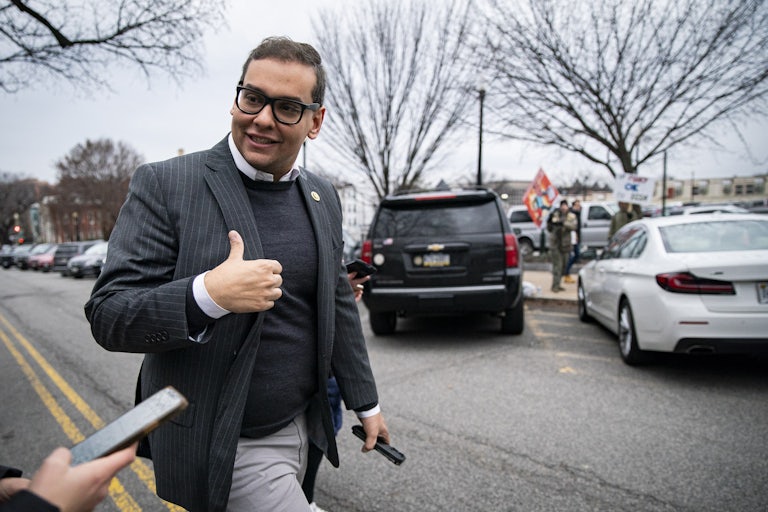
You’ll never guess what’s gotten stuck in the craw of the perpetually bothered GOP doyenne Peggy Noonan. This past weekend, the Wall Street Journal columnist took to the paper’s doughty op-ed page to sound off on George Santos, the human falsehood fountain who now serves New York’s 3rd congressional district. In a column titled “George Santos Has Got to Go,” Noonan says that she doesn’t “get why members of Congress would let the George Santos story” drag on. “It diminishes them,” she writes. “It is both a daily insult to the American people and a taunt.” She joins a boomlet of conservatives, from within and without New York, who’ve called for Santos’s exit in recent days.

As The New Republic’s Alex Shephard recently wrote, Santos actually does bring something to the table: His daily cascade of lies and humiliations provides the GOP with a much-needed distraction. Every day, his peccadilloes hit the headlines, pushing down discussion of, say, the crazy “fair tax” on which Republicans are going to vote. Perhaps Noonan and her fellow critics do not share this visionary strategy. But they’re also lacking in perspective. It is said that Santos wanted to find a way to receive lifetime health care coverage and a pension. These aren’t unreasonable things to want. It’s further said that he eyed becoming a member of Congress to get these perks, which is also quite reasonable. And then he arrived at the most reasonable conclusion of all: Where would an inveterate liar and con man be most welcomed in politics? The clear answer was the Republican Party.

Anytime a conservative gets on their high horse about Santos, the derelict lawmaker ends up looking more sinned against than sinning—and not just because it’s clear that plenty of Republicans knew what Santos was all about. Noonan says that Santos “waged war on reality”? Hard to imagine that he wouldn’t be welcome in the party that popularized this practice in numerous ways, rejecting the fruits of science and academia and turning its base against these professions. Noonan complains that Santos has “stolen from voters … a sense of what’s true.” That’s rather rich coming from someone who touts the party that lied the nation into a destructive war.

“The only entity that smoked out a fake was a small local newspaper, The North Shore Leader,” writes Noonan, seemingly unaware of the long war her party has waged to discredit the press, a project that accelerated after Newt Gingrich’s ascension. Does anyone imagine that the GOP is going to play a role in reassembling a robust, adversarial press in the numerous news deserts that have bloomed across the country? Like everything George Santos says, it is not to be believed.

Noonan’s far from the only Republican celebrity who needs to get off the fainting couch and take a look in the mirror instead. Former House Speaker Paul Ryan recently accused Santos of being a “fraudulent candidate” who “hoaxed his viewers.” It’s an interesting take! Here’s a fun fact about Paul Ryan, though: During the 2012 presidential campaign, Ryan staged a fake photo op at a Youngstown, Ohio, soup kitchen, where he pretended to wash some already-washed dishes long after everyone had already gone home. (Another interesting fact is that after Ryan’s ruse was exposed, his supporters took it out on the soup kitchen.) Maybe he’s not in the strongest position to be chiming in on the matter of George Santos.

Was Santos really so wrong to imagine that he wouldn’t be welcomed into the Republican Party with open arms? The GOP has a rich tradition of scams and flimflam, so much so that not only can you easily see how the road got paved for a celebrated con artist in the form of Donald Trump to become the standard-bearer of the party of Paul Ryan, but you can also surmise that Trump is insignificant to this larger and long-standing tendency within the contemporary Republican Party. In 2012, The Baffler’s Rick Perlstein spelunked into the depths of the conservative movement’s grift-industrial complex, chronicling how direct-mail titan Richard Viguerie unleashed the floodgates for a million get-rich-quick schemes and snake oil testimonials to find their way into their supporters’ mailboxes, the better to shake them down for whatever loose change could be prised from their pockets. Writing for The New Republic, Jeet Heer explained how the GOP’s anti-intellectual bent softened the brains of its base, making them more susceptible to the waterfall of bunkum that routinely comprises the whole of the Republican rhetoric.

The big swindle never stopped. From penny stock scams to pump-and-dump schemes to fake medical cures, the Republican Party has become associated with treating its own voters like rubes and fleecing them to the hilt. Just this week, Talking Points Memo’s Hunter Walker reported that the people who formed the “People’s Convoy”—the aborted effort of truckers to encircle the District of Columbia in protest of various Covid-19 public health mandates—have seamlessly transformed themselves into a multilevel marketing scheme. And why not? Betsy DeVos surveys her domain from atop a mountain of Amway funny money. What’s good for the goose is good for the gander.

At any rate, while various conservatives pile up the hypocrisies because they’re angry at George Santos for getting caught, I have a good feeling he’s going to stick around for a while. The new GOP House majority has slim margins and its poor bedraggled leader, Kevin McCarthy, is going to need every vote he can get, up to and including that of Santos. Frankly, I don’t think Santos played his hand too badly, and given time, perhaps he might form the same strong bonds with McCarthy that the speaker has forged with Marjorie Taylor Greene, who believes that the California wildfires were caused by Jewish space lasers.

This article first appeared in Power Mad, a weekly TNR newsletter authored by deputy editor Jason Linkins. Sign up here.
Biden’s Document Screwup Is an Ethical Opportunity

Rather than follow the Beltway’s cynical damage-control playbook, the president should put on a master class in how to take responsibility for a mistake.

Tom Brenner/Getty Images

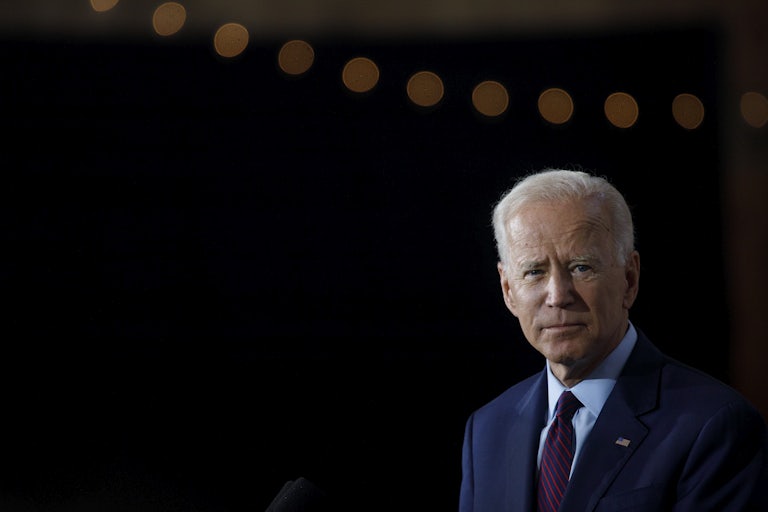
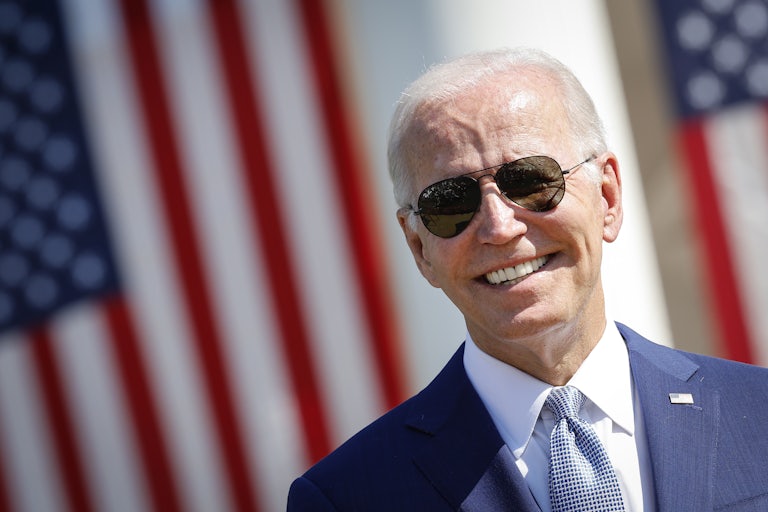
As President Biden enters his next and final presidential election cycle, there can be little doubt that his best argument for reelection is that he put a wayward nation right after four years of Trumpian misrule. There will be contrasts that Biden will surely want to tout, from job numbers and legislative accomplishments to his superior tone and temperament. But a recent delivery from the “Be Careful What You Wish For” store has drawn him into a less favorable comparison with Trump.

There are early indications that Biden’s mishandling of classified documents is rooted in error rather than corruption or egomania. Unlike Trump, Biden did not spend a lengthy period of time intransigently blowing off authorities, forcing them to carry out a search and seizure of his property; his team immediately fessed up and handed over the documents to the National Archives. But thanks to the appointment of a special counsel to investigate the matter and a second discovery of classified documents that was handled less forthrightly, the flap has offered the GOP and its media organs enough meat to ensure this matter won’t be pleasantly resolved.

CNN summed up the White House’s strategy like so: “Pledge full cooperation. Attack House Republicans. Don’t engage in the details of an ongoing matter,” the idea being that “pushing ahead with their regularly scheduled programming” is the best course of action. But as The Washington Post subsequently reported on Wednesday evening, things didn’t go to plan, and the administration earned itself a furor by not picking the right moments to be as transparent as possible.

That the White House prefers a low-key approach is understandable—unlike Trump, most presidents don’t try to inject themselves into the news cycle every hour of the day. But I think it’s an error. What Biden is facing is a test of mettle, not a pitfall to dodge. Rather than play this matter down, Biden should—within the limitations that are wisely enforced during an ongoing investigation—endeavor to play it up, instead. He should own whatever mistakes led to these classified documents ending up where they shouldn’t have. This is an opportunity to make government ethics great again, and it’s long overdue.

One of the more important jobs a president has is setting an ethical standard for his administration. We don’t have ethics cops walking the beat and making arrests; there’s no enforcement mechanism other than the tone set from the guy at the top. When this is absent, as we saw during the Trump administration, things unwind quickly—the entire Republican National Convention ends up being a massive violation of the Hatch Act. A post-Trump restoration couldn’t be more vital: New norms get established quickly in Washington. They also erode fast. So Biden should sail over the low bar set by his predecessor by detailing the errors that led to the misplacement of these classified materials and making clear what’s being done to ensure the mistake won’t be repeated.

Why is this important? While Biden and his fellow Democrats can’t do much in the way of passing laws with the GOP in control of the House, they can still spend the next two years setting an example. Collectively, everyone on the team should be seeking out opportunities to play Gallant to the Republicans’ weird Goofus impulses. But it’s also important for Biden to burnish his credibility with the American people—and maybe be a direly needed change agent in our all-too-tatty political culture. Washington, a notoriously cynical place, is famous for its common sense–crippling ideas about leadership. Perhaps one of the most notorious is the odd standard that holds that publicly admitting errors is a sign of weakness and that politicians should go to comical lengths to avoid doing so.

There’s another way: In Bailout, Neil Barofsky’s memoir of his time in Washington serving as the special inspector general overseeing the Troubled Asset Relief Program, he described the advice he received from Kristine Belisle, the woman he smartly hired to be his communications director. It was about as anti-Washington as it can get: “We’ll admit and even highlight our mistakes.” As she went on to explain, there’s method in a strategy that most people inside the Beltway would deem madness:

This is the best way to earn the press’s trust. They’ll know we’re not spinning like everyone else. SIGTARP will quickly become the only credible source for information in Washington about TARP. We might be embarrassed at times and disclose things that we could—and others would—easily hide, but we’ll shock the press with our honesty. No one else does this, and before long, we’ll have a built in defense when we’re attacked. No matter what they hear, the press will come to us first and believe us, because we’ll prove to them that we tell the truth.

This is perhaps the biggest reason for Biden to pursue the course of radical responsibility-taking: Moments inevitably arise in any presidency when having the trust of the public and the institutions that safeguard the civic interest is critical. Moreover, there is vital capital to be earned by owning our mistakes, and there’s an important distinction that Biden can draw with his political opponents. The president would do well to follow the old adage: Tell the truth—and shame the devil.

Mint the Trillion-Dollar Platinum Coin, Dark Brandon!

The debt ceiling is a legendarily ridiculous problem. Fortunately, there is a ridiculously legendary solution.

Chip Somodevilla/Getty Images

You have to give some credit to the new Republican House majority: The first week of their new reign was hilarious. Between several days of watching Kevin McCarthy get subjected to ritual humiliation and New York Congressman George Santos’s total commitment to ensuring that not a day would pass without fresh “revelations” about his haphazardly constructed lies, this has been a period of peak content. While it may have been possible for Democrats, like Katie Porter, to practice “the subtle art of not giving a fuck” during this period, I’m sorry to say that the time for chortling is over—and the fuckery that the GOP’s House majority has planned will be anything but subtle. 

Already there’s been a lot of hot talk about Star Chamber–style investigations and possible impeachments. The House is in session, in chaos, and there’s not much to be done about it until the next election. But there’s one concern that stands out: the likelihood that the GOP will drag the country to the brink of a debt default, and perhaps even push us over the edge. I know, I know: How many times are we going to go through this? The Democrats had a chance to disarm this ticking time bomb during the lame-duck session but chose not to. Now it’s essentially understood that the threat of a debt limit default is back for the duration

Well, we can live with the constant fear of a GOP-precipitated debt default for the next year if we want, in the hopes that cooler heads will prevail and cobble together some sort of short-term compromise that might tide the global economy over until the next deadline. Or we can do what we should have done a long time ago: have the president command the U.S. Treasury to mint a magic trillion-dollar platinum coin, stash it in the Treasury, and end the danger once and for all.

I know what a lot of dull-witted pundits are going to say about this proposal: You can’t just mint a magic coin, it’s a total gimmick, this is crazy talk. You want to know what’s really crazy? Agreeing to remain the secretary of the treasury during a period of time when the House of Representatives’ primo nutters have made it their cause célèbre to regularly threaten to tank the global economy. But just this week, Bloomberg News reported that Treasury Secretary Janet Yellen—who herself has called the platinum coin a “gimmick”—will remain in the role for “the duration.” If she wants to survive, let alone enjoy her tenure, she should tell Joe Biden that she’s ready to mint the coin. Honestly, I’d question the judgment of any treasury secretary who wouldn’t do so, given the sadomasochistic alternative of grimly enduring an escalating series of economic nightmare scenarios.  

In politics, conflict and complications are inevitable. Simple solutions are in short supply. And we all have a tendency to overthink things. It was, in fact, “overthinking things” that got us into this mess: During the “Grand Bargain” phase of his presidency, Barack Obama thought it would be a great idea to use the occasion of raising the debt ceiling as a moment to enter into larger negotiations on debt reduction. Obama just threw open Pandora’s box, enabled the GOP’s plunge into debt-limit psychosis, and we’ve been struggling to get unfucked ever since.

It was also, not coincidentally, during Obama’s first term that the idea of minting a trillion-dollar coin—which appears to be an entirely legal cheat code, thanks to a few sentences in a 1996 law—first arose. Now Biden, who had a front-row seat to Obama’s massive cock-up, can end this grievous era of totally overthinking it. By embracing the kind of mentality that Alexander the Great deployed when he was faced with the Gordian knot, or which Indiana Jones turned to when challenged by a scimitar-spinning fool who failed to observe that he was carrying a loaded pistol, Biden can write his name alongside these legends. He can reach for the quickest solution to the debt ceiling fiasco and secure Dark Brandon’s place in history by minting the coin.

The main criticism against minting the coin appears to be that it might worsen inflation. But the truth is, no one knows because we’ve never tried it—and certainly defaulting on the nation’s debt would have more immediate and drastic economic consequences than minting a coin and stashing it away. The idea may seem absurd on its face, but as Zachary Carter argued back in 2021, the real absurdity is the debt ceiling itself. There’s a beautiful symmetry about thwarting the ridiculous problem it poses with an equally ridiculous solution.

The Viral Stupidity of Politicians’ TikTok Bans

Lawmakers across the country are looking to kill off the social media platform for many of the same sins that Big Tech commits regularly.

Jonathan Raa/Getty Images

What are the biggest problems that the people of Rapid City, South Dakota, have to face? I’d argue that its citizens should be most concerned that the sole reason the state seems to exist is to provide a haven for oligarchs and tax cheats. But not everyone agrees—and in what is becoming a pitched mayoral race in the state’s second-most-populous city, it’s a matter of hot debate. If you listen to city Councilwoman Laura Armstrong, who has already announced her intention to run, she’ll tell you the biggest issues are crime and meth. But a potential rival, her council colleague Jason Salamun, has identified a different villain: TikTok.

Over the past few months, TikTok—the social media platform that Gen Z has taken to in droves and which their aunts don’t quite understand—has earned the opprobrium of lawmakers near and far. The Wall Street Journal, which reported on these Rapid City goings-on, asserts that concerns over the platform have gone “from Washington to Main Street”—and with a bipartisan sheen to boot. It’s hardly the first time a tech company has drawn the critical eye of policymakers. But what critics of TikTok claim is a matter of national security looks, upon closer inspection, to be a familiar concern about privacy that could just as easily be levied—and should be levied—against a whole array of U.S.-based tech companies.

The political war on TikTok has been brewing for some time, but it ramped up in mid-December when bipartisan legislation was introduced in both the House and Senate that would ban TikTok outright in the United States. That this measure suddenly arrived on the scene with such broad approval was, to me, a red flag. Bipartisan legislation typically falls into three categories: the naming of post offices, the funding of unwinnable wars, and stupid pieces of stunt legislation. My suspicions were confirmed when I saw the name of the bill: Averting the National Threat of Internet Surveillance, Oppressive Censorship and Influence, and Algorithmic Learning by the Chinese Communist Party Act, or ANTI-SOCIAL CCP Act. As my colleague Matt Ford has written, acronym bills are typically the work of the unhinged or the unserious.

Nevertheless, it does seem as though this bipartisan and bicameral desire to limit TikTok’s ability to, say, briefly cement Louis Theroux’s status as a hip-hop icon, was born of bona fide real-world concerns. As NBC News’s Rebecca Shabad reported, lawmakers took the step after receiving “warnings from the FBI director and cybersecurity experts who have said China could use the social media platform for spying”; Buzzfeed reported in June that China-based employees of TikTok’s parent company had accessed the nonpublic data of U.S. users despite assurances to the contrary. The ANTI-SOCIAL CCP Act, put forth in the Senate by Marco Rubio, sought “to protect Americans from foreign adversaries who might use certain social media to surveil Americans, learn sensitive data about them, and spread influence campaigns or propaganda.”

But TechDirt’s Karl Bode took a dim view of Rubio’s proposal, and with good reason. “For several years,” he wrote, “we’ve noted how most of the calls to ban TikTok are bad faith bullshit made by a rotating crop of characters that not only couldn’t care less about consumer privacy, but are directly responsible for the privacy oversight vacuum TikTok (and everybody else) exploits.” Bode noted the dubious legal underpinnings of the measure but found a larger fault at the core of the proposal: “For decades the GOP (and more than a few Democrats) have worked tirelessly to erode [Federal Trade Commission] privacy enforcement authority and funding, while fighting tooth and nail against absolutely any meaningful privacy legislation for the Internet era.”

This door has been open for tech companies of all stripes to abuse in similar fashion. “If you actually care about national security,” wrote Bode, “holding all companies and data brokers accountable for privacy abuses should be your priority. A basic, helpful, well-written privacy law should be your priority. A working, staffed, properly funded FTC should be your priority.”

We have some idea what a more rigorous regulatory regime looks like. European authorities this week dropped hundreds of millions of dollars’ worth of fines on Mark Zuckerberg as part of the EU’s larger effort to bring Meta into compliance with the privacy regulations of its member nations. That we don’t have this level of enforcement in America is down to the fact that firms like Meta spend a lot of time and money influencing our lawmakers to retain a status quo in which they have broad latitude to do the very things TikTok stands accused of doing: surveilling Americans, acquiring sensitive data about them, and subjecting them to influence campaigns and propaganda.

What’s likely to happen once all the shouting is over? As Bode notes, a stateside TikTok ban is not going to prevent China’s exploits in the field of data acquisition: “You could ban TikTok immediately and the Chinese government could simply buy this (and more) data from a rotating crop of dodgy data brokers and assorted middlemen.” Meanwhile, the tech industry’s surveillance-capitalism panopticon will continue its work. Lawmakers could take bigger and more effective efforts to secure our privacy, but until then we’ll get a few brief and repetitive seconds of feckless and ineffectual parliamentary song-and-dance from lawmakers across the land. How very TikTokian.