Breaking News
Breaking News
from Washington and beyond

Democrats Historically Suffer Down-Ballot Losses. That’s Really Dangerous This Year.

Abortion access, the climate, and basic democratic integrity are on the ballot this election.

Voters cast their ballots at Desert Vista Community Center in Las Vegas, Nevada. In the foreground to the right, an older white man wearing blue shorts, a white tshirt, and a black cap points at a paper on the table in front of him. In the background to the left, a woman with strawberry blonde hair wearing jeans and a black hoodie looks at a ballot. The booth panel has a sticker that reads "Clark County, Nevada."
David Becker/Getty Images
Voters cast their ballots at Desert Vista Community Center in Las Vegas, Nevada.

New research shows just how bad Democrats can be at voting down-ballot.

Analysis from the Sister District Project on ten battleground state legislatures reveals that Democrats are much more likely than Republicans to vote for their candidates at the top of the ticket, and then neglect to vote for down-ballot races. In contested races, Democrats failed to vote down-ballot 79.41 percent of the time, while Republicans only failed to vote 37.25 percent of the time.

Amid a midterm election where election denialists are running across the country, and as the future of abortion access and climate change will be decided in state legislatures and gubernatorial offices, Democrats’ failure to vote down-ballot is especially troubling.

Researcher Gaby Goldstein is especially worried about what this could mean in swing states like Nevada, where Democrats might be too comfortable.

“Nevada could be this year’s Virginia if Democrats don’t pay attention,” Goldstein said, referring to the Republican gubernatorial victory last year.

Nevada’s state Senate is divided with 12 Democrats and nine Republicans; its Assembly divided 26 Democrats to 16 Republicans. Democratic incumbent Senator Catherine Cortez-Masto is in a dead heat with Republican challenger Adam Laxalt, while incumbent Governor Steve Sisolak is similarly neck-and-neck with Republican Joe Lombardo.

Goldstein fears that Republicans’ strong performances at the top of the ticket, like the Senate race, will carry all the way down to the state legislature.

Wisconsin is another state to keep a close eye on, as state legislators have already blocked the Democratic governor’s efforts to expand early voting, adjust public benefit programs, and guarantee the right to an abortion.

“We are in a moment of ascendancy, where states are growing in power,” Goldstein said, describing it as a consequence of strategic power-building on the right. “We desperately need a compelling and intellectually-consistent project around the idea of progressive federalism—and the need to build state power, not just as a reaction to the terrible activities of Republicans in our states, but as an important project in and of itself.”

Read more at Sister District Project.
Twitter Is Descending Into Misinformation Chaos, Right Before the Midterm Elections

Twitter plans to unveil paid verified badges one day before the election.

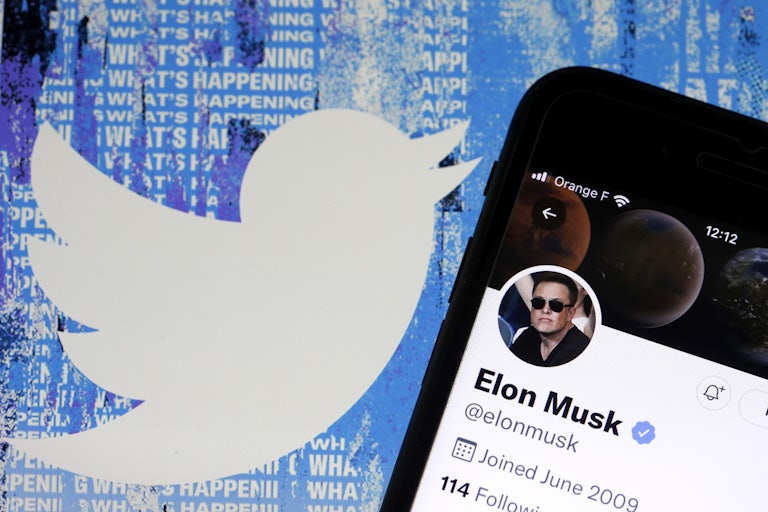
Elon Musk's Twitter account on a phone, with the Twitter logo (a blue bird) and the words "WHAT IS HAPPENING" on a screen behind it

Twitter is falling into chaos days away from midterm elections that are already rife with disinformation.

On Monday—just one day before the election—Elon Musk’s Twitter is set to unveil its subscription plan allowing anyone to become verified if they pay $8 a month. Internal company documents suggest that users would not even need to actually authenticate their identity to get the verification badge.

That is going to make it harder to find out what is real, and what’s isn’t, come Election Day.

“The website is built on sticks, and it might fall apart,” NBC reporter Ben Collins warned Friday about the rapid changes happening at Twitter under the Musk regime.

If verification has nothing to do with actually verifying who someone is, that is a formula for disaster for a place like Twitter, where politicians speak to the public, election officials report results, and news outlets keep track of it all. Twitter is also a major source of news on Election Day, as journalists track results.

There are nearly 80 million Twitter users in the U.S. As in, nearly 80 million people—plus their friends and families, plus the audiences of news outlets who report on what happens on Twitter—are now at risk of being duped by people who may try impersonating politicians and elected officials.

Meanwhile, hundreds of election denialists are running across the country, Republicans are already priming voters to reject Democratic victories, and our government is still adjudicating an attack on the Capitol sprung up by election conspiracy.

To make matters worse, it seems like the company is even less equipped than ever to handle any misinformation or inflammatory content as Musk has begun mass layoffs, including reportedly, members of the curation team responsible for tackling misinformation. (Musk is now dealing with an employee-led lawsuit for violating California labor laws.)

The consequences of Musk’s layoffs are already underway. Twitter users are reporting that antisemitic and incendiary posts are very quickly being marked as having “no violations.”

Musk, of course, claims “nothing had changed with content moderation.”

What makes the Musk era of Twitter so disturbing is that there don’t appear to be clear mechanisms of accountability or support. Technology reporter Davey Alba said Twitter was the most responsive platform in 2020, helpful in quelling misinformation. Now, the communications department appears “dark,” unclear what staff are even left.

Meanwhile, any customer support Musk directly offers involves reinstating the accounts of conspiracy theorists and election denialists.

Billionaires Have Spent $881 Million This Election (Mostly on Republicans)

This is the most expensive midterms ever.

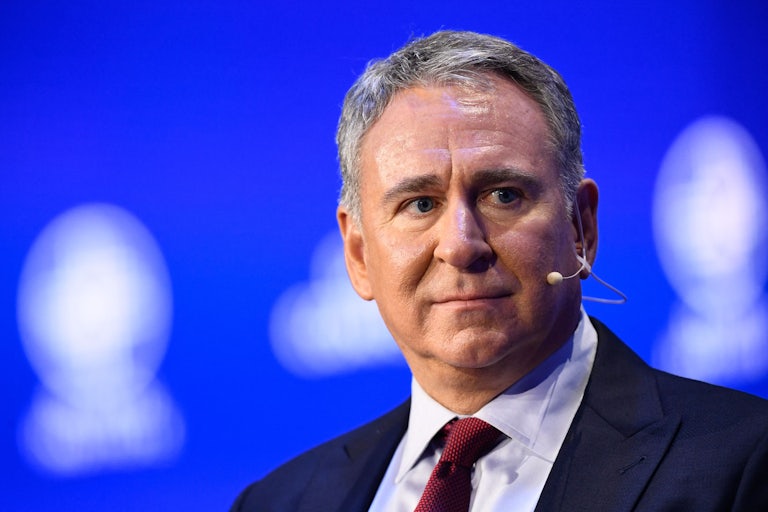
Ken Griffin
PATRICK T. FALLON/AFP via Getty Images

American billionaires have spent a record $881 million on the crucial 2022 midterms, a new report found, with most of that money going to Republican candidates and causes.

The mindboggling amount is 44 percent higher than billionaires’ total spending during the 2018 midterm cycle and could easily reach $1 billion by next week, according to a report published Thursday by the group Americans for Tax Fairness.

The influx of cash from billionaires has made this the most expensive midterms ever.

A separate report from Open Secrets found that midterm spending at both the state and federal levels is expected to exceed $16.7 billion this year.

That is the most that has ever been spent on midterm elections at both levels, the group’s director Sheila Krumholz said.

The biggest individual billionaire donor this election was George Soros, who gave $128 million to the liberal super PAC Democracy II. But his total contribution was edged out by the combined total of donations from the second- and third-place donors, Richard Uihlein and Ken Griffin, who gave $67.3 million and $66.1 million respectively to several Republican super PACs and candidates.

Overall, Republicans received 59 percent of the donations, while Democrats received only 39 percent. Considering billionaires make up a tiny fraction of the U.S. population, their contributions risk “distorting our democracy by drowning out the voices of regular Americans,” Americans for Tax Fairness warned.

The 2022 midterms haven’t even happened yet, but they’re already proving to be some of the most contentious and crucial elections in recent history. Democrats are struggling to maintain their razor-thin hold on Congress, while Republicans have promised a raft of petty repercussions should they take control, such as impeaching President Joe Biden.

Many GOP members are already sowing disinformation about the elections online and are priming voters to reject tight Democratic victories.

So it’s no surprise that people in general, especially billionaires, are pouring money into the elections to try and influence the outcome in their favor.

Of Course Elon Musk Is Being Sued for the Way He’s Mass Firing Twitter Employees

What did the "Chief Twit" think was going to happen?

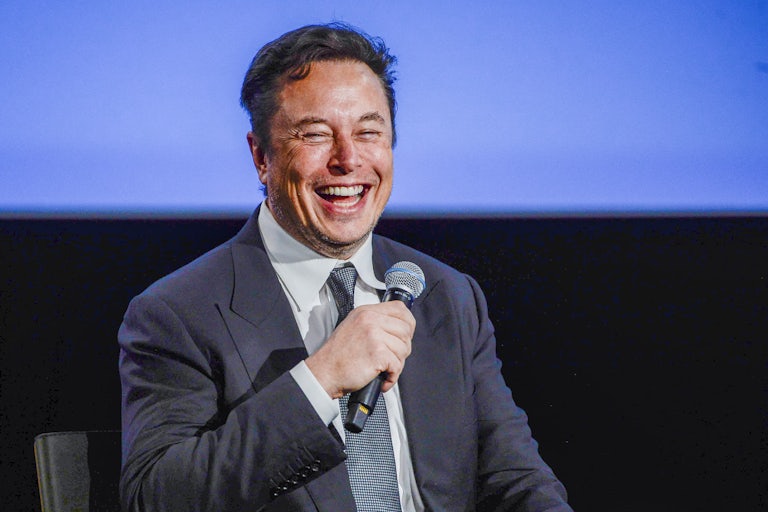
Elon Musk laughing and holding a mic
CARINA JOHANSEN/NTB/AFP via Getty Images

Just when he thought he’d escaped one Twitter-related lawsuit by buying the platform, Elon Musk finds himself at the center of another.

A group of former and current Twitter employees filed suit against the company Thursday night, alleging that they were not provided enough notice of their layoffs, in violation of both federal and California state law.

In the suit, the group said that one member was fired effective immediately, instead of receiving the required 60-days notice. Three others were locked out of their Twitter accounts before they had been formally notified of a layoff or given advance notice.

The billionaire, who definitely bought Twitter because he “loves humanity,” clearly thought he was above the federal law prohibiting mass layoffs without at least 60 days advance notice. His week-long reign has been nothing short of shambolic.

Musk bought Twitter last Friday for $44 billion, after a court ordered him to complete the deal when he tried to back out of it. He promptly fired most of the top executives and the entire board of directors.

He also announced plans to lay off about 3,700 people, roughly half of the company’s staff. Many employees are not told of his decisions directly and instead have to follow him on Twitter to see what’s going to happen next.

Twitter gets 90 percent of its revenue from advertising, but since Musk took over, advertisers have been fleeing Twitter in droves. General Motors has suspended ads on the platform. Earlier this week, advertising behemoth IPG recommended its clients—which include Coca-Cola, Johnson & Johnson, and Spotify—do the same.

Twitter has had a massive drop in revenue, due to activist groups pressuring advertisers, even though nothing has changed with content moderation and we did everything we could to appease the activists,” Musk tweeted Friday morning. “Extremely messed up! They’re trying to destroy free speech in America.”

Musk has been scrambling to come up with new ways to produce revenue, including a plan to charge verified accounts $8 per month that has been widely met with scathing criticism, including from Representative Alexandria Ocasio-Cortez.

Lmao at a billionaire earnestly trying to sell people on the idea that ‘free speech’ is actually a $8/mo subscription plan,” she tweeted Tuesday.

Kyrie Irving’s Week-Long Journey Towards (Sort-of) Apologizing

After the Nets suspended Irving for five games, Irving has finally kind of apologized.

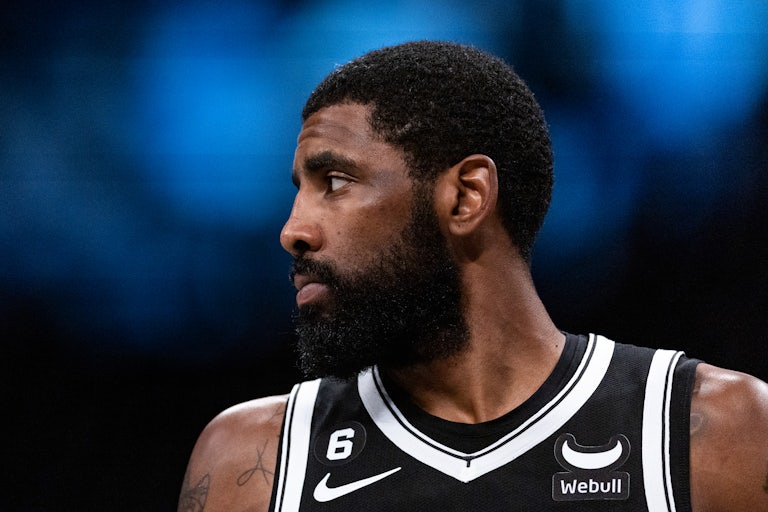
Dustin Satloff/Getty Images

All it took for Kyrie Irving to say the words “I apologize” was a five-game suspension.

Last week, the NBA and Brooklyn Nets star posted a tweet and an Instagram story boosting Hebrews to Negroes: Wake Up Black America, a movie based on a book of the same name.

The film, filled with antisemetic tropes, depicts a global Satanic conspiracy. It invites viewers to “find out what Islam, Judaism and Christianity have covered up for centuries.” Among other things, the film promotes antisemitic tropes of Jewish power and greed and calls the death toll of the Holocaust one of “five major falsehoods.”

Two days later, Irving pushed back against public backlash, saying he was an “omnist”—someone who respects all religions.

Irving was later confronted by ESPN reporter Nick Friedell about Irving’s promotion of the film. “Stop calling it promotion,” Irving said, accusing the reporter of “dehumanizing” him. “I put it out there, just like you put stuff out there,” Irving said.

By Tuesday, Irving was not made available to the media. “We don’t want to cause more fuss right now…Let’s let him simmer down,” said Nets general manager Sean Marks. The following day, Irving, the Nets, and the Anti-Defamation League released a joint statement saying Irving and the Nets would each donate $500,000 towards organizations working “to eradicate hate and intolerance in our communities.”

On Thursday, NBA Commissioner Adam Silver, who is Jewish, expressed disappointment that Irving hadn’t offered “an unqualified apology.” That afternoon, Irving conceded the film “may have had some falsehoods in it,” but stopped short of a straightforward apology. “I cannot be antisemitic if I know where I come from,” he said.

That evening, the Nets suspended Irving for a minimum of five games. “Such failure to disavow antisemitism when given a clear opportunity to do so is deeply disturbing…Accordingly, we are of the view that he is currently unfit to be associated with the Brooklyn Nets,” the team wrote.

On Thursday evening, Irving published an apology on Instagram, writing “To All Jewish families and Communities that are hurt and affected from my post, I am deeply sorry to have caused you pain, and I apologize:”

Still, the apology was strange, as Irving referred to himself as a “seeker of truth and knowledge” and he apologized for “posting the documentary without context.” 

In some ways, Kyrie has actually embodied “free thinking” in speaking out on behalf of Palestinians, Indigenous peoples, and even animal rights. But his conspiratorial promotion—from his anti-vaccine stance to dangerous antisemitic content—will stain his legacy.