Breaking News
Breaking News
from Washington and beyond

The Latest January 6 Revelation About Mark Meadows Is Both Literally and Figuratively Incendiary

Score one for everyone who thought the Trump administration was like the Coen Brothers movie “Burn After Reading.”

Drew Angerer/Getty Images
Former White House Chief of Staff Mark Meadows

Former White House aide Cassidy Hutchinson told the House January 6 investigative committee that she saw her erstwhile boss, Trump White House Chief of Staff Mark Meadows, regularly burn documents in his office fireplace.

Hutchinson was a star witness for the committee over the summer, providing bombshell details about Donald Trump’s level of knowledge of and involvement in the attack on the Capitol. She also made a series of fiery revelations when she initially testified in May, according to transcripts the committee released Tuesday.

Hutchinson said that Meadows burned multiple batches of documents about a dozen times in his office fireplace between December 2020 and January 2021, including after two meetings with Representative Scott Perry. Perry, a Pennsylvania Republican, has been linked to efforts to make the Justice Department overturn the 2020 election.

Meadows has been ordered to testify about efforts to overturn the election results in Georgia. Talking Points Memo also reported in early December that a laundry list of election deniers in Congress had texted Meadows multiple times about subverting U.S. democracy in Trump’s favor.

Hutchinson also testified that Representative Marjorie Taylor Green discussed the QAnon conspiracy group multiple times with Meadows and Trump; during one of those conversations, she told Meadows that her QAnon supporters would be attending the January 6 “Stop the Steal” rally in Washington, which eventually turned into the Capitol Riot.

Her testimony comes a week after the revelation that Trump’s former ethics attorney advised Hutchinson to lie to the January 6 committee.
Supreme Court Orders the U.S. to Keep Violating Its Own Laws and Reject Asylum Seekers

The Calvinball court is at it again with its recent Title 42 decision.

Drew Angerer/Getty Images

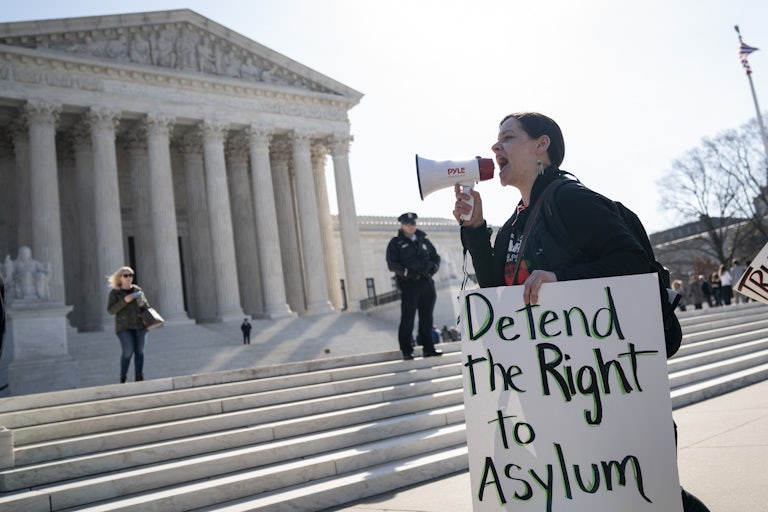
On Tuesday, the Supreme Court voted to keep Title 42—a Trump-era policy that expels asylum seekers—in effect, overriding a district judge’s November decision that would have ended the policy last week. The Supreme Court will now entertain arguments in February, with a decision expected months from now, in June.

The 5-4 decision went in favor of the 19 Republican state attorneys general who had filed an emergency request in response to a ruling from U.S. district judge Emmet Sullivan, who ruled that Title 42 was “arbitrary and capricious in violation of the Administrative Procedure Act.” Sullivan’s ruling described how the Center for Disease Control hadn’t evolved the policy alongside the changing state of the pandemic, failing to make adjustments as wider availability of vaccines, testing, and treatments became the norm.

The majority’s decision flicked at the court’s conservative bloc’s tendency to play Calvinball with the law; having previously allowed the Trump administration the leeway to act as it willed in illegally rejecting asylum seekers, it thwarted the attempts of the executive branch to remediate those policies once it became “the Biden administration.”

But the decision didn’t entirely break along partisan lines. Justice Neil Gorsuch joined Justices Sonia Sotomayor, Elena Kagan, and Kentanji Brown Jackson in dissenting. Gorsuch wrote that “the current border crisis is not a COVID crisis,” and accordingly, “courts should not be in the business of perpetuating administrative edicts designed for one emergency only because elected officials have failed to address a different emergency.”

Gorsuch’s thoughts in a losing opinion can only provide so much comfort. After all, just as the 19 Republican attorneys general sought to use Covid as a justification for draconian asylum restrictions, the Supreme Court played a similar round of Covid Calvinball last year when deciding to reject administrative action for workplace safety. Arguing that the Occupational Safety and Health Administration’s Covid testing mandate for workers overstepped the boundaries of the agency’s authority by issuing a “public health” edict instead of a “workplace safety” rule, the Supreme Court ruled 6-3 to block the mandate.

In that instance, the court’s six conservative justices argued that Covid presented a “universal risk” and not just a specifically occupational hazard; the dissenters rightly pointed out that “[the OSHA statute] is indifferent to whether a hazard in the workplace is also found elsewhere.… That provision authorizes regulation to protect employees from all hazards present in the workplace.… It does not matter whether those hazards also exist beyond the workplace walls.”

With the conservative-led Supreme Court’s incoherence on overseeing Covid-inspired policy, it’s no surprise that Republican members of congress—particularly those who have been on the front lines of Covid denialism—have cited the pandemic as a justification to skip votes (and sometimes end up instead happily attending CPAC).

The United States continues to disregard its own laws and principles on accepting asylum seekers. Halfway through the Biden administration, the Trump-era policy tweak has been allowed to continue while Biden has sought to quietly neutralize the border as an issue. In response to the Court’s decision, the administration says it is still preparing to manage the border while the Court reviews Title 42, and challenges Republicans “to move past political finger-pointing and join their Democratic colleagues in solving the challenge at our border.” But such bland messaging might not be up to snuff in confronting a Supreme Court that seems to want to make up the rules of the game as it goes along.

Tesla’s Share Value Losses Reached a Sexy Low in 2022

Perhaps the only good news about the firm's precipitous stock plunge is that it gave Twitter's meme-knowers a chance for laughs.

Mark Maketa/Getty Images

Elon Musk’s year just went from bad to … nice.

The value of Tesla’s stock plunged a whopping 69 percent over the course of 2022, on track to be its worst annual performance ever. That drop has also cost the electric carmaker its position as one of the 10 biggest U.S. public companies.

When Twitter users saw that Tesla stock had lost a pretty sexy amount of value, they couldn’t resist commenting on it.

Tesla has really struggled this year. The company had to suspend work at its massive Shanghai factory, and demand for the cars is so low that Tesla began offering $7,500 discounts for new vehicles, while the price of used ones dropped sharply, reported Popula, which is tracking how much Tesla’s value has dropped.

Already plagued by supply chain snarls, legal suits, and PR issues, Tesla was sent into a tailspin when Musk took over Twitter at the end of October. It hasn’t helped that Musk lied to Tesla investors about selling off company stock and seems more interested in letting Nazis back onto Twitter than running the electric car company.

The Deep Roots of Southwest Airlines’s Winter-Weather Meltdown

The carrier’s holiday-season omnishambles can't be completely attributed to the snow.

Brandon Bell/Getty Images
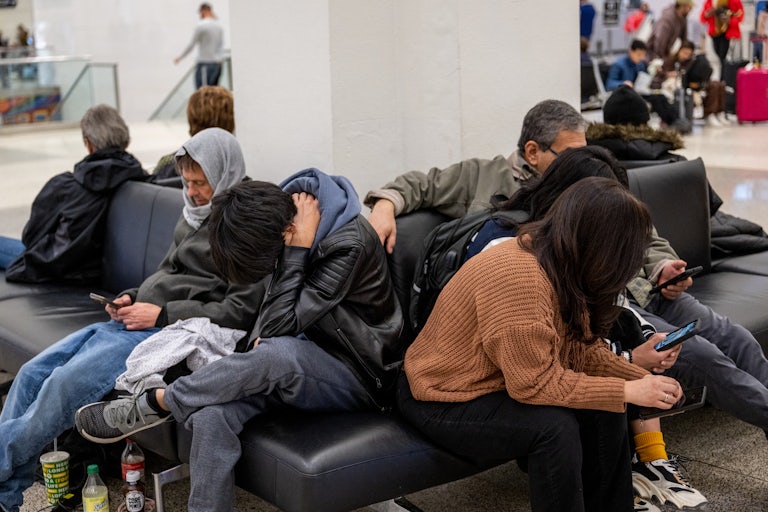
Southwest Airlines has canceled thousands of flights due to a variety of issues including this year’s historic winter storm and scheduling complications involving crew members.

The massive winter storm that battered the country over the weekend hasn’t just snowed under half of the United States. The airline industry is also on ice: Thousands of flights have been canceled, and although air travel is slowly returning to normal, one carrier in particular—Southwest Airlines—is struggling hard to unmuddle itself.

Southwest canceled 63 percent of its scheduled Tuesday flights and has already canceled 62 percent of its flights for the following day, according to flight tracker FlightAware. Reports abound of hours-long waits in customer service lines, people sleeping in airports waiting to get rerouted, and suitcases piling up at the airline’s desks.

But these recent snafus can’t be entirely pinned on the inclement weather—it’s the absolutely shambolic state of Southwest’s inner workings that are actually to blame. Many airlines lacked sufficient staff for the holiday weekend, but Southwest also hurt itself by not blocking out enough turnaround time between flights, a FlightAware spokesperson explained to CNN.

The president of the Southwest flight attendants’ union also told CNN that they have not been able to get in touch with their bosses at the airline. Both Southwest’s manpower and internal communication issues are partly due to its outdated crew scheduling system, according to a member of the flight crew on a British Airways plane, who goes by the Twitter name @JustAnother_Ben.

An aviation watchdog that goes by the Twitter handle @JonNYC shared an internal memo from Southwest’s vice president of ground operations Chris Johnson. In the memo, Johnson declared a state of operational emergency at the Denver International Airport and said employees would be fired for calling in sick without a doctor’s note, requesting personal time off, or refusing to work now-mandatory overtime.

The president of the Southwest Airlines Pilots Association, Casey Murray, told CNN that these problems have been going on for nearly two years. Winter Storm Elliot appears to be merely the straw that finally broke the camel’s back.

“These sorts of meltdowns occur on a much more regular basis and it really just has to do with outdated processes and outdated IT,” Murray said. “It’s phones, it’s computers, it’s processing power, it’s the programs used to connect us to airplanes—that’s where the problem lies, and it’s systemic throughout the whole airline.”

Air Disasters

Four Washington Power Substations Attacked, Knocking Out Power for 14,000+

These most recent incidents are part of an alarming nationwide trend.

Peter Zay/Getty Images
Tens of thousands were left without power in North Carolina earlier this month after power station were targeted with attacks.

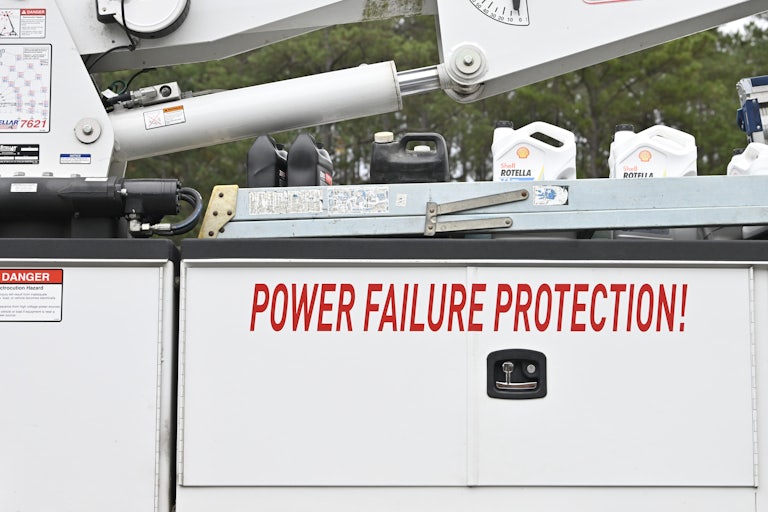
Four power substations in the state of Washington were attacked on Sunday, knocking out power for more than 14,000 customers. The Christmas Day station attackers damaged equipment at each station and set a fire at one.

These most recent attacks join an alarming trend of vandals, trespassers, and domestic terrorists who have targeted power substations across the country. From North Carolina and Oregon, Washington to Florida, intruders have disabled equipment and even struck stations with gunfire. Tens of thousands have lost power as a result; North Carolina residents were recently without power for four days.

Attacks on the power grid are not unheard of—but they’re soaring compared to previous years. Documents obtained by Politico showed that “the past three years have been the most active for reported attacks on the grid in the past decade,” with “101 reported this year through the end of August” after a previous peak of 97 attacks for the entire year of 2021.

There have been numerous warnings, but stakeholders just don’t seem prepared for the onslaught. Nearly a year ago, The Daily Beast obtained a DHS intelligence report that warned of extremist groups identifying the “electric grid as a particularly attractive target given its interdependency with other infrastructure sectors.” And CNN recently obtained a 14-page document circulating on Telegram that included a white supremacist instruction guide for how to conduct low-technology attacks that foment chaos, including attacking a power grid with firearms.

“When the lights don’t come back on … all hell will break lose [sic], making conditions desirable for our race to once again take back what is ours,” the document reads.

In February, three men pleaded guilty of plotting to attack substations with firearms. The trio were alleged white supremacists who had for years strategized how to incite civil unrest, hoping to touch off a potential race war, and the second Great Depression.

Such attacks are disturbing in their own right. But the broader context behind the ideological underpinnings of the attackers only causes more concern. The January 6 Capitol Riot demonstrated the extent to which right-wing radicalization has deepened the resolve of fringe actors to attack the institutions that keep this country running. And in terms of pure mayhem, the attacks on power substations are arguably a lower risk-for-higher reward pursuit compared to mounting an attack on the U.S. Capitol: Literally fatal power outages from New York to Tennessee reveal how keenly vulnerable our country’s infrastructure—and citizens—are to power mishaps.

Politicians gleefully throw support behind brutally reckless over-policing; perhaps they could consider still satisfying their itch for vigilance by at least shifting their focus to protecting our crucial power infrastructure from those who’ve clearly been targeting it in increasing numbers.