Breaking News
Breaking News
from Washington and beyond

Why Is Tim Scott Even Running?

The South Carolina Republican wants to lead a party that has no concern for people who look like him.

Tim Scott
Win McNamee/Getty Images

South Carolina Senator Tim Scott is running for president. The longtime South Carolina politician made his announcement Monday at a rally in his hometown of North Charleston, after officially filing last week with the Federal Election Commission.

“Joe Biden and the radical left are attacking every single rung of the ladder that helped me climb,” Scott said Monday, as his party threatens either cutting social security and Medicare services for millions of poor people, or upending the American economy. “And that’s why, I’m announcing today, that I am running for president of the United States of America.”

Scott joins a notably diverse Republican primary field, including Vivek Ramaswamy, radio host and failed Gavin Newsom–recaller Larry Elder, and another South Carolina political veteran, Nikki Haley. This also means Scott, the only Black Republican in the Senate, joins a slate of candidates vying to lead a party that has no committed concern for people who look like them.

Scott has generated a good deal of support from his colleagues; Senators Joni Ernst, John Cornyn, John Barrasso, and Lindsey Graham have all expressed enthusiasm for his run. Senator Mike Rounds committed to backing Scott’s run last week. And on Monday, while making his announcement, Scott was joined by Senator John Thune, the second-in-command of the Republican caucus.

Scott first began his political career serving on the Charleston County Council for 14 years. In 2009, Scott was elected to the state House, becoming the first Republican African American to do so in over 100 years. He then went on to become the representative for South Carolina’s first congressional district, becoming the first African American Republican elected to Congress from South Carolina in 114 years. And in 2012, then-Governor Haley herself announced she would appoint Scott to the state’s junior senator position; he became the first African American to be a southern senator since Reconstruction.

But aside from these milestones, Scott is offering virtually nothing new in the already crowded Republican primary.

He has refused to disavow Donald Trump, who since announcing his bid has vowed to destroy the constitution, become the first former president to be criminally indicted, and been found liable for sexual abuse. On abortion, too, he falls in line with some of the most radical in his party: endorsing the idea of a 20-week national ban.

Last month, Scott announced his exploratory committee for president in a video in which he looked back at the Civil War: “the defining moment” of whether the country would “truly be one nation under God, indivisible, with liberty and justice for all.”

“America’s soul was put to the test, and we prevailed,” Scott claimed. His nod to the Civil War was fascinating, given the ensuing failure of Reconstruction, and the mass backlash to the African American South Carolina Republicans that made it so Scott became the first in over a century to join in their footsteps.

“I know America is a land of opportunity, not a land of oppression,” Scott said. “I know it, because I’ve lived it.”

Scott did indeed come from a working background. He grew up in a divorced household, in which his mother worked long days to support his family. Scott’s claim about his family—repeated again during his announcement Monday—represents a common conservative belief: because one individual’s luck and hard work aligned, that proves that all people have access to the same outcomes. A logic that only makes sense if you have no knowledge, or concern, for how broader systems operate.

Scott has at times tried to address these systems, but just barely. After the murder of George Floyd, for example, he introduced the “Justice Act,” purported to address police reform and “systemic issues affecting people of color.” Nevertheless, while drafting such legislation, Scott insisted, time and again, that America is not a racist country. The bill, which did not address qualified immunity, never moved forward.

It is great that Scott was able to lift himself out of tough conditions. It’s a shame that he, alongside Haley and other Republicans of color, insists on America’s greatness by citing his own success in spite of the slate of racial and economic struggles he has faced, while also pretending those struggles are not systemically hurting people who look just like him.
8 More Women Join Lawsuit Against Texas Abortion Ban, Saying It Almost Killed Them

“What happened to these women is indefensible and is happening to countless pregnant people across the state.”

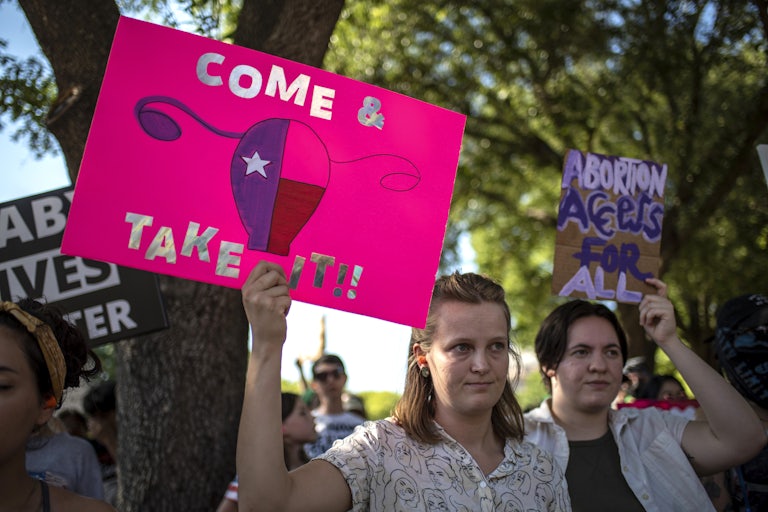
A woman holds up a pro-abortion protest sign
Sergio Flores/Getty Images
Protesters hold up signs during an abortion rights rally on June 25, 2022 in Austin, Texas.

Eight more women joined a lawsuit against the state of Texas on Monday, arguing that the state’s extreme abortion restrictions endangered their health or their lives when they experienced pregnancy-related medical emergencies.

Five women initially sued the Lone Star State in March. A total of 15 people—both patients and doctors—have now signed on to the suit, saying that the laws are unclear and put people’s well-being at huge risk. Texas had implemented a near-total abortion ban in September 2021, even before Roe v. Wade was overturned.

State laws prohibit anyone from getting an abortion unless the pregnant person’s life is at risk. There are no exceptions for a fetus developing an anomaly that would prevent it from surviving past birth, one of the major issues in the lawsuit. Texas doctors who conduct abortions could face life in prison and fines of up to $10,000, meaning that few are willing to discuss giving or referring someone for an abortion.

“Abortion bans are hindering or delaying necessary obstetrical care,” the lawsuit states. “And, contrary to their stated purpose of furthering life, the bans are exposing pregnant people to risks of death, injury, and illness, including loss of fertility—making it less likely that every family who wants to bring children into the world will be able to do so and survive the experience.”

“Medical professionals are now telling their patients that if they want to become pregnant, they should leave Texas.”

One of the plaintiffs, Amanda Zurawski, testified before Congress in April about the toll her state’s abortion laws took on her life. “I nearly died on their watch,” she said of her senators, Ted Cruz and John Cornyn.

Zurawski’s water broke less than halfway through her pregnancy, but she couldn’t get an abortion because her fetus still had a heartbeat. She went into septic shock before she could get an abortion in the emergency room.

Another plaintiff, Kylie Beaton, learned that her baby’s head was growing abnormally fast, but its brain was not developing properly and likely never would. Even though the baby was unlikely to survive past birth, she couldn’t get an abortion in Texas. The law delayed her care, making it too late for her to seek an abortion out of state, and Beaton was forced to carry the pregnancy to term. She had to deliver via emergency C-section because of how big the baby’s head was, and he died just a few days after he was born.

Some plaintiffs had their water break incredibly early. Others developed fatal fetal anomalies, and one developed Mirror syndrome, where both she and her fetus retained too much fluid and were both at risk of death. They were all denied abortions.

“What happened to these women is indefensible and is happening to countless pregnant people across the state,” Molly Duane, an attorney for the Center for Reproductive rights, said in a statement. “The Texas government must answer for their laws that have nearly killed these women and that put more lives at risk every day.”

Minnesota Governor Vows to Legalize Marijuana: “I Trust Adults to Make Their Own Decisions”

Tim Walz and the Democratic Party in Minnesota are making real progressive changes in their state.

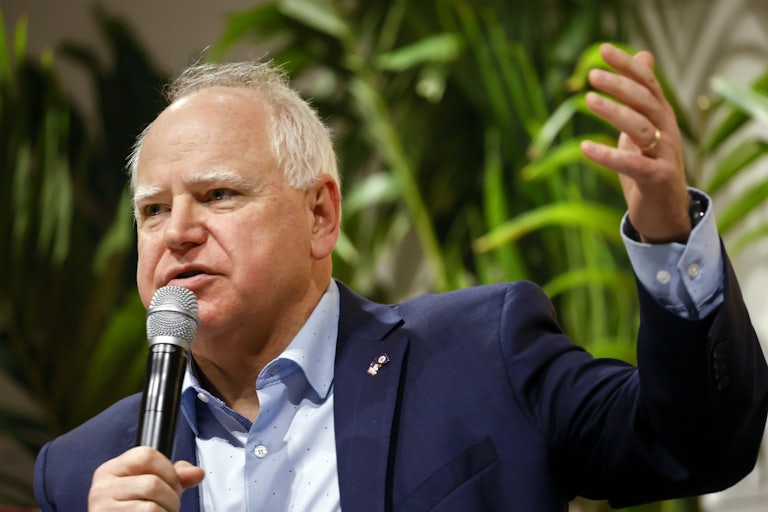
Minnesota Governor Tim Walz
Eva Marie Uzcategui/Bloomberg/Getty Images

The center of Democratic efficacy is not in New York or California—it’s in the Midwest. Minnesota has spent its entire legislative session notching progressive win after win, from becoming the first state to codify abortion rights after the fall of Roe, to guaranteeing free meals for every Minnesota public and charter school student.

And now, Minnesota Governor Tim Walz is vowing to sign the marijuana legalization bill passed by the state legislature.

“I served on the Veterans Affairs Committee in Congress for a dozen years, and we passed the first piece of legislation on medicinal cannabis to help us move away from the opioid addictions that we saw with our returning soldiers. And we know that prohibition doesn’t work,” Walz reasoned on Sunday. “And with the issues of contamination of fentanyl, and xylazine and things we’re seeing show up on street cannabis, it doesn’t make any sense. And so we’re gonna allow people to grow it at home.”

Walz’s answer was steeped not just in practical logic, but in convincing philosophical terms that embody what a winning case for the party is: emphasizing freedom to, and not just freedom from.

“I trust adults to make their own decisions. We’re talking about freedoms. You make [your] own health care decisions in Minnesota. We’re not going to tell you how to deal with your children. We’re going to allow teachers to teach. We’re not going to ban books,” Walz said. “We’ll have it legally—the regime will be in place to make sure that it’s safe, the things that are being sold to folks, and we’ll use the resources from the tax revenue to help educate people on addiction which we know is ravaging, you know, people across the country.”

States like Florida and Texas have earned much-deserved scrutiny for their extremely oppressive legislative sessions. Minnesota and other midwestern states warrant their own contrasting recognition: of Democrats running on popular progressive policies, delivering on them, and bettering the lives of millions.

Editor’s Pick

Marjorie Taylor Greene, Who Loves Demonizing Drag Queens, Now Defends Drag-Wearing Boyfriend

The Georgia representative has built a career demonizing drag queens and queer people generally. Oh how the turntables.

Representative Marjorie Taylor Greene
Anna Moneymaker/Getty Images

Representative Marjorie Taylor Greene, who has gone out of her way to attack drag queens, is now defending her drag-wearing boyfriend.

Greene has been dating Brian Glenn since late last year. Glenn currently works as a programming director for the conservative Right Side Broadcasting Network, but from 2013 to 2015, he was an anchor for a local Dallas, Texas, news station. A video posted to Twitter on Sunday shows him in drag for a morning segment. It is unclear when the segment originally aired.

I’m kicking the shoes off,” Glenn says in the clip, sporting a curly blonde wig, a pink dress, gloves, and a purse.

“I may keep the pantyhose on. It does feel kind of good, actually,” he adds, which is blatantly untrue (just ask anyone who’s had to wear pantyhose for an extended period of time).

Both Glenn and Greene have shared the video on social media, with Greene tweeting that she was “literally lol’ing.”

Glenn “dressed in drag for morning news in Dallas years ago reporting on an upcoming local theatre production and the morons over at Patriot Takes think this is an attack,” she said on Twitter. “The left is so stupid.”

Greene has repeatedly attacked drag performances of any kind, at one point calling them “indoctrination” and saying it should be “illegal” for children to attend. She has likened supporting the LGBTQ community to grooming children, and even suggested that people who support drag queens should be considered “domestic terrorists.” She and other far-right people seeking to ban drag in public insist that their efforts are to protect children.

Well, her boyfriend’s news segment presumably did not include a warning for any minors who might be watching, so people under the age of 18 were likely able to see such obscene content.

The actual problem for Republicans does not seem to be drag, but who is dressed in drag. Tennessee Governor Bill Lee wore drag in high school, but he signed the country’s first law banning drag performances in public (that law was blocked by a judge). Criminally indicted Representative George Santos dressed in drag in Brazil, but he has fully embraced the GOP’s anti-LGBTQ stances. And now Glenn, who works for a far-right, openly Trump-supporting news network.

The issue actually at play is LGBTQ people who live their lives openly and do not fall in line with whatever Republicans deem acceptable.

Nebraska Passes Double-Whammy Bill Banning Abortion and Trans Kids’ Health Care

The bill is expected to be signed into law by Republican Governor Jim Pillen.

Getty
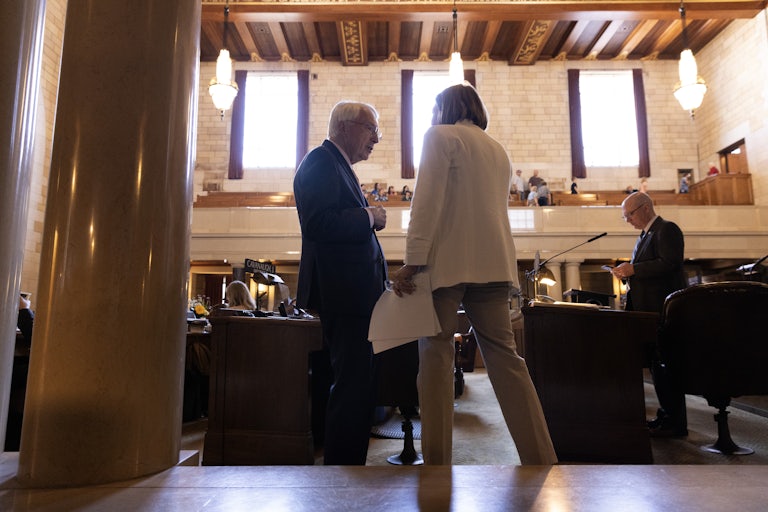
Nebraska state Senator Merv Riepe chats with fellow Senator Jane Raybould at the Nebraska state Capitol

The Nebraska state legislature passed a bill Friday banning abortion after 12 weeks and gender-affirming care for minors, a double-whammy of curbing human rights.

The anti-abortion, anti-trans bill passed the House by a vote of 33–15 and now heads to the desk of Governor Jim Pillen, who has said he will sign it. The measure initially passed the Senate on Tuesday, when lawmakers also voted 33–15 to add the abortion ban as an amendment to the existing gender-affirming care bill.

The rotunda and gallery were packed with people protesting against the bill, chanting so loudly that lawmakers struggled to hear each other. At one point, when Republican Senator Kathleen Krauth began speaking, protesters erupted so loudly that security cleared the gallery. Demonstrators threw tampons onto the chamber floor before they were escorted out.

“Nothing I say matters in this chamber, so I am going to say the unvarnished truth,” Senator Machaela Cavanaugh said during the final debate. “This place is morally bankrupt, that you are playing political games with parents and children in this state to get something. It’s gross. It’s vile.”

The Nebraska legislature failed last month to pass a six-week abortion ban, after two typically anti-abortion senators voted “present.” Republicans then pushed the 12-week ban by folding it into the anti-trans bill.

The measure will ban abortion after 12 weeks. Exceptions would only be made for rape, incest, or to save the pregnant person’s life. The bill would also prohibit people under 18 from receiving puberty blockers, hormone therapies, and genital or nongenital surgeries. Genital surgeries are not performed in Nebraska, but Republicans have banned them anyway.

The state’s chief medical officer—who is simply an ear, nose, and throat specialist appointed by the Republican governor—would be able to set rules and regulations that would allow gender-affirming medications in certain situations. The bill’s supporters say this is a compromise, but critics worry this authority could be used to create a blanket ban instead of more flexibility.

State Democrats, led by Cavanaugh and Senator Megan Hunt, have sought to block anti-trans legislation by filibustering every single bill that came up during the legislative session. But they were finally defeated on Friday.