Breaking News
Breaking News
from Washington and beyond

Nikki Haley Ends Her Week of Saying Stupid Things With a Gift to Trump

The former South Carolina governor seems to have forgotten that she’s running against the former president.

Joseph Prezioso/Getty Images

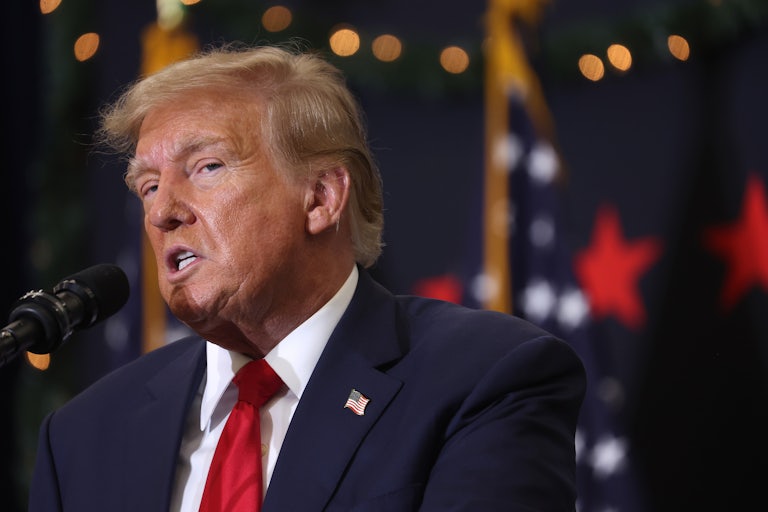
Presidential hopeful Nikki Haley says she would pardon Donald Trump for the sake of letting the country move on. It’s the latest weird moment in a week of self-sabotage. It’s also the latest example of one of Trump’s ostensible political opponents opting to treat the many criminal accusations against him with solicitousness instead of actually taking advantage of his one massive vulnerability.

During a Thursday campaign event in New Hampshire, a 9-year-old asked Haley if she would pardon Trump. Haley replied that she would. “If he is found guilty, a leader needs to think about what’s in the best interest of the country,” Haley said. “What’s in the best interest of the country is not to have an 80-year-old man sitting in jail, that continues to divide our country.”

“What’s in the best interest of the country would be to pardon him, so that we can move on as a country and no longer talk about him.”

Haley is naïve to think that a pardoned Trump would just go away. There’s a far greater chance that Trump, once fully pardoned, would go right back to what he’s doing now: working to obtain the power necessary to get revenge on his political enemies, and working behind the scenes to undermine democracy. With the support of his fervent fan base and his well-documented tendency to bear grudges, he’d likely undermine even a Republican successor.

This isn’t the first time Haley has suggested pardoning Trump if he is convicted in one of his many lawsuits. After Trump was indicted in June for hoarding classified documents at Mar-a-Lago, Haley said she “would be inclined in favor of a pardon” for him if he is found guilty.

Haley’s opinion on a potential Trump pardon came just hours after she refused to say that slavery was one of the main factors in the Civil War. Instead, she insisted at a Wednesday night campaign stop that the war was fought over the role of government and (white) people’s freedoms.

When asked about Haley’s lack of comments on slavery, her fellow presidential hopeful Chris Christie accused her of running scared. (Christie doesn’t appear to have a chance of winning, but he isn’t shy about calling out his fellow candidates.)

“She didn’t say it because she’s a racist, because she’s not,” Christie said Thursday. “She did it because she’s unwilling to offend anyone by telling the truth.”

“If she is unwilling to stand up and say that slavery is what caused the Civil War because she’s afraid of offending constituents in some other part of the country, if she’s afraid to say that Donald Trump is unfit because she’s afraid of offending people who support Donald Trump, and because maybe she harbors in the back of her mind being vice president or being secretary of state … what’s going to happen when she has to stand up against forces in our own party who want to drag this country deeper and deeper into anger and division and exhaustion?”
Ohio’s Republican Governor Vetoes Bill Blocking Care for Trans Minors

Mike DeWine bucked his party, which has grown increasingly hostile to the LGBTQ community in recent years.

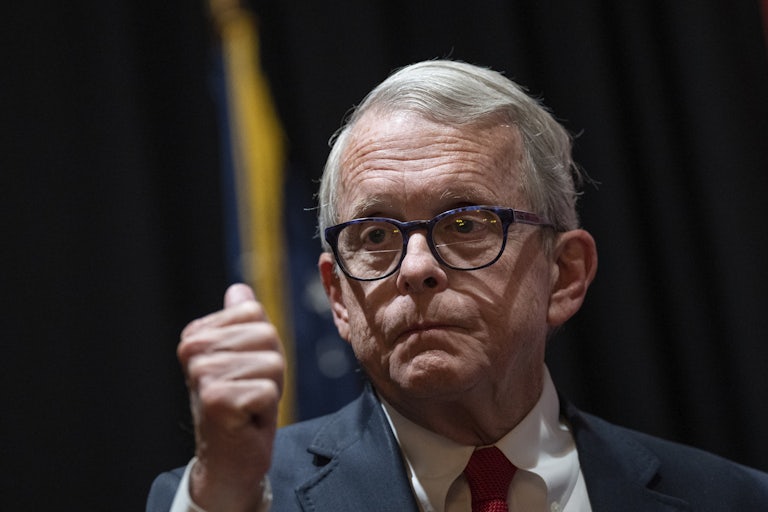
Ohio Governor Mike DeWine
Drew Angerer/Getty Images
Ohio Governor Mike DeWine

Ohio’s Republican Governor Mike DeWine shocked everyone Friday when he vetoed a bill that would have banned gender-affirming care for minors, a major win for LGBTQ residents of the Buckeye State.

House Bill 68 would have banned gender-affirming care for transgender and nonbinary teenagers. The measure would have applied to treatments including puberty blockers, hormones, and medical procedures; it also included prohibitions on trans high school and college students participating on sports teams that match their gender identity.

“Were I to sign House Bill 68, or were House Bill 68 to become law, Ohio would be saying that the state—that the government—knows better what is medically best for a child than the two people who love that child the most: the parents,” DeWine said at a press conference.

“I cannot sign this bill as it is currently written. Just a few minutes ago, I vetoed this bill.”

More than 500 people testified against the bill in early December, including representatives for most major medical institutions in the state and the country. DeWine cited the medical support for gender-affirming care as a factor in his decision, as well as conversations he had with trans teens and their parents.

“Parents have looked me in the eye and told me that but for this treatment, their child would be dead,” he said. “And youth who are transgender have told me they are thriving today because of their transition.”

DeWine’s decision is a rare bright spot in the current onslaught of measures restricting access to gender-affirming care. GOP-led states have passed hundreds of bills banning health care for trans teens and adults. The few victories are often the result of a Republican breaking ranks, such as in Louisiana, where Republican state Senator Fred Mills cast the deciding vote in May to kill a gender-affirming care ban in committee. Unfortunately, the Louisiana Republicans resurrected the bill and successfully passed it through a different committee. That ban will go into effect on January 1.

Maine Adds Pain to Trump’s Presidential Ballot Woes

The Pine Tree State joins Colorado in disqualifying the former president from seeking office—a decision that will likely force the Supreme Court to settle the matter.

Scott Olson/Getty Images

Maine has disqualified Donald Trump from its 2024 primary ballot, the second time this month that a state has made the historic move regarding the former president.

Maine Secretary of State Shenna Bellows ruled Thursday that Trump had engaged in insurrection during the January 6 attack, rendering himself ineligible for elected office under the text of Article Three of the Fourteenth Amendment. Trump’s team had desperately tried to stop her from handing down this decision, arguing that Bellows should have recused herself from the case because of past comments she had made about the riot at the U.S. Capitol.

Bellows determined that the January 6 attack was “violent enough, potent enough, and long enough to constitute an insurrection.” Trump, she stated in her decision, “used a false narrative of election fraud to inflame his supporters and direct them to the Capitol to prevent certification of the 2020 election and the peaceful transfer of power.”

“The events of January 6, 2021 were unprecedented and tragic,” Bellows wrote. “The evidence here demonstrates that they occurred at the behest of, and with the knowledge and support of, the outgoing President. The U.S. Constitution does not tolerate an assault on the foundations of our government, and [Maine law] requires me to act in response.”

Bellows’s decision comes a little more than a week after the Colorado Supreme Court also determined that Trump had engaged in insurrection and barred him from the state’s primary ballot. Neither decision will go into effect immediately so Trump has time to appeal.

Multiple other states are currently weighing cases regarding Trump’s ballot eligibility. The secretaries of state in Michigan, Minnesota, and California have all determined that Trump will remain on their presidential ballots. The next decision will likely come out of Oregon.

While it’s possible that other states might come to the same conclusion reached by election officials in Maine and Colorado, the question of whether Trump will ultimately appear on these states’ ballots will likely be determined by the Supreme Court. Trump’s campaign has already said it will appeal the Maine and Colorado decisions. The Colorado Republican Party on Wednesday asked the nation’s high court to review the state Supreme Court decision.

While the Supreme Court is not required to take the case, there is a sense of momentum that this dispute is headed its way, as  legal scholars have called on the justices to resolve the issue. Their decision will provide a single rule for all states—instead of having a messy mix of some state ballots with Trump’s name and some without—and will likely shape how the Fourteenth Amendment’s language will be interpreted going forward.

The Day Trump’s Plot to Overturn the Election Got Stuck in the Mail

A new CNN report shines a light on the idiocy and cynicism of the president’s inner circle as they tried to pull off their madcap scheme to remain in power.

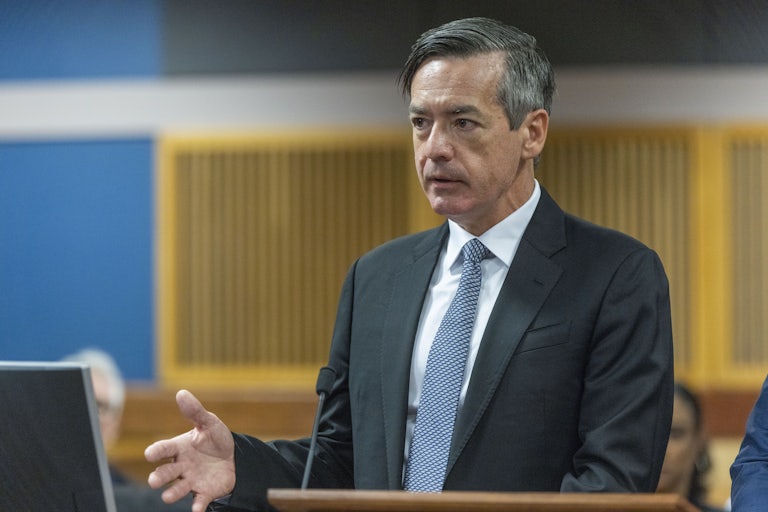
Kenneth Chesebro speaks to Fulton County Superior Court Judge Scott McAfee during a hearing where Chesebro accepted a plea deal in a case related to his alleged role as the legal architect of a fake elector plot to undermine the 2020 elections.
Alyssa Pointer/Getty Images
Kenneth Chesebro speaks to Fulton County Superior Court Judge Scott McAfee during a hearing where Chesebro accepted a plea deal in a case related to his alleged role as the legal architect of a fake elector plot to undermine the 2020 elections.

It turns out that pulling off a scheme to use fake electors to overturn a presidential election isn’t as easy as you might think. What if, for example, the fake elector documents you ginned up to further the plot somehow gets stuck in the mail? Well, then you have to go to elaborate lengths to make sure that your counterfeit credentials make it to Washington in time to stop the actual electoral votes from being counted—an “all hands on deck” moment for President Donald Trump’s crackerjack gang of coup plotters.

That’s one of the primary takeaways from a new report from CNN, adding fresh details to the way Trump’s inner circle plotted to get Vice President Mike Pence to throw a spanner in the works in the days before Trump’s desperate effort to hold onto power in the days before the January 6 attacks on the U.S. Capitol. The news comes at a time when secretaries of state around the country are mulling whether Trump’s efforts to topple the electoral process should get him booted from the presidential ballot under the Fourteenth Amendment.

Late Thursday afternoon, CNN reported that it had obtained “emails and recordings” that shine a light on “the chaotic last-minute effort to keep Donald Trump in office”—specifically that the plotters’ “fake elector certificates from two critical battleground states were stuck in the mail.” Per CNN:

So, Trump campaign operatives scrambled to fly copies of the phony certificates from Michigan and Wisconsin to the nation’s capital, relying on a haphazard chain of couriers, as well as help from two Republicans in Congress, to try to get the documents to then-Vice President Mike Pence while he presided over the Electoral College certification.

The operatives even considered chartering a jet to ensure the files reached Washington, DC, in time for the January 6, 2021, proceeding, according to emails and recordings obtained by CNN.

This fresh material comes courtesy of improbably named Trump lawyer Kenneth Chesebro—an indicted co-conspirator in the Georgia election fraud case who has since been cooperating with prosecutors. According to the CNN report, the two Republican lawmakers who were part of this comedic courier chain of fake documents were Wisconsin Senator Ron Johnson and “a Pennsylvania GOP lawmaker that he believed was Rep. Scott Perry.” (CNN goes on to note that the January 6 committee’s report says “a staffer for a different Pennsylvania Republican, Rep. Mike Kelly, helped shuttle the documents that day.”)

In 2017, The New Republic’s Jeet Heer wrote that the oft-maligned Coen brothers movie Burn After Reading—about a group of imbeciles who have only the most limited understanding of the world around them who get involved in cynical, seriocomic plot that effectively “captures the amorality that leads people to become entangled in mercenary treason”—was “singularly prophetic of the Trump era.” I think we can all agree that Heer’s take has aged very well.

“Parental Rights” Activist Allegedly Threw Drunken Underage Party—and Punched Teen

The onetime candidate for lieutenant governor in Pennsylvania is going to miss out on the Mother of the Year award.

AP Photo/Matt Rourke

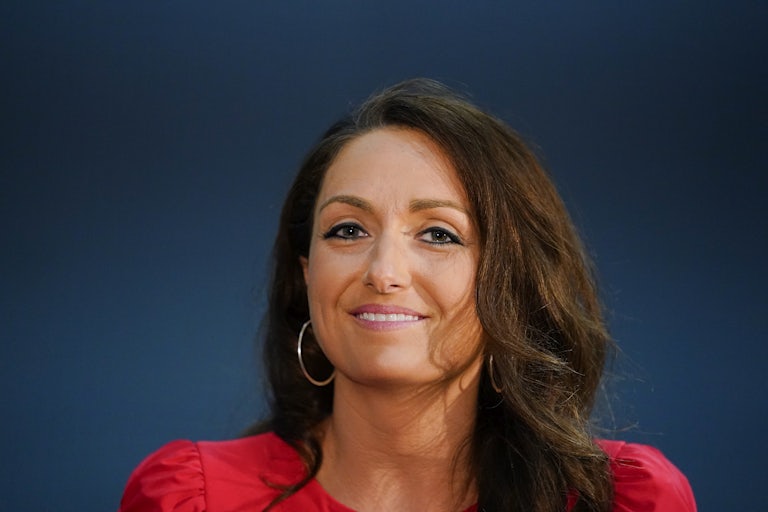
A conservative parental rights activist and former candidate for Pennsylvania lieutenant governor has been charged for providing alcohol to minors at a party in September and then punching one of the attendees.

Clarice Schillinger was charged in late October over the incident at her home in Doylestown, Pennsylvania, about an hour and a half’s drive north of Philadelphia. The charges were reported on Thursday. The 36-year-old faces charges of assault, harassment, and furnishing minors with alcohol. Her lawyer has denied the charges.

Schillinger has earned some notoriety in her home state for launching a political action committee in 2021 aimed at preventing schools from implementing lockdowns due to Covid-19. She also made a wildly unsuccessful bid for Pennsylvania lieutenant governor last year.

The October charges stem from a 17th birthday party Schillinger hosted for her daughter the month prior. According to the police report, Schillinger stocked a drinks table with vodka and rum, poured alcohol for the teenage guests, asked them to take shots with her, and played beer pong with them.

Things took a turn for the worse when Schillinger began to fight with her then-boyfriend, Shan Wilson. When a teenager tried to intervene, Wilson grabbed the teen by the neck. Schillinger’s mother allegedly punched the teen in the eye and chased him around the kitchen.

Wilson later hit another teen during an argument, after which some of the adolescent partygoers began to leave to get away from the adults. But things continued to escalate as Schillinger told them to stay and then grabbed one partygoer who was trying to depart. That teen told police that Schillinger hit him three times with a closed fist but didn’t injure him.

One of the partygoer’s parents called the police early the next morning, on September 30, to report the assault and the underage drinking. As it turned out, this was not the first time police had been called to Schillinger’s home for an out-of-control party. One week before, police responded to a noise complaint at Schillinger’s house. Officers saw beer cans thrown all around the front yard and street, and saw about 20 teenagers run into the house when the authorities approached.

Schillinger made a name for herself in 2021 when she launched a PAC to back candidates that opposed closing schools down as a Covid-19 safety measure. She has described her PAC and organization as bipartisan and single-issue, but they only back Republican candidates.

That first year, her organization took credit for flipping six school districts. But they fell victim to the pushback against parental rights activists, which delivered major wins for Democrats nationwide this past fall. Schillinger also ran as a Republican for lieutenant governor in 2022. She finished fourth, with a little more than 148,000 votes out of the 1.2 million cast in total.

Schillinger is the latest case of a conservative activist falling ironically short of the moral standards to which she holds other people. Most recently, the national organization Moms for Liberty has been rocked by a rape allegation. A woman revealed she had engaged in threesomes with Moms for Liberty co-founder Bridget Ziegler and her husband, Christian Ziegler. The woman accused Christian Ziegler of sexually assaulting her.