Breaking News
Breaking News
from Washington and beyond

The South Will Send Its First Openly LGBTQ Politician to Congress

Julie Johnson has been elected to the House of Representatives.

Representative-elect Julie Johnson
Julie Johnson for U.S. Congress

Texas elected Julie Johnson to replace Representative Colin Allred on Tuesday, marking the first time that the Lone Star State has chosen an openly LGBTQ person to represent it in Congress.

The Democrat won Texas’s 32nd Congressional District by a landslide, pulling more than 60 percent of the vote against Republican Darrell Day, reported The Dallas Morning News. She will represent parts of Collin, Dallas, and Denton Counties.

But Johnson’s win isn’t just a local victory for LGBTQ Texans—it’s also a regional one. Johnson’s election makes her the first queer representative in Washington from the South, according to Austin-based KUT News.

“Tonight, Team Julie made history,” Johnson wrote in a post after the results were called. “I am incredibly honored and humbled that you have elected me to be your Representative for the 32nd district. Together, we have shattered barriers and proven that representation matters.”

“This is just the beginning of the work ahead, but tonight, let’s celebrate this historic moment and our progress together,” Johnson wrote, thanking the “countless individuals” who “fought for equality and inclusion.”

“Rest assured, I am committed to continuing this journey with the same passion and dedication, and I will not rest until we achieve our shared goals,” she added.
Harris Picks Up One Crucial Electoral College Vote in Blow to Trump

Nebraska splits up its electoral college votes. Here’s what that means for Kamala Harris’s race to 270 votes this election.

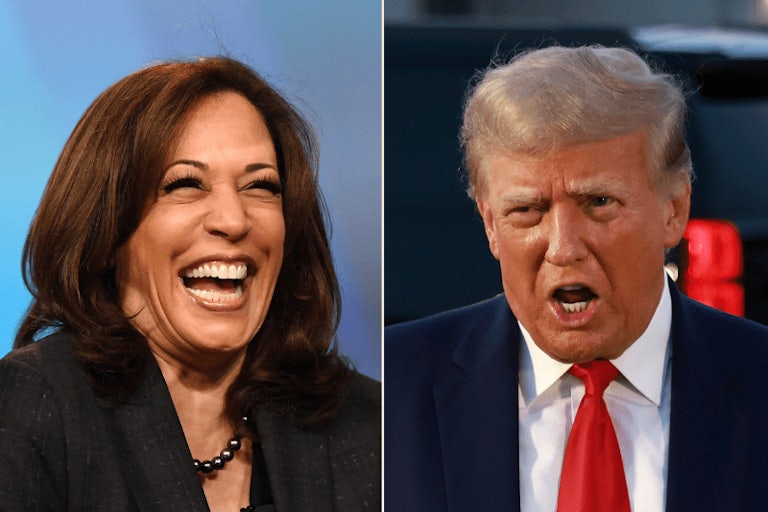
Splitscreen of Kamala Harris laughing and Donald Trump yelling
Getty x2

Kamala Harris has secured victory in the integral blue dot of Nebraska, bringing her one step closer to her 270 to win. 

Harris won the single electoral vote from Nebraska’s 2nd congressional district, the Associated Press called Tuesday evening.

The blue dot was important to Harris’s campaign, and she now has 210 electoral college votes to Trump’s 230 votes, as both candidates race toward the 270 votes needed for victory. Trump has already pulled off a victory in the battleground states of North Carolina. Results in the other battleground states have yet to be announced. 

Omaha has been a pain in Republicans’ sides throughout the election cycle. Nebraska is one of only two states with a split electoral vote system, giving those living in the state’s largest city a special role in determining the presidential election. That’s why MAGA sought to change the state to a winner-take-all system earlier this year. 

While Harris and Tim Walz, who is from the state, won the district’s one electoral vote, Trump will take Nebraska’s remaining four.   

Democrats were perhaps buoyed to go to the polls thanks to Nebraska’s two abortion-related, and slightly confusingly worded, ballot questions. Also perhaps aiding in Harris’s victory, thousands of Nebraska’s former felons, many of whom live in or near Omaha, were enfranchised less than three weeks before the election. 

As results continue to trickle in, Walz should take a second to celebrate his home state win.

Republicans Take Control of the Senate in Major Upset

Republicans have taken control of the Senate.

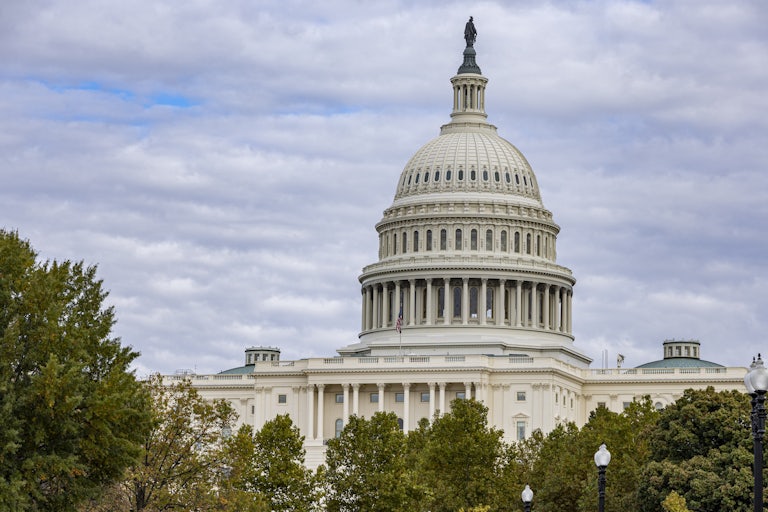
The U.S. Capitol building
Nicolas Economou/NurPhoto/Getty Images

Republicans have taken control of the U.S. Senate, according to the Associated Press.

Republicans held 51 seats Tuesday night and Democrats held 42. There are still seven seats to be called.

The House majority has not yet been determined.

Ahead of the election, several GOP contenders found themselves struggling in states where the top of the ticket, Donald Trump, saw considerable enthusiasm.

Republican senators found themselves met by aggressive opponents. In Nebraska, Senator Deb Fischer found a tough contender in independent candidate Dan Osborn. Meanwhile, Texas Democratic candidate Colin Allred appeared to gain traction ahead of the election in his race against Republican Senator Ted Cruz.

Fischer and Cruz ultimately kept their seats.

And Republican challengers seemed to falter against Democratic incumbents. In Arizona, Kari Lake previously trailed Democratic Representative Rueben Gallego by multiple points, even as Kamala Harris and Trump found themselves tied. Ohio’s Democratic Senator Sherrod Brown held a lead against Bernie Moreno. And in Montana, Republican challenger Tim Sheehy held only a slim four-point lead over Senator John Tester, even though Trump led Harris by 17 points in the Treasure State.

Brown lost his seat. Gallego and Tester’s races have not yet been called.

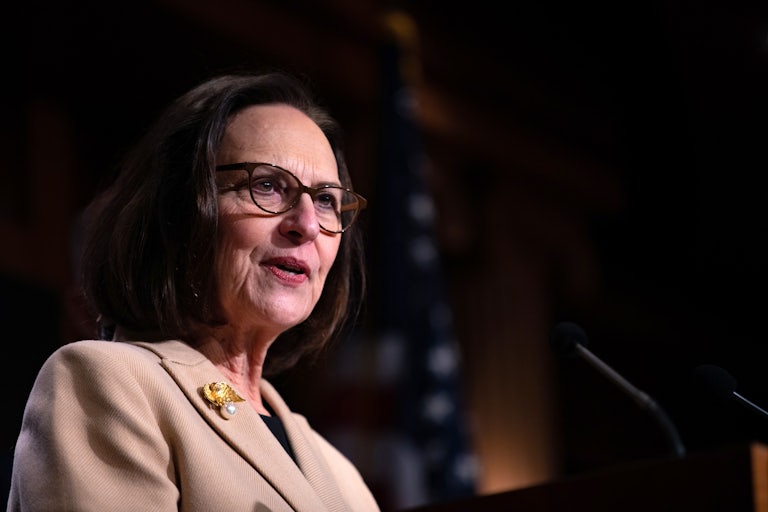
Nebraska Senator Deb Fischer Hands Republicans Control of the Senate

Republican Senator Deb Fischer just eked out a win over independent challenger Dan Osborn.

Nebraska Senator Deb Fischer
Anna Rose Layden/Getty Images

Republican Senator Deb Fischer won her re-election Tuesday night, dashing Democratic votes that independent Dan Osborn would successfully oust her from office. 

Fischer won against the former leader 51.5-48.5 percent, with 72 percent reporting, according to the Associated Press.

Osborn, who led 500 workers at his Kellogg’s plant through a three-month strike to end a two-tiered benefits system and stop plant closings, led an impressive campaign against Fsicher, who has held the Senate seat since 2013. The Democratic Party did not field a candidate in the race, but given Osborn’s political views, his win was expected to be a serious setback for the GOP.

With Fischer’s victory, Republicans have secured control of the Senate. They currently have 51 seats to Democrats’ 42 seats, with seven seats still remaining to be called.

Osborn refused to seek an endorsement from any political party including the Democrats, citing his desire not to be beholden to the money or special interests behind them. “I want to be clear that I’m an independent,” Osborn told the Nebraska Examiner in May. “I want to stay true to who I am.”

Still, his pro-labor stances were expected to have him caucusing with the Democrats similar to Independent Senator Bernie Sanders.

“I hadn’t been a very political person until corporate greed came knocking on my door a few years ago, when I was president of my local union, and we went out on strike, at a time where the company was making record profits,” Osborn told Semafor in September.

With Fischer’s victory, Democrats’ hopes to retake the Senate comes to a sad end.

Missouri Pulls Off a Massive Win on Abortion Rights

Missouri has overturned a total abortion ban.

People protest for abortion rights
Angela Weiss/AFP/Getty Images

Missouri overturned a total abortion ban Tuesday, with the majority of the state voting to enshrine abortion protections in the state constitution.

Roughly 53.2 percent of the state voted in favor of Amendment 3, achieving the simple majority necessary to protect reproductive freedom in Missouri, including an individual’s decision to have an abortion up to the point of viability.

Fetal viability typically occurs during the second trimester, between 23 and 24 weeks of pregnancy, but the ballot measure has a different definition for the developmental stage. Instead, it describes fetal viability as “the point in pregnancy when, in the good faith judgment of a treating health care professional” there is a “significant likelihood of the fetus’s sustained survival outside the uterus without the application of extraordinary medical measures.”

The measure, called the Right to Reproductive Freedom Initiative, solidifies that the government has no role in a person’s “fundamental right to reproductive freedom,” including but not limited to prenatal care, childbirth, postpartum care, birth control, abortion care, miscarriage care, and respectful birthing conditions. It undoes the Show-Me State’s total abortion ban, which took effect one hour after the Supreme Court overturned Roe v. Wade in 2022.

“The right to reproductive freedom shall not be denied, interfered with, delayed, or otherwise restricted unless the Government demonstrates that such action is justified by a compelling governmental interest achieved by the least restrictive means,” the ballot measure read in part. “Any denial, interference, delay, or restriction of the right to reproductive freedom shall be presumed invalid.”

Governmental interest was specified as compelling only if it had the limited effect of “improving or maintaining the health of a person seeking care” and was consistent with “widely accepted” evidence-based medicine and does not “infringe on that person’s autonomous decision-making.”

Missouri is one of 10 states that have placed abortion on the ballot this year—the most to appear in a single year in U.S. history.