Breaking News
Breaking News
from Washington and beyond

16 Democrats Just Voted to Confirm Another Trump Appointee

What the hell is going on with the Democrats?

Donald Trump smiles in his gold Oval Office.
Chip Somodevilla/Getty Images

Donald Trump’s choice for U.S. ambassador to China was confirmed Tuesday with the help of 16 Democratic votes in the Senate. 

David Perdue, formerly a Republican senator from Georgia, easily sailed through with a 67–29 vote, with four senators not voting. The Democrats who joined all but two Republicans to vote for Perdue weren’t only representing battleground states, either.

“Yea” votes included New Jersey’s Cory Booker, whose record-breaking speech on the Senate floor against Trump’s policies earlier this month seemed to inspire the rest of his party, as well as Illinois Senator Tammy Duckworth, a military veteran who has criticized the administration for firing military veterans from civil service positions.  

Perdue was confirmed while the U.S. and China are in the midst of a trade war entirely caused by Trump’s ill-conceived 145 percent tariffs against Chinese imports, which China has responded to with its own 84 percent tariffs against U.S. exports to the country. Somehow, 16 Senate Democrats agreed with Trump’s choice of Perdue to deal with Beijing during this manufactured crisis. Here are their names: 

  1. Cory Booker—New Jersey
  2. Chris Coons—Delaware
  3. Tammy Duckworth—Illinois
  4. John Fetterman—Pennsylvania
  5. Ruben Gallego—Arizona
  6. Maggie Hassan—New Hampshire
  7. Tim Kaine—Virginia
  8. Andy Kim—New Jersey
  9. Angus King—Maine (independent who caucuses with Democrats)
  10. Amy Klobuchar—Minnesota
  11. Gary Peters—Michigan
  12. Jack Reed—Rhode Island
  13. Jacky Rosen—Nevada
  14. Jeanne Shaheen—New Hampshire
  15. Elissa Slotkin—Michigan
  16. Mark Warner—Virginia

Trump’s Economy Sends U.S. Confidence Dropping Like a Rock

U.S. consumer confidence is the lowest it’s been in years.

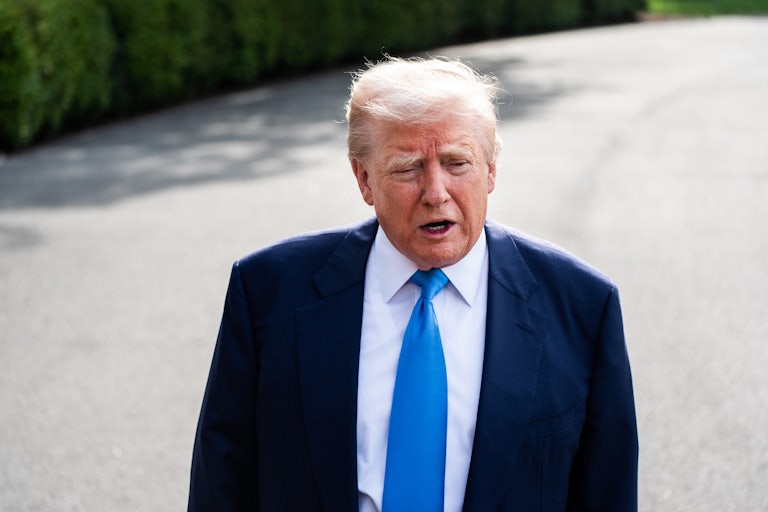
Donald Trump speaks to reporters outside the White House
Demetrius Freeman/The Washington Post/Getty Images

Consumer confidence in the economy has plummeted for the fifth straight month, sinking to lows not seen since the onset of the Covid-19 pandemic, all thanks to Donald Trump’s tariffs.

The Conference Board’s consumer confidence index fell by 7.9 points in April, bringing overall consumer confidence to 86, according to a report published Tuesday. Consumer futures were brought to a 13-year low, with outlooks on the economy dropping by 12.5 points to 54.5 points. That’s well below the threshold of 80 that “usually signals a recession ahead,” according to the Conference Board.

“The decline was largely driven by consumers’ expectations. The three expectation components—business conditions, employment prospects, and future income—all deteriorated sharply, reflecting pervasive pessimism about the future,” Stephanie Guichard, a senior economist at the Conference Board, said in a statement.

The number of consumers expecting fewer jobs in the next six months (32.1 percent) was particularly alarming, reaching heights not seen since April 2009, when the country was in the midst of the Great Recession.

“Expectations about future income prospects turned clearly negative for the first time in five years, suggesting that concerns about the economy have now spread to consumers worrying about their own personal situations,” Guichard noted.

The drop-off in confidence has rattled all ages and income groups, as well as all political affiliations. The group with the sharpest decline in confidence is also America’s most employed, people aged 35 to 55.

The root cause of the instability was “high financial market volatility in April,” which hit American consumers’ stock portfolios and retirement savings hard and fast, per the Conference Board’s report. That was almost singularly due to Trump’s machinations in the White House, which included releasing (and stalling) a sweeping and vindictive tariff proposal plan that economists observed (and the White House eventually confirmed) was founded on bad math.

It’s not the only negative indicator for Trump’s performance. An ABC News/Washington Post/Ipsos poll published Sunday found that Trump’s approval rating had plummeted to 39 percent—a 6 percent drop from February—marking the lowest first-100-day rating of a president since modern polling began roughly 80 years ago.

Elon Musk Lost Boatload of Money in Trump’s First 100 Days

Here’s one thing to celebrate from Trump’s first 100 days in office.

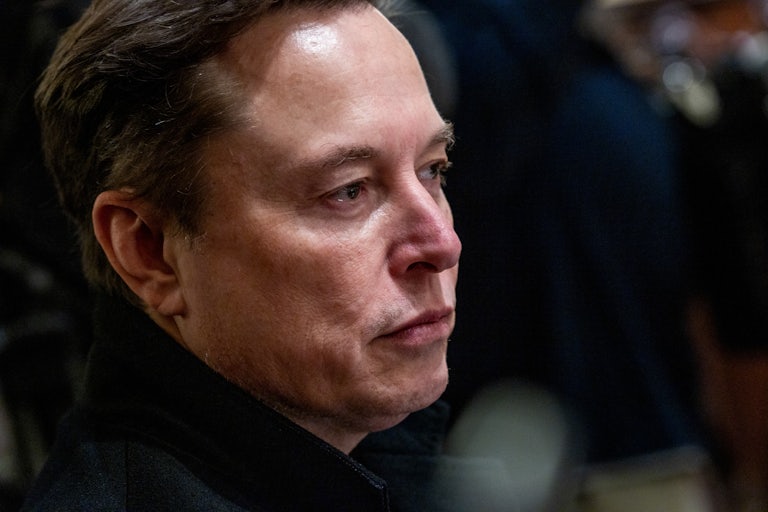
Elon Musk sits in Donald Trump’s Cabinet meeting and stares off forlornly.
Shawn Thew/EPA/Bloomberg/Getty Images

It turns out that all of Elon Musk’s villainous efforts working in the Trump administration have cost him 25 percent of his total wealth.

Since January 17, just three days prior to the start of President Trump’s second term, the tech oligarch and fascism enthusiast has lost $113 billion, Bloomberg reports. The bulk of that loss has come from a 33 percent drop in the stock price of Musk’s Tesla car company, taking a chunk out of his wallet even as his other companies, such as SpaceX, Neuralink, and XAi, have taken in more funding.

Tesla has lost $448.3 billion in market value since January, with the car company becoming the target of protests over the White House’s massive cuts to government agencies and its other unpopular policies. Demonstrations have sprouted up at Tesla dealerships across the country, and sales have plummeted, with the company experiencing its worst quarterly earnings in years.

Musk has crowed about the success of his work in government through theDepartment of Government Efficiency. But he has been unable to live up to his own promises, claiming to save only $160 billion versus the lofty $2 trillion figure he said he would deliver. On top of that, his cost-cutting measures could end up costing taxpayers even more money. His efforts have made him massively unpopular, with 54 percent of Americans disapproving of the world’s richest man compared to 53 percent disapproval of Trump, according to a new poll.

Musk can’t ignore the consequences of his actions anymore, saying on Tesla’s earnings call last week, “There’s been some blowback for the time that I’ve been spending in government.” As a result, Musk added that his “time allocation to DOGE will drop significantly” beginning in May.

But even if that is true, it may not reverse Musk’s financial misfortunes or his lack of popularity. It’s not going to make Americans start buying his cars again or forget that he called Social Security, which millions of disabled and elderly Americans depend on, a “Ponzi scheme.” Musk will have to work tirelessly to atone for his actions to get back into the public’s good graces, if that’s even possible.

“Pissed” Trump Called Jeff Bezos to Yell About Amazon Tariffs Report

Trump called up the Amazon founder furious about reports that the world’s largest online retailer was prepared to show the price of tariffs directly to consumers.

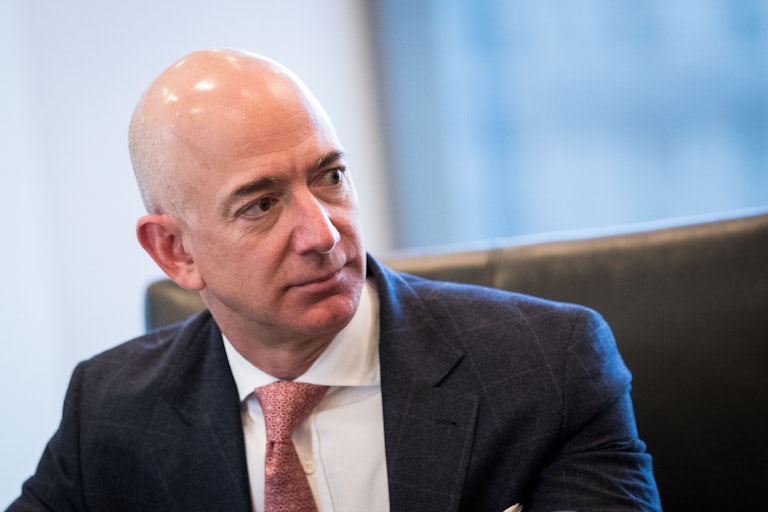
Jeff Bezos glances to his left as he sits at a table.
Drew Angerer/Getty Images

President Trump called Jeff Bezos Tuesday morning to fume at the Amazon founder about reported plans for the company to display a number alongside product prices that tells consumers exactly how much Trump’s tariffs are adding to the final cost, according to CNN. 

Amazon had planned the display in the wake of Trump’s unprecedented tariff war on imports from virtually the entire world inevitably leading to increased prices. White House press secretary Karoline Leavitt called it a “hostile and political act” when asked about the news. 

“This is a hostile and political act by Amazon. Why didn’t Amazon do this when the Biden administration hiked inflation to the highest level in 40 years? And I would also add that it’s not a surprise. As Reuters recently wrote: ‘Amazon has partnered with a Chinese propaganda arm,’” she stated. “So this is another reason why Americans should buy American; it’s another reason why we are onshoring critical supply chains here at home to shore up our own critical supply chain and boost our own manufacturing here.” 

At some point, the president placed a call to one of his most high-profile supporters, and after that the tariff price marker idea was dead. 

“Of course he was pissed.… Why should a multibillion-dollar company pass off costs to consumers?” an anonymous source told CNN, using pro-labor language to misrepresent the nature of the tariffs.

Amazon had an opportunity to show people everywhere what the impact of the president’s destructive trade policies actually looked like. Instead they seem to have fallen in line, even as Trump costs them. 

Trump’s Shady Crypto Business Partner Exposed in Shocking New Report

Donald Trump has turned the White House into his personal crypto firm.

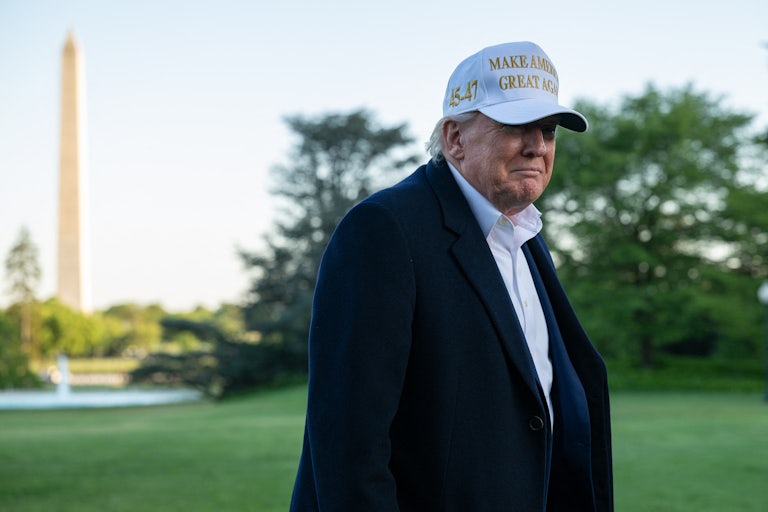
Donald Trump wears a white Make America Great Again hat while standing outside the White House. The Washington Monument is visible behind him
Annabelle Gordon/AFP/Getty Images

Donald Trump’s shady crypto business has a surprising partner: Zachary Witkoff, the son of the president’s special envoy to the Middle East, Steve Witkoff. But don’t worry, his dad is getting in on the action too.

A sweeping investigation published Tuesday by The New York Times found that the young Witkoff had found his way to becoming one of the top three managers of World Liberty Financial, or WLFI, the decentralized finance platform that is majority owned by a Trump business entity.

DT Marks DEFI LCC, which is affiliated with Trump and his family members, owns 60 percent of World Liberty and is entitled to 75 percent of $WFLI token sales after deduction of agreed reserves, according to the website.

Trump serves as the company’s “Chief Crypto Advocate.” It’s a sort of ironic title because, while Trump can promote the brand itself, he can also shape policy to the benefit of cryptocurrencies and influence the very markets to which crypto value is tied. The president’s sons, Eric and Don Jr., are both Web 3 ambassadors, while Barron, a freshman at New York University, is a “DeFi Visionary.”

A Securities and Exchange Commission filing lists Witkoff and his son as “promoters.” Witkoff, whose background is in New York real estate, has become a central figure in the floundering U.S.-brokered peace negotiations between Ukraine and Russia.

The Times reported that Zachary Witkoff was one of three managers who oversee daily operations at World Liberty, alongside Chase Herro and Zak Folkman of Dough Finance, a lending app that was hacked in July, losing its customers more than $2 million. Coindesk previously reported that some of WLFI’s code was lifted directly from the defunct Dough Finance.

The young Witkoff recently traveled with Folkman and Herro to Pakistan to meet with Prime Minister Muhammad Shehbaz Sharif and other government officials to discuss World Liberty.

“The trip, complete with limousines, a dance performance and police escorts, seamlessly blended the president’s business interests with the trappings of a state visit,” the Times reported.

The trio also met this week with Changpeng Zhao, the founder and former chief executive of Binance, in Abu Dhabi to discuss USD1, WLFI’s stable coin, which is a cryptocurrency that maintains a value of $1. Zhao has been seeking a pardon from the Trump administration after he pleaded guilty to violating U.S. anti–money laundering laws, according to The Wall Street Journal.

World Liberty presents a golden opportunity for investors to curry favor with the Trump administration by allowing them to invest in a coin that directly benefits the president and his family.

World Liberty sent multiple firms a pitch saying that they could essentially pay somewhere between $10 million and $30 million for World Liberty’s endorsement, according to three firms that spoke with the Times. In return for tens of millions of dollars, World Liberty would buy a small amount of the firm’s cryptocurrency, signaling to the market that the firm’s coin was worthy of investment, while pocketing the rest of the cash.

Some firms turned them down. “It’s a very dishonest approach,” Dominik Schiener, founder of the IOTA Foundation, told the Times. His Berlin-based group “immediately” rejected the pitch, he said.

Crucially, World Liberty allows foreign investors to financially back Trump. Many of World Liberty’s early investors were from South Korea, Hong Kong, Singapore, and the United Arab Emirates. Early investors also included some foreign crypto entrepreneurs who had to make payments to the Securities and Exchange Commission over their misdeeds.

Crypto executives have used their purchases of $WLFI to raise their profile in the U.S. and globally, in addition to granting them leverage with the White House. Justin Sun, a Chinese billionaire who founded the crypto platform Tron and was sued by the SEC during the Biden administration, bought a whopping $75 million of $WFLI, late last year. A few months later, the SEC asked a federal judge to halt Sun’s case.

In March, Trump announced plans for a U.S. “crypto strategic reserve,” which presents as a blatant insider trading scam to make his billionaire crypto czar richer—funded by taxpayer money. It directly increased the value of World Liberty’s stash of ether, which was one of the coins included in Trump’s reserve.