Breaking News
Breaking News
from Washington and beyond

Karoline Leavitt Claims Trump Doesn’t Need “Evidence” for Retribution

The White House doesn’t care that the Justice Department has no evidence against Donald Trump’s latest victim.

White House press secretary Karoline Leavitt speaks while making a hand gesture for emphasis
Andrew Harnik/Getty Images

White House press secretary Karoline Leavitt crumbled Monday when pressed about President Trump’s lawfare against New York Attorney General Letitia James.

Trump last week forced Erik Siebert out of his post as U.S. attorney for the Eastern District of Virginia for failing to find (read: concoct) evidence of James’s criminality during a five-month-long investigation.

James previously filed a civil case against Trump, in which he was ultimately found liable for business fraud in September 2023. (An appeals court last month tossed a $500 million penalty—but not the verdict.) Now, like several other Trump foes, James faces a thinly veiled retribution campaign, in which she’s accused by the administration of mortgage fraud.

ABC White House correspondent Selina Wang laid these facts before Leavitt at a Monday press conference. Considering that a monthslong investigation into James by Siebert (a Trump appointee) yielded no evidence, she asked, “Is the president saying here it doesn’t matter if there’s a crime, he just wants his political enemies to be charged?”

Leavitt launched into a tirade against James, who, she said, “completely abused her oath of office” and “was actively and openly engaged in lawfare.” The press secretary also falsely claimed that last month’s removal of Trump’s half-billion-dollar civil fraud penalty meant the president was “exonerated” of James’s “witch hunt”—when, in reality, the appeals court upheld the lower court’s verdict that Trump is indeed liable for fraud.

“Why won’t the president accept the conclusions of his Justice Department to not bring charges against Letitia James?” Wang followed up, observing that Siebert’s ouster was reportedly privately opposed by Attorney General Pam Bondi and Deputy Attorney General Todd Blanche.

“I just answered that question for you,” Leavitt shot back—though she very much hadn’t. Trump, she added, “wants to see accountability for those who abuse their office and abuse their power, and Letitia James absolutely did that whether you want to admit it or not.”

“Is that not retribution, though?” Wang asked, to which Leavitt replied, “It’s accountability,” before brusquely taking another question.

Doctors Issue Stark Warning Against Trump’s $100,000 H-1B Visa Rule

The American Medical Association says Trump’s new H-1B visa restriction will have serious impacts on the country.

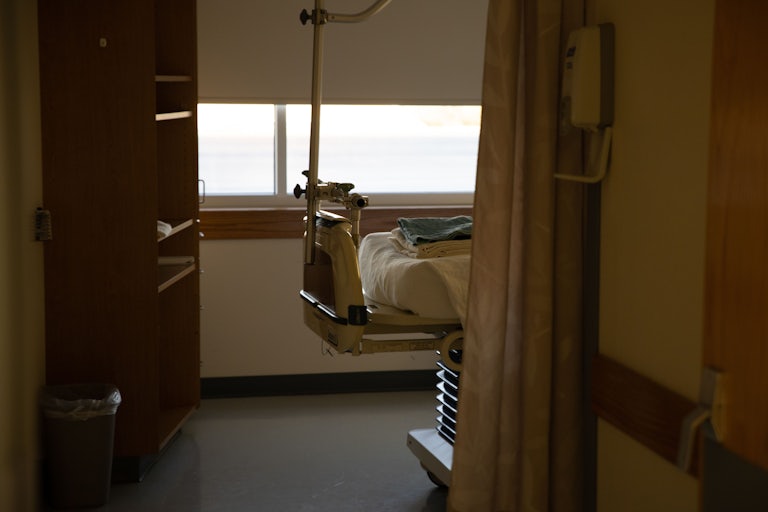
The view of a hospital bed from a doorframe.
MEGAN JELINGER/AFP/Getty Images

Doctors are warning that the Trump administration’s move to force companies to pay $100,000 for employees on H-1B visas may very well cripple the country’s medical apparatus and make it even harder for Americans to get lifesaving care in a timely manner.

“Raising the H-1B visa fee to $100,000 risks shutting off the pipeline of highly trained physicians, especially in rural and underserved communities,” the American Medical Association said in a statement Monday.

“The H-1B nonimmigrant visa program was created to bring temporary workers into the United States to perform additive, high-skilled functions, but it has been deliberately exploited to replace, rather than supplement, American workers with lower-paid, lower-skilled labor,” the administration said in a statement announcing the new visa restriction on Friday. “The large-scale replacement of American workers through systemic abuse of the program has undermined both our economic and national security.”

International medical students and residents make up a huge portion of health care employment. Making their companies pay $100,000 in order to employ them would simply wipe many of them out, and rob their patients in the process.

“When you’re putting a doctor in the middle of rural Ohio or rural Indiana, and they have to serve the underserved—that kind of a price tag is going to wipe out a lot of health care for a lot of people across the country who really need it,” attorney David Leopold, who represents H-1B visa doctors serving in health care deserts, told Bloomberg. “If that visa’s not available, then we’re not able to place physicians in these areas.”

Scientist and former H-1B visa holder M.E. Siddall warned that this kind of tax on foreign professionals will lead to a reverse brain drain, as the world’s medical talent may look elsewhere for work.

“The history of the United States is attracting the best minds of the world,” he said. “Princeton would have to pay $100,000 for Einstein?”

Trump Ends Survey on How Many Americans Are Hungry as Economy Plummets

Donald Trump is covering his own tracks on the effects of “big, beautiful bill.”

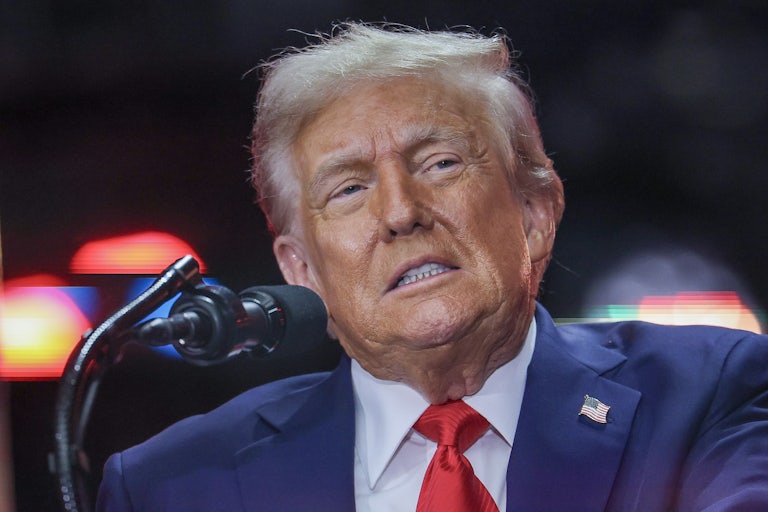
Donald Trump stands at a microphone during Charlie Kirk’s memorial service
Win McNamee/Getty Images

The federal government is nixing its most prominent research program designed to track national food insecurity.

The Agriculture Department ended its Household Food Security Report over the weekend, referring to the 30-year study as “redundant.”

“These redundant, costly, politicized, and extraneous studies do nothing more than fear monger,” the USDA said in a press release Saturday, further deriding the research as “liberal fodder.”

“Trends in the prevalence of food insecurity have remained virtually unchanged, regardless of an over 87 percent increase in SNAP spending between 2019-2023,” the release noted, referring to ​​​​the Supplemental Nutrition Assistance Program.

But there is about to be a dramatic uptick in the number of Americans struggling to eat. Donald Trump’s One Big Beautiful Bill Act expanded the work requirements to qualify for SNAP earlier this year, a rescission that’s expected to leave at least 2.4 million Americans without food aid, according to NPR.

Further still, experts say the Agriculture Department’s claim that food insecurity has remained “unchanged” is patently untrue. Kyle Ross, a policy analyst with the progressive research group the Center for American Progress, told NPR that there was an uptick in food insecurity as recently as 2023. That year, the rate of food-insecure children in the United States grew by 3.2 percent over the year prior, according to data from the Food Research and Action Center.

“At that point, it has been the largest rate of food insecurity that the country has seen since 2014 and substantially larger than just two years prior,” Ross told the radio network.

The last iteration of the Household Food Security Report, published in 2024, found that 13.5 percent of American households were food insecure “at least some time during” 2023, which the report noted was “statistically significantly higher than the 12.8 percent in 2022.”

Anti-hunger researchers described the data provided by the national food insecurity survey as “critical.”

“Without that data, we are flying blind, and we don’t know the impact,” Crystal FitzSimons, president of the Food Research and Action Center told NPR.

Read more about food insecurit:

Elena Kagan Tears Into Supreme Court for Letting Trump Run Amok

Kagan warned the court was allowing “what our own precedent bars.”

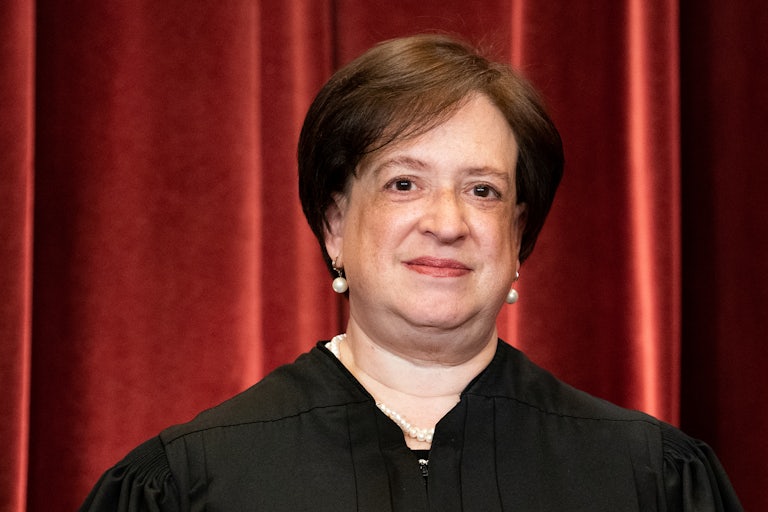
Supreme Court Justice Elena Kagan sits for a photo
Erin Schaff/Pool/Getty Images

Justice Elena Kagan slammed the Supreme Court’s conservative majority Monday for handing “full control” of independent agencies to President Donald Trump by allowing him to fire anyone he wants “for any reason or no reason at all.”

The Supreme Court issued a 6–3 ruling along ideological lines approving Trump’s emergency request to remove Rebecca Slaughter, a Democratic commissioner on the Federal Trade Commission. The court also announced that it would hear arguments for the case in December.

In a brief, scathing dissent, Kagan accused her conservative colleagues of allowing Trump to discharge a member of the FTC “without any cause,” just as they had let him do with the other independent agencies made up of bipartisan members: the National Labor Relations Board, the Merit Systems Protection Board, and the Consumer Product Safety Commission.

Trump “may now remove—so says the majority, though Congress said differently—any member he wishes, for any reason or no reason at all. And he may thereby extinguish the agencies’ bipartisanship and independence,” Kagan wrote.

Kagan cited the 1935 case Humphrey’s Executor v. United States, in which the court rejected Franklin Delano Roosevelt’s attempt to fire a conservative commissioner appointed by President Herbert Hoover overseeing his New Deal policies. “Congress, we held, may restrict the President’s power to remove members of the FTC, as well as other agencies performing ‘quasi-legislative or quasi-judicial’ functions, without violating the Constitution,” Kagan wrote, noting that that siding with the court here would be a reversal of that ruling.

“Our emergency docket should never be used, as it has been this year, to permit what our own precedent bars. Still more, it should not be used, as it also has been, to transfer government authority from Congress to the President, and thus to reshape the Nation’s separation of powers,” Kagan wrote.

Trump attempted to fire Slaughter in March, leading the commissioner to challenge the move, as presidents may only legally remove FTC commissioners for “inefficiency, neglect of duty, or malfeasance in office.”

In July, a federal court blocked Trump’s “unlawful” attempt to remove Slaughter, citing Humphrey’s Executor. That decision was then upheld by the U.S. Circuit Court of Appeals for the District of Columbia, which last week stated that Trump “has no likelihood of success on appeal given controlling and directly on point Supreme Court precedent.”

The Supreme Court previously allowed Trump to oust Gwynne Wilcox at the National Labor Relations Board and Cathy Harris at the Merit Systems Protection Board—whose terms weren’t due to expire until 2029—as well as three Democratic appointees on the Consumer Product Safety Commission.

Disney Says It’s Bringing Jimmy Kimmel Back After Mass Protests

Disney seems to have realized it made a massive mistake.

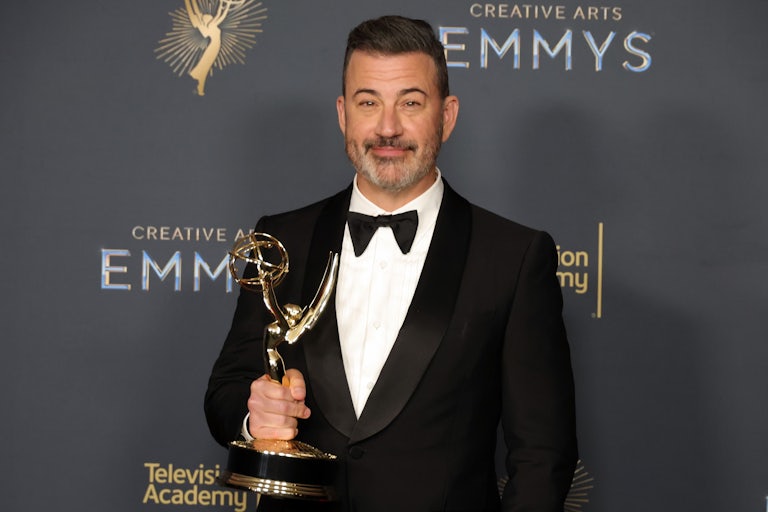
Jimmy Kimmel holds an Emmy
Kevin Winter/Getty Images

Less than a week after Disney-owned ABC drew mass outrage by censoring Jimmy Kimmel’s late-night show at the behest of the Trump administration, the company has reversed its decision, and Jimmy Kimmel Live! will return to air Tuesday.

“Last Wednesday, we made the decision to suspend production on the show to avoid further inflaming a tense situation at an emotional moment for our country. It is a decision we made because we felt some of the comments were ill-timed and thus insensitive,” the Walt Disney Company said in a statement. “We have spent the last days having thoughtful conversations with Jimmy, and after those conversations, we reached the decision to return the show on Tuesday.”

The late-night host was suspended after making comments ridiculing President Donald Trump and MAGA’s response to the fatal shooting of conservative activist Charlie Kirk. In response, Federal Communications Commission Chairman Brendan Carr threatened companies that platform the comedian, and Nexstar Media Group and Sinclair Broadcast Group—both of which own ABC affiliate stations and reportedly have business before the FCC—took the show off air. Shortly thereafter, ABC announced the show’s cancellation.

Trump celebrated ABC’s initial decision (saying media figures are “not allowed” to excessively criticize him) and even called his next shots—urging NBC to suspend the shows of Jimmy Fallon and Seth Meyers, while Carr floated that The View could be next. Meanwhile, the move was decried by major figures in politics and culture, with calls for a boycott gaining traction, including among actors who have worked for Disney.

In the end, the protests seem to have worked.

This story has been updated.