Breaking News
Breaking News
from Washington and beyond

Trump Nearly Has a Stroke Trying to Pronounce Names of African Leaders

Donald Trump struggled to pronounce the names of the Rwandan and Congolese presidents.

Donald Trump raises his fist while standing in between Rwandan President Paul Kagame and Democratic Republic of Congo President Felix Tshisekedi
ANDREW CABALLERO-REYNOLDS/AFP/Getty Images
Trump with (from left) Rwandan President Paul Kagame and Democratic Republic of Congo President Felix Tshisekedi

Donald Trump insulted the presidents of two countries right before signing a peace deal when he introduced the duo as “courageous leaders”—but couldn’t follow the flattery up with the correct pronunciation of their names.

The U.S. president couldn’t wrap his mouth around the name of Congolese President Felix Tshisekedi or Rwandan President Paul Kagame as the trio met in Washington Thursday to advance a peace deal that could cap 30 years of violence between the brother nations.

“I want to thank the two courageous leaders—they are courageous leaders, they really are courageous leaders, great people. President Ja-secky-theh-eh, of the Democratic Republic of the Congo,” Trump wheezed.

He then introduced Kagame, whose name he spilled out as “President Keh-goo-may.”

Tshisekedi’s name is pronounced Chi-sek-ed-dee. Kagame’s is pronounced Kah-gah-may.

Trump opted to fully skirt attempting Tshisekedi’s name when his speech required it a second time, instead referring to him as “president of DRC.”

It’s far from the first time that Trump has butchered a foreign name. Last month, he messed up the pronunciation of Kazakhstan, a decades-long U.S. ally, while seated right next to the country’s president.

During a White House dinner with Central Asian leaders, Trump claimed that “Ka-ZACK-a-stan” had joined the Abraham Accords, adding a syllable and stressing the wrong one in the country’s name while announcing supposedly new diplomatic ties between Kazakhstan (which is actually pronounced Kahz-uck-stan) and Israel.

And in 2017, Trump famously remarked on the nonexistent country of “Nambia” during a conference with African leaders.

But don’t be fooled: Trump does have a knack for language—so long as it’s the version he made up. When English proves too difficult for the president, he frequently turns to his own inventive terms, such as “bigly” (an abbreviation of big league), “ana-nomish” (an attempt to pronounce anonymous), and “covfefe,” which still no one has been able to decipher.
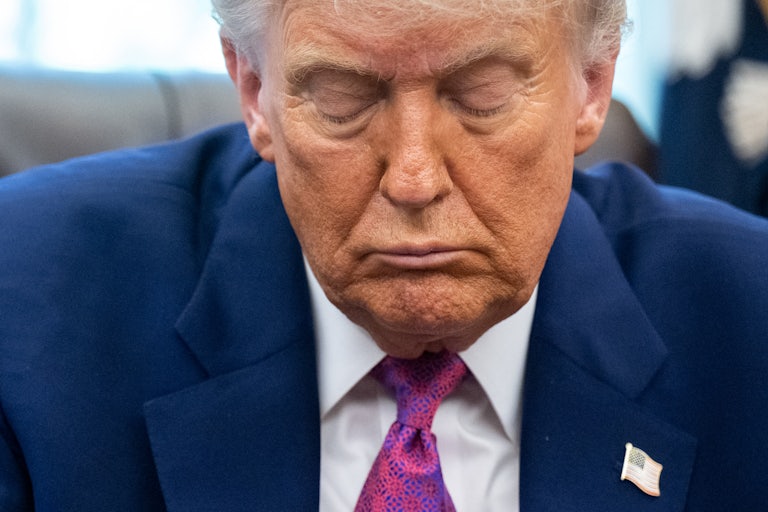

Trump, 79, Falls Asleep Again During Peace Agreement Signing

Donald Trump was bragging about this Rwanda-DRC peace agreement minutes before he began to doze off.

Donald Trump falls alseep
SAUL LOEB/AFP/Getty Images
Donald Trump at an Oval Office meeting in June

Days after Donald Trump fell asleep during a televised Cabinet meeting, the president on Thursday again dozed off during a ceremony to mark the signing of a peace agreement between Rwanda and the Democratic Republic of the Congo.

Trump was visibly closing his eyes as Rwandan President Paul Kagame spoke from the podium at the ceremony inside the U.S. Institute of Peace building, his hands clasped and his head drooping while he sat at a table to the left. Trump continued to doze after Kagame concluded his remarks and DRC President Félix Tshisekedi made his way to the podium, trying in vain to pay attention to each speaker.

Thankfully for the 79-year-old Trump, the two leaders spoke for less than 15 minutes, much shorter than Tuesday’s two-hour Cabinet meeting. One would think he’d be able to last longer at an event with more press, especially international outlets, at a building that he took over with questionable legality and plastered his name on.

Last week, The New York Times reported about Trump’s physical and mental decline, angering the president. But if he keeps falling asleep during public appearances, he really has nothing to argue about, especially considering the untold reasons why he needed an MRI and extra tests at his last doctor’s visit.

Vance Sent 2:30 a.m. Text as Officials Tried to Cover Up Signalgate

Vice President JD Vance texted the Signal group after all their messages about bombing Yemen were leaked.

JD Vance gives a thumbs up
Brett Carlsen/Getty Images

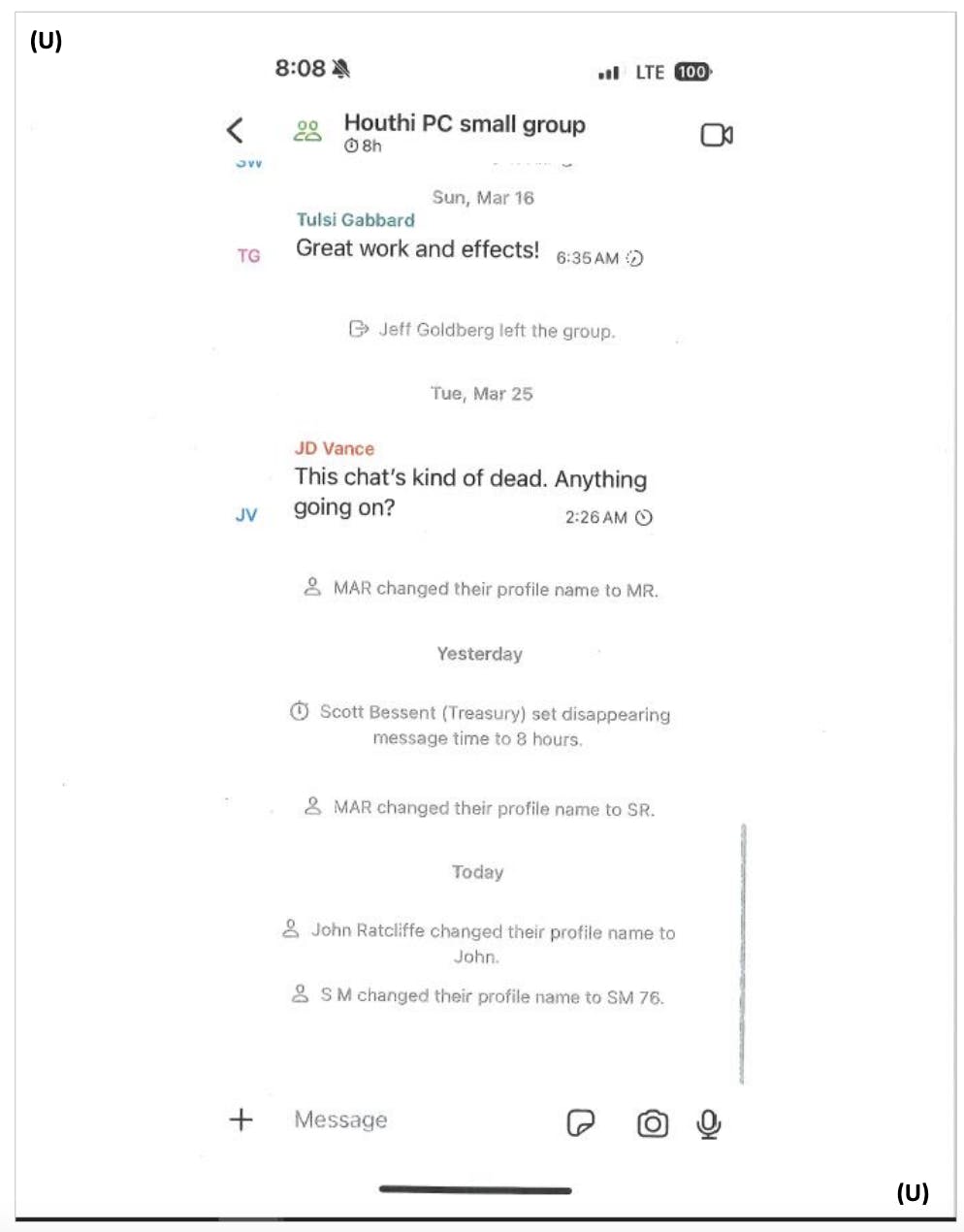
JD Vance hit up his buddies in the Signal chat used to coordinate bombing Yemen with a late-night plea for companionship—hours after the chat’s existence was revealed to the public by Atlantic editor Jeff Goldberg.

“This chat’s kind of dead,” Vance texted at 2:26 a.m. “Anything going on?”

Screenshot of Signalgate messages on March 25
Department of Defense Inspector General report

A report from the Pentagon inspector general released Thursday reveals new details about what the chat’s members did in the days and hours after March 24, when Goldberg published that Defense Secretary Pete Hegseth had inadvertently texted him classified information about the Trump administration’s war plans.

The vice president’s “u up?”-style message, which we are generously reading as a joke, was sent in the wee hours of the morning of March 25.

Where Vance chose to make light of the possible treason, Treasury Secretary Scott Bessent appeared to have another aim: to cover the group’s tracks. According to the screenshot, Bessent shortened the time it would take for messages to disappear from the chat to eight hours. Goldberg reported that the messages had previously been set to disappear after either one or four weeks, already a potential violation of federal law.

Other officials changed their profile names: Secretary of State Marco Rubio changed his screen name from “MAR” to “MR,” CIA Director John Ratfcliffe shortened his name to simply “John,” and deputy chief of staff Sephen Miller, “S M,” changed his name to “SM 76.”

It’s unclear why these obviously identifiable (and already identified) officials would change their names, or attempt to make their messages disappear faster—the photo of the chat from the report was taken on March 27, leaving only a day for fast-deleting messages to be sent and then erased—but they obviously were scrambling.

Hegseth Gave Signalgate Probe Little as Possible—and Still Got Wrecked

The investigation found that Pete Hegseth’s actions endangered U.S. troops.

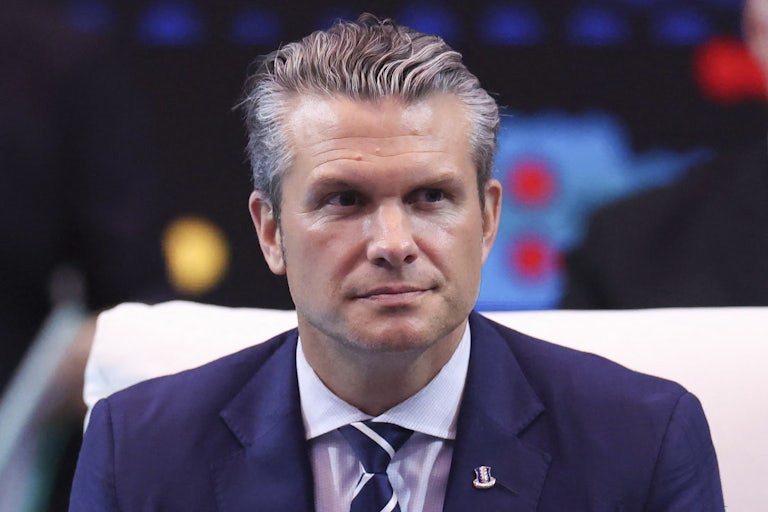
Defense Secretary Pete Hegseth sits during an event
HASNOOR HUSSAIN/AFP/Getty Images

The Office of the Inspector General’s Signalgate report is out, and it does not fully exonerate Defense Secretary Pete Hegseth, regardless of his supporters’ claims.

Hegseth overwhelmingly declined to cooperate with the OIG’s report on his early-term scandal, refusing to hand over the personal phone he used to make war plans over Signal and refusing to sit for an interview. Nonetheless, the report found that Hegseth not only violated the DOD’s protocol about using personal devices for sensitive information, he also endangered the lives of American troops in the process.

“We concluded that the Secretary sent sensitive, nonpublic, operational information that he determined did not require classification over the Signal chat on his personal cell phone,” the 84-page report reads.

Hegseth also sent messages on Signal detailing “the quantity and strike times of manned U.S. aircraft over hostile territory” just hours before the strike on the Houthis. “Using a personal cell phone to conduct official business and send nonpublic DoD information through Signal risks potential compromise of sensitive DoD information, which could cause harm to DoD personnel and mission objectives,” the OIG continues.

In his defense, Hegseth claimed in a written statement that his Signal messages contained “non-specific general details which I determined, in my sole discretion, were either not classified, or that I could safely declassify.” And yet one of the messages the IG obtained literally reads, “THIS IS WHEN THE FIRST BOMBS WILL DEFINITELY DROP.” Others include exact timestamps of attacks. That all sounds extremely specific.

“If this information had fallen into the hands of U.S. adversaries, Houthi forces might have been able to counter U.S. forces or reposition personnel and assets to avoid planned U.S. strikes,” the report says. “Even though these events did not ultimately occur, the Secretary’s actions created a risk to operational security that could have resulted in failed U.S. mission objectives and potential harm to U.S. pilots.”

Framing this as a “full exoneration,” of Hegseth, as Pentagon spokesman Sean Parnell did Wednesday, is laughable when the phrase “the Secretary did not comply with” followed by a specific DOD protocol is in the report at least eight different times. And yet Hegseth and the administration are acting as if he is being somehow unfairly attacked for planning a bombing over Signal as the head of the Defense Department. This, frankly, should have been an automatic firing.

Read the full report here.

Republican Senators Question Hegseth’s Future as Outrage Grows

A growing number of top Republicans are refusing to publicly support Defense Secretary Pete Hegseth after that second strike to kill survivors.

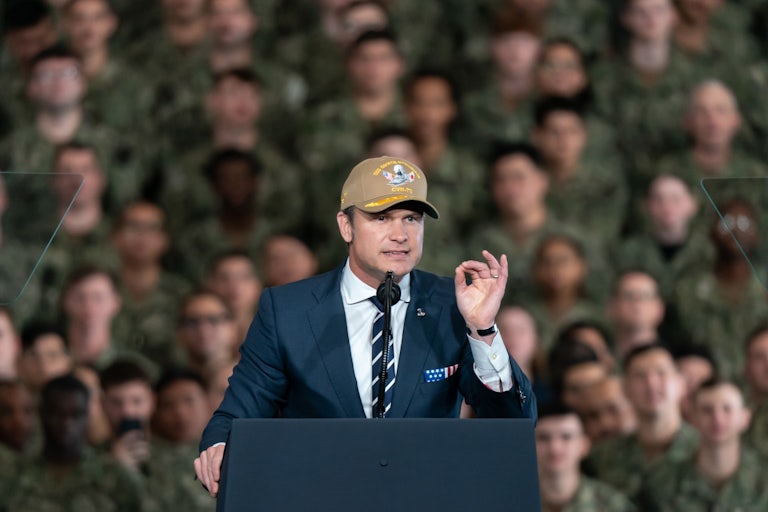
Defense Secretary Pete Hegseth speaks to troops.
Tomohiro Ohsumi/Getty Images

After 83 people have lost their lives in dubiously legal boat strikes in the Caribbean, some prominent Republican senators seem to finally be ready to part ways with Defense Secretary Pete Hegseth.

Hegseth’s Pentagon was revealed to have levied a second strike against a boat in September in order to kill two survivors of the first attack. The strike, which could be considered a war crime, may be the last straw for Hegseth.

On Thursday, Republican Senator Roger Wicker, chair of the Armed Services Committee, said he had no problem with Hegseth’s conduct regarding the Signal chat where he inadvertently shared classified information about a military operation to a reporter—but stopped short of backing Hegseth completely.

When asked by CNN reporter Manu Raju if he had concerns about Hegseth’s leadership after a watchdog’s report on Signalgate, Wicker said, “We’re continuing to get the facts, but based on this particular allegation, which is now several months old, I think the secretary is in a pretty good position on that.”

“Do you have confidence in him? Would you say that? Could you say if you do?” Raju asked, as Wicker walked away.

Wicker said nothing, and continued down the hall.

Republican Senator Mike Rounds also stopped short of backing the embattled defense secretary, saying that he needs more information to make a call. “We’ll make our decisions based on the facts of the case; we haven’t got the facts yet in front of us in a classified setting,” he told Forbes reporters on Thursday.

Leading members of the House and Senate Armed Services committees heard testimony Thursday from Hegseth’s chosen scapegoat for the second boat strike, Admiral Frank “Mitch” Bradley. At least one lawmaker left that hearing appalled.

Hegseth has claimed that he was not in the room when the double-tap strike was conducted, but that Bradley was following his orders and acted appropriately.

But Thom Tillis, a key Republican senator, told CNN’s Kaitlan Collins Wednesday that Hegseth simply claiming to be out of the room isn’t enough to exonerate him.

“I’ll take at face value right now what Secretary Hegseth said: He said he wasn’t there, he said he was busy doing other things,” Tillis said. “I would assume a part of the record was—what was the other thing that he was doing that was more important than a battle damage assessment over the first strike in the Caribbean?”

Tillis also stood by his claim that whoever was responsible for the second strike should be out of a job. “If someone knowingly launched a second missile at that boat, which led to the deaths of the other two, then they have to be held accountable and they shouldn’t be in whatever role they’re in,” he told Collins.