Breaking News
Breaking News
from Washington and beyond

ICE Barbie Is Building Her Own Fleet of Deportation Planes

Homeland Security Secretary Kristi Noem just signed a nearly $140 million contract with Boeing.

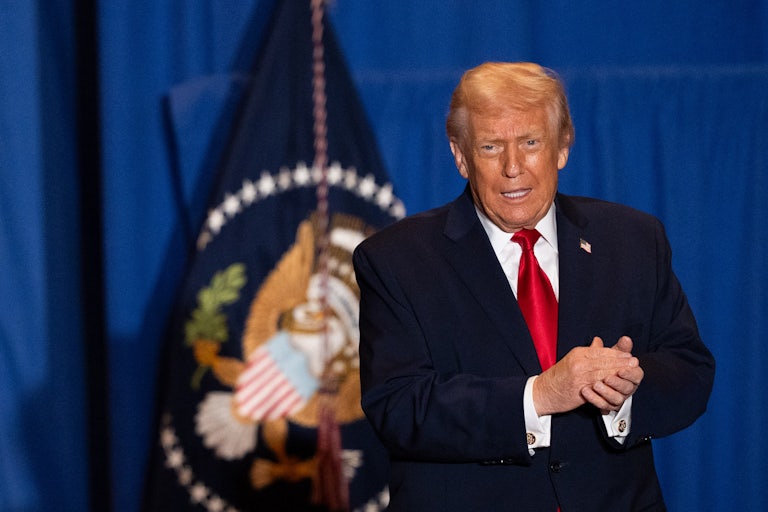
Homeland Security Secretary Kristi Noem stands in profile to the camera
Eric Lee/Bloomberg/Getty Images

The Department of Homeland Security just paid nearly $140 million to be in charge of managing its own deportation flights. 

Homeland Security Secretary Kristi Noem has signed a multimillion-dollar contract to purchase six Boeing 737 aircrafts from Daedalus Aviation Corporation, whose owners already have ties to massive DHS contracts, The Washington Post reported Wednesday. 

Immigration and Customs Enforcement previously chartered planes to carry out deportations. DHS spokesperson Tricia McLaughlin told the Post that owning its own planes would allow ICE to “operate more effectively, including by using more efficient flight patterns.” 

Now the agency would be responsible for managing its own fleet of aircraft, flight crews, and all the logistics involved in transporting immigrant detainees around and out of the country. But John Sandweg, former acting ICE director, said that dealing with all of this might be more trouble than it’s worth.  

“It’s so much easier to issue a contract to a company that already manages a fleet of airplanes,” Sandweg told the Post. “So this move I’m surprised by because what the administration wants to accomplish, by and large, can be accomplished through charter flights already.”

$140 million is just a small drop in the $170 billion bucket that is DHS’s new four-year budget—but it’s not clear that the decision to run its own deportation airline won’t incur more costs as part of the Trump’s administration’s ongoing efforts to drive up the rate of removals.

The owners of Daedalus Aviation, William Allen Walters III and Taundria Cappel, are also the figures behind Salus Worldwide Solutions Corporation, which won a three-year $915 million air services contract to carry out deportations. That contract is the subject of an ongoing lawsuit, over allegations that it was an “unlawful, rushed, and non-competitive award.”
Guess How Many Republican Seats Democrats Flipped in Recent Elections?

It was a true Blue Wave.

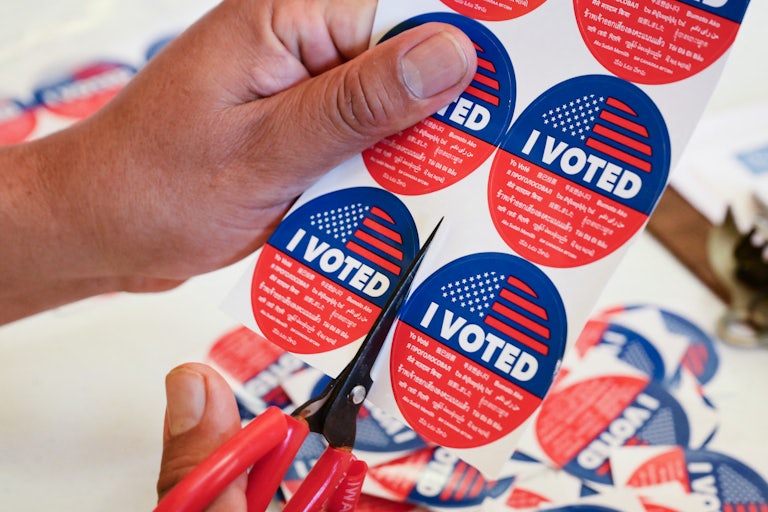
A person cuts up a sheet of "I Voted" stickers
FREDERIC J. BROWN/AFP/Getty

Now that the 2025 elections are over, we can definitively say: This was a very good year for Democrats.

According to an analysis by Daniel Nichanian for Bolts, Democrats flipped 21 percent of Republican-held state legislative seats—a huge upset and a harbinger of midterm doom for the president’s party.

On the Republican side, candidates managed to flip exactly zero seats: not in New Jersey, where Bolts reports the party had high hopes, and not in newly red Trump-voting districts in New York.

For those hoping for a 2026 blue wave like the one we saw in 2018, get excited: So far, 2025’s election results are looking eerily similar to 2017’s. During the first year of Donald Trump’s first term, Democrats won big in New Jersey and Virginia, as well as in special elections across the country—the same thing that happened this year, with New Jersey Democrats gaining five seats in their assembly, and Virginia Democrats gaining a whopping 13.

And according to Bolts, the overall swing this year is even stronger: 21 percent of GOP-held seats flipped, compared to 2017’s 20 percent.

What’s more, Bolts’ analysis looks at legislative seats, so these winning statistics don’t even take into consideration big victories on the state executive level, such as Governors-elect Abigail Spanberger and Mikie Sherill in Virginia and New Jersey, respectively, or local offices, like just-elected future Miami Mayor Eileen Higgins.

In an even stronger referendum than in 2017, voters made clear that they’re tired of Trump.

Trump Team Extradited Woman Here. Now They Want to Deport Her.

The judge called the move “preposterous and offensive.”

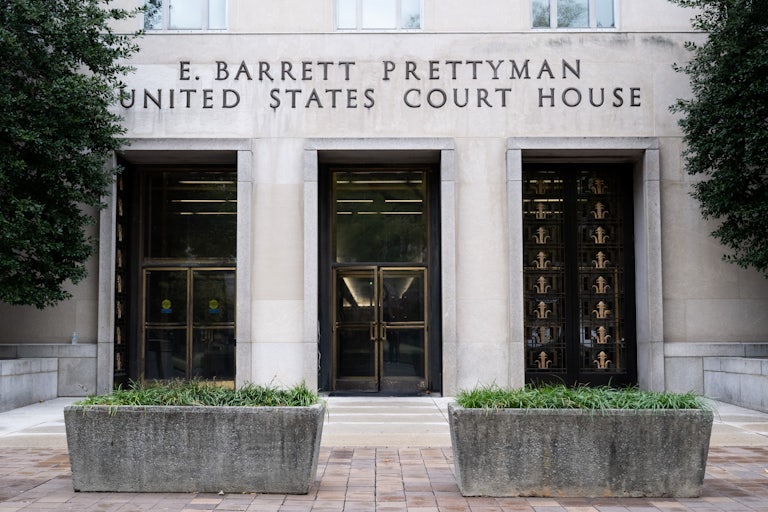
The E. Barrett Prettyman Courthouse in Washington, D.C.
SAUL LOEB/AFP/Getty Images
The U.S. District Courthouse in Washington, D.C.

The feds worked for a year to extradite a Belarusian woman accused of smuggling millions of dollars of U.S. aviation equipment into Russia for its war on Ukraine. But now that she’s finally in the United States, where she can face charges, the Department of Homeland Security is trying to deport her. 

The case against the woman, Yana Leonova, could fall apart if she were to be detained by Immigration and Customs Enforcement, The Washington Post reported Wednesday. She’s facing a 10-count felony indictment for alleged fraud, smuggling, and money laundering. Or, if ICE has its way, she could just, you know, go home. 

Judge Zia M. Faruqui called the situation “Kafkaesque” in a hearing Monday, according to the Post. In a written order, he said, “Indeed, it is both preposterous and offensive for the government to bring someone into the United States against their will and then turn around and seek ICE detention because that person is here ‘illegally.’… The government needs to decide what its priorities are: ginning up deportation stats or prosecuting alleged criminals.”

Technically, Leonova was only authorized to remain in the country for two weeks after she arrived in early November. So ICE pounced: DHS told the court that they planned to take Leonova into custody and deport her—if and when she was released from D.C. jail, where she’s been held since she arrived. 

The move has confounded lawyers and judges alike. Now prosecutors must ask DHS if Leonova can be given legal authorization to stay in the country while she is tried for her alleged weapons smuggling. 

“I haven’t been in this predicament before, your honor,” one prosecutor said to the judge at Monday’s hearing.

“Me, either,” Faruqui responded, according to the Post.

It seems when it comes to locking up actual criminals, as opposed to daycare workers, pregnant citizens, or children, Donald Trump couldn’t care less.  

Read more about immigration:

Trump Goes to War With ICC to Shield Himself From Prosecution

Donald Trump is demanding the International Criminal Court rewrite its rules.

Donald Trump clasps both hands
Adam Gray/Bloomberg/Getty Images

The U.S. government is threatening new sanctions on the International Criminal Court unless it changes its founding document to guarantee that it won’t prosecute President Trump or other administration officials. 

Reuters, citing an unnamed White House official, reports that if the court doesn’t listen to American demands, including dropping investigations into war crimes by Israel in Gaza and U.S. troops in Afghanistan, the Trump administration could sanction more ICC officials, as well as the entire court. 

Republicans and Democrats alike have long attacked the court over its investigation into Israel’s conduct in Gaza, and those efforts only increased after the court issued arrest warrants for Israeli Prime Minister Benjamin Netanyahu, former Israeli Defense Minister Yoav Gallant, and Hamas military leader Mohammed Deif last year. 

In March 2020, ICC prosecutors opened an investigation in Afghanistan that included possible crimes by the U.S. military. In 2021, the court deprioritized, but never closed, the investigation, and apparently the Trump administration is worried. 

“There is growing concern ... that in 2029 the ICC will turn its attention to the president, to the vice president, to the secretary of war and others, and pursue prosecutions against them,” the unnamed White House official told Reuters. “That is unacceptable, and we will not allow it to happen.”

Even under the Biden administration, the U.S. was hostile to the ICC, with Biden calling the arrest warrants for Gallant and Netanyahu “outrageous,” even though Israel has killed at least 69,000 Palestinians in Gaza since 2023.  But so far, the ICC has resisted pressure campaigns from the U.S., rejecting American demands last week

The U.S. has already imposed sanctions against the court’s chief prosecutor, Karim Khan, as well as several of its judges, and, along with Israel, has challenged the court’s jurisdiction on non-member states. 

The U.S. is not a signatory or party to the Rome Statute that created the court in 2002, although many of its allies around the world are. Changing the document would require a two-thirds vote from all of the 125 countries that ratified the Rome Statue, which gives the ICC a mandate to prosecute individuals, including sitting heads of state, for crimes committed by them or under their command on the territory of a member state. Trump doesn’t want to be one of them. 

Mike Johnson Finally Reveals GOP’s Health Care Plan—and It’s Rough

Johnson presented his caucus with 10 ideas but told them just to pick a few to implement.

House Speaker Mike Johnson attends an event at the White House
Yuri Gripas/CNP/Bloomberg/Getty Images
House Speaker Mike Johnson

House Speaker Mike Johnson just unveiled Republicans’ plan to address spiking health care costs—and it’s a disaster. 

As Affordable Care Act tax credits are set to expire in just a few weeks, sending health care costs surging for more than 20 million Americans, Republican leadership presented several bullet points Wednesday on how they plan to lower premiums and give Americans better health options. 

Instead of subsidizing premiums for those on Affordable Care Act plans, Republicans proposed introducing Health Savings Accounts, Association Health Plans, and Choice Accounts. 

Americans who don’t get insurance through their employer would be given cash directly into an account, which would reportedly be paired with a high-deductible health plan, meaning higher insurance premiums would be replaced by higher out-of-pocket costs. 

Currently, Obamacare enrollees never see the funds from their tax credits, which instead are sent directly to insurers. President Donald Trump has suggested that consumers would rather see the money themselves, what little of it there is. Republicans’ plan purports to take the burden of negotiating insurance rates away from health care providers and large companies and place it on individuals, so they can “feel like entrepreneurs,” according to Trump.

Republicans are also considering implementing cost-sharing reductions, programs that can assist low-income Americans in paying high deductibles, that were passed as part of Trump’s behemoth budget bill in July. However, the Congressional Budget Office estimates that funding these reductions will increase the number of people without health insurance by 300,000 through 2034.

Another bullet point was controversial “provider-owned hospitals,” which are directly owned and operated by the doctors. The Federation of American Hospitals published a study earlier this year finding that physician-owned hospitals, which focus on a boutique selection of treatments and services, could be damaging to community hospitals, which typically treat patients using Medicare or Medicaid and therefore operate on razor-thin margins. More provider-owned hospitals could siphon away healthier, better-insured patients.

Another point was to codify the Trump administration’s rules to “fix the ACA,” though it’s not entirely clear what that would entail.  

There were some potentially good ideas buried within their list aimed at increasing price transparency. One was to reform pharmacy benefit managers, or PBMs, a class of middlemen who manage the supply chain of prescription drugs. Critics of PBMs have suggested that consolidation among these managers has contributed to decreased transparency and thwarted competitive pricing. 

Another idea was “site neutrality,” which means that patients would pay the same prices for the same services regardless of setting—though some critics have warned that would further reduce hospital revenues. 

Johnson told Republicans that they wouldn’t implement all 10 of the proposed bullet points and that caucus members should choose two or three to pursue, NOTUS reported.

While discussion was “cordial,” a source told NOTUS, there was “no consensus” at all.