Breaking News
Breaking News
from Washington and beyond

Iran Destroys U.S. Missile Defenses as Trump Insists Everything’s Fine

Defense Department officials have already warned the U.S. is running out of the ability to defend against Iranian strikes.

People stand amid rubble in Tehran
AFP/Getty Images
A destroyed residential building in Tehran

Iran has systematically destroyed U.S. missile defense systems across the Middle East over the last 13 days, opting to surgically dismantle the eyes and ears of America’s regional defense systems rather than go toe-to-toe with the country’s raw firepower.

The Pentagon confirmed that Iran’s military hit Muwaffaq Salti Air Base in Jordan, wrecking a radar system valued at $300 million.

“The AN-TPY/2 radar is essentially the heart of the THAAD battery, enabling the launch of interceptor missiles and contributing to a networked air defense picture,” munitions specialist N.R. Jenzen-Jones told CNN last week. “It also happens to be an incredibly expensive piece of kit.”

THAAD is short for terminal high-altitude area defense. Paired with an AN-TPY/2 radar, the tech is capable of locating incoming missiles and translating an interception point to American rockets. Destroying the radars removes America’s ability to detect and interpret the flight path of an incoming missile, leaving the military’s missile defense systems useless.

“The loss of even a single radar of this type would be an operationally significant event,” Jenzen-Jones said. “It is probable that a replacement unit would have to be redeployed from elsewhere, which will take time and effort.”

The rapid depletion of missiles has been a growing problem since Israel and the U.S. opened fire on Iran on February 28.

U.S. military officials have stressed that fighting Iran has drastically depleted America’s missile defense systems. In a closed-door meeting with lawmakers on March 3, Defense Secretary Pete Hegseth and Chairman of the Joint Chiefs of Staff Gen. Dan Caine reportedly said that Iran’s Shahed attack drones had proved a more difficult problem than initially predicted.

In the days since, EU defense officials have warned that the U.S. is no longer capable of supplying missiles to its allies amid its war with Iran, stressing that the continent would need to develop its own missile manufacturing sector in order to adequately fill their supply without Washington’s help.

One source told CNN last week that the U.S. has been “burning” through long-range precision-guided missiles in order to fend off the drones.

Earlier this week, it became clear that the White House had months earlier been offered the opportunity to buy tech that would have given U.S. forces a dramatic advantage against Iran. The offer was extended by Ukraine, and the the intel was battle-proven: Ukraine has more experience fighting Shaheds than practically any other country, downing the same design under Russia’s flag (Russia rebranded the military tech as “Geran drones”).

The decision to snub the offer has since been discussed as one of the biggest miscalculations thus far in the Iran war.
Palantir CEO Makes Shocking Confession on Disrupting Democratic Power

They’re saying the quiet part out loud now.

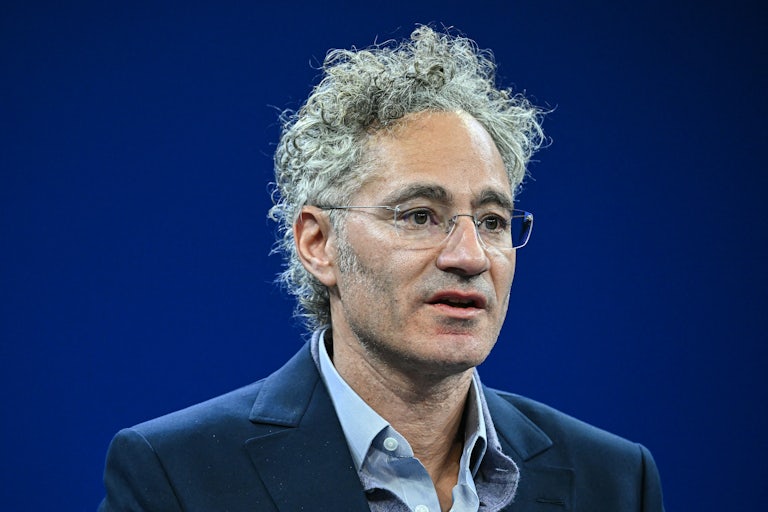
Alex Karp
Fabrice COFFRINI/AFP/Getty Images
Palantir CEO Alex Karp

Palantir CEO Alex Karp thinks his AI technology will lessen the power of “highly educated, often female voters, who vote mostly Democrat” while increasing the power of working-class men.

“This technology disrupts humanities-trained—largely Democratic—voters, and makes their economic power less. And increases the economic power of vocationally trained, working-class, often male, working-class voters,” Karp said in a CNBC interview Thursday. “And so these disruptions are gonna disrupt every aspect of our society. And to make this work, we have to come to an agreement of what it is we’re going to do with the technology; how are we gonna explain to people who are likely gonna have less good, and less interesting jobs.”

This sounds like a direct, long-term pitch to the GOP from a CEO whose tech firm already has numerous government contracts and is deeply embedded in the Pentagon. Karp’s message is loud and clear: My technology will take political capital away from one of your greatest enemies—liberal women with degrees—and give one of your favorite demographics to patronize—working-class men—more political power to transfer to you. He’s aligning his technology with both GOP political strategy and the larger male-centered culture war that the right has been waging for the better part of a decade now. And how exactly would his technology only hurt Democrat women?

Karp also made a Patriot Act–era argument, justifying his admittedly “dangerous” technology by claiming that Palantir will allow us to “be American” in the future.

“These technologies are dangerous societally,” Karp continued. “The only justification you could possibly have would be that if we don’t do it, our adversaries will do it. And we will be subject to their rule of law.… Why is it that we’re absorbing the risk of disrupting the very fabric of our society, including the most powerful parts of our society, if it’s not because it’s about maintaining our ability to be American in the near term and long term?”

Trump’s Iran War Cost Us More Than $11 Billion in One Week

Donald Trump is blowing through the money he supposedly saved by gutting social programs.

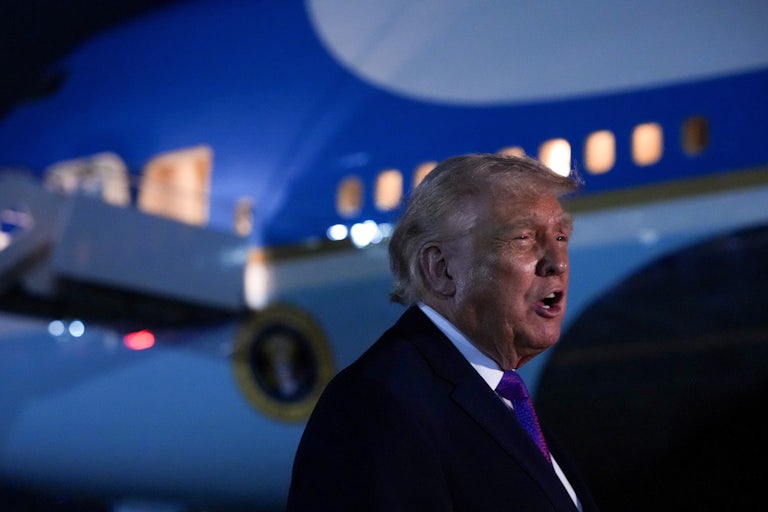
Donald Trump speaks while standing next to Air Force One
Andrew Harnik/Getty Images

The Pentagon estimates that it spent more than $11.3 billion in the first week of Donald Trump’s illegal war in Iran. And every cent of that was spent without congressional approval.

During a closed-door meeting on Capitol Hill Wednesday, Pentagon officials told lawmakers that the cost of the first six days of America’s aerial bombing campaign exceeded $11.3 billion—not including the cost of the buildup ahead of the strikes, multiple outlets reported.

The Pentagon previously estimated it spent $5.6 billion on munitions alone during the first two days of the war—significantly dwarfing the Pentagon’s preliminary cost estimate of $1 billion per day. Some GOP lawmakers said they’d received estimates that were closer to $2 billion per day.

Elaine McCusker, who served as deputy undersecretary of defense during the first Trump administration, estimated that it cost an additional $630 million to assemble the largest force of U.S. military assets to the Middle East in decades before the first shot was even fired.

Meanwhile, Tomahawk cruise missiles, like the one the U.S. military reportedly used in a deadly strike on an Iranian girls’ primary school, cost $2.2 million each. It may be worth keeping these figures in mind as the Trump administration argues it doesn’t have enough money to make health care more affordable.

This exorbitant spending on a military campaign the American people do not support and their representatives did not authorize cancels out billions supposedly saved by sweeping cost-cutting measures. In order to fund his war, Trump has laid waste to federal programs.

Let’s do some quick math: The $1.1 billion Trump rescinded from the Corporation for Public Broadcasting and the $7 billion from foreign aid, added to the $2.7 billion gutted from medical research and the $500 million slashed from food banks, is roughly equivalent to the $11.3 billion the Trump administration has spent bombing Iran.

Or to put it more simply: In his first year back in office, Trump disrupted at least $12 billion toward K-12 education. Rather than fund schools, the U.S. bombed them.

Trump Desperately Says Rising Oil Prices Are Good, Actually

President Trump is trying to spin things after his strikes on Iran caused the price of oil to skyrocket.

Donald Trump looking especially orange
Win McNamee/Getty Images
President Donald Trump speaks to reporters alongside White House press secretary Karoline Leavitt as he departs for Marine One on March 11.

Donald Trump is trying to spin skyrocketing oil prices caused by the war in Iran as good for the U.S.

“The United States is the largest Oil Producer in the World, by far, so when oil prices go up, we make a lot of money,” Trump wrote in a Truth Social post Thursday morning, suggesting that Americans would see economic benefits as gas prices shoot up.

That may be true for American gas and oil companies, but Americans who don’t work in that industry aren’t likely to see any of those companies’ profits. In fact, they will likely get sticker shock when they go to fill up their cars, with gas prices already exceeding $5 a gallon in California.

But on some level, Trump knows that high oil prices aren’t good for the U.S., at least from a political standpoint. On Wednesday, Trump said he would open the U.S. Strategic Petroleum Reserve and release 172 million barrels of oil to help bring prices down.

“We’ll do that, and then we’ll fill it up,” Trump told a local Cincinnati TV station. “I filled it up once, and I’ll fill it up again. But right now, we’ll reduce it a little bit, and that brings the prices down.”

Energy Secretary Chris Wright said the releases will begin next week and take about 120 days. The reserve is about 59 percent full, with the Trump administration replenishing only small amounts of oil. The last time it was tapped was by President Biden in 2022 after Russia invaded Ukraine.

Meanwhile, Iran has taken control of the Strait of Hormuz and blocked all ships, including oil tankers, from entering or leaving. The country is actually exporting more of its own oil than it was before the war, making a tidy profit itself.

Right now, the 20 million barrels of crude oil that usually traverse through the strait are stuck thanks to an Iranian blockade reinforced by sea mines. The U.S. typically consumes a similar amount of crude oil each day. If the strait doesn’t reopen soon, the stocks of American oil producers might gain value, but the average American will end up having to spend a massive chunk of their paycheck on gas, causing a ripple effect that will further hurt the economy.

Kash Patel Enlists UFC Fighters to Train the FBI

The FBI director announced a “historic seminar” at Quantico.

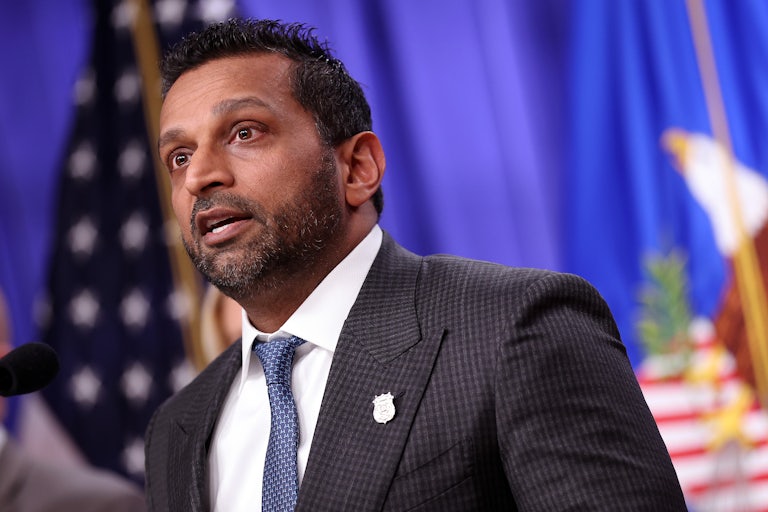
FBI Director Kash Patel
Kevin Dietsch/Getty Images

FBI Director Kash Patel announced on Wednesday that his agents will be training with UFC fighters, further solidifying the sport’s connection to the right wing and raising more questions as to what exactly Patel does all day.

“I’m thrilled to announce this historic seminar between the FBI and the UFC at Quantico,” Patel said in a statement. “This is a tremendous opportunity for our FBI agents to learn and train with some of the greatest athletes on earth—helping the world’s premier law enforcement agency be even better prepared to protect the American people.”

The training will occur this weekend at the FBI Academy in Quantico, after Patel proposed the collaboration last year. UFC CEO Dana White has also been a vocal supporter of President Trump, and there is set to be a UFC event on the White House lawn this summer.

The news follows a rough news cycle for Patel, in which he came under scrutiny for downing beer with the U.S. men’s Olympic hockey team while the FBI was in the middle of the missing persons search for Savannah Guthrie. This UFC training session, his frequent jet flights on the taxpayers’ dime, his jacket meltdown, and his girlfriend’s security detail all suggest that Patel is more concerned with the perks of the job than the actual job.