Breaking News
Breaking News
from Washington and beyond

Just Four People Show Up to Pro-Redistricting Rally in Red State

Donald Trump’s attempts to remake Indiana aren’t going so well.

Donald Trump waves
Roberto Schmidt/Getty Images

President Donald Trump’s plot to push out Republican Indiana state senators who killed his redistricting scheme may demonstrate just how much power the president has lost.

Last week, Turning Point USA held a get-out-the-vote event for Brenda Wilson, a Trump-backed candidate challenging state Senator Greg Goode in the upcoming primary election on May 5.

A team from Turning Point USA gathered at the Fairbanks Park Amphitheater in Terre Haute, Indiana, flush with law signs and fliers, blasting a playlist called “Trump Rally,” NOTUS reported Monday.

But only four people came, three of whom were from the same family, according to the outlet.

It seems that Turning Point USA has hosted other events with higher attendance, as part of a wider effort aimed at unseating so-called RINOs and moderates, or anyone who has not supported Trump’s meddling in state elections.

Eight of the Republican legislators who voted against Trump’s congressional redistricting scheme are up for reelection in Indiana’s primary, and seven are being challenged by Trump-endorsed opponents.

In addition to funding promised from Trump’s allies in the state, including Governor Mike Braun and Senator Jim Banks, the Trump-backed challengers have invited an influx of outside spending from groups such as Club Growth for Action, which is spending $2 million across eight races.

But as Trump’s approval ratings have fallen to 37 percent nationally and roughly 49 percent in Indiana, a state he won in 2024, it’s not clear that being tied to the president, his unpopular war in Iran, and his poor economic report card won’t be a liability to candidates instead of a boost.

U.S. Scrambles to Deny Report Iran Bombed American Warship

Iranian news agencies report that a U.S. Navy vessel was hit in the Strait of Hormuz.

Ships in the Strait of Hormuz
Asghar Besharati/Getty Images
The Strait of Hormuz, on April 28

The U.S. military on Monday denied claims in Iranian state media that Iran bombed a U.S. Navy ship in the Strait of Hormuz, shortly after President Trump announced a new plan to help guide ships through the critical waterway.

Iran’s Fars Media reported that a Navy vessel in the southeast sector of the strait was struck for “violating maritime security and navigation norms” and that the ship turned around after being hit. One Iranian official told the BBC that there was one warning shot but could not confirm if there was damage.

U.S. Central Command is denying any reports of serious damage.

“CLAIM: Iranian state media claims that Iran’s Islamic Revolutionary Guard Corps hit a U.S. warship with two missiles,” CENTCOM wrote Monday on X. “TRUTH: No U.S. Navy ships have been struck. U.S. forces are supporting Project Freedom and enforcing the naval blockade on Iranian ports.”

This comes as the U.S. begins attempts to enact Trump’s recently announced “Project Freedom”—a bid to escort merchant and allied ships through the strait while continuing to blockade Iranian vessels, something Trump is calling a “humanitarian gesture.” Iran continues to hold its own blockade of the strait, as well.

Trump Threatens States That Don’t Rig Their Midterm Elections

Trump is escalating pressure on states in the wake of the Supreme Court’s decision to gut the Voting Rights Act.

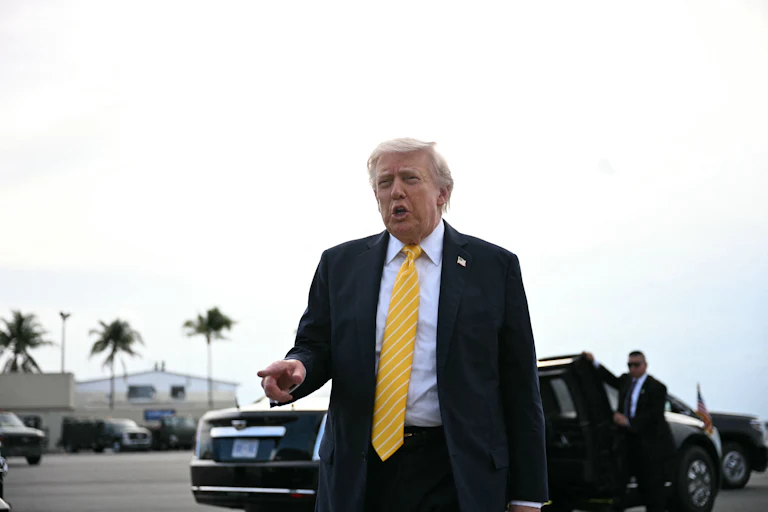
Doanld Trump points as he stands near a car
Jim WATSON/AFP/Getty Images

President Trump is insisting that states rig elections in Republicans’ favor—even if it means people have to vote multiple times until they win.

On Sunday night, Trump took to Truth Social and posted, “We cannot allow there to be an Election that is conducted unconstitutionally simply for the ‘convenience’ of State Legislatures.”

“​​If they have to vote twice, so be it. We should demand that State Legislatures do what the Supreme Court says must be done. That is more important than administrative convenience. The byproduct is that the Republicans will receive more than 20 House Seats in the upcoming Midterms! President DONALD J. TRUMP,” he wrote.

Trump didn’t even bother to repeat the false Republican claim of widespread voter fraud, instead blatantly stating that his goal is additional congressional seats for the GOP. He hopes that these newly redrawn seats would mitigate or even prevent losses in November’s midterm elections.

All of this comes after the Supreme Court basically nullified the Voting Rights Act last week, throwing out decades of precedent and giving many Republican-led states the ability to redraw their districts and disenfranchise Black voters. Louisiana, South Carolina, Florida, Tennessee, Mississippi, Alabama, and other states either have already started redrawing their congressional maps or are preparing to do so.

Democrats are scrambling to sue over these new maps, while also fighting efforts from the Trump administration to gain access to voter rolls in blue states. The midterms are six months away (sooner with early voting), and the Republican Party, led by Trump, is doing everything—other than reverse its unpopular policies—to rig the results in its favor.

Trump Makes It Harder to See if Drugs Are Laced With Fentanyl

The move has shocked public health experts who are worried about a spike in drug overdoses.

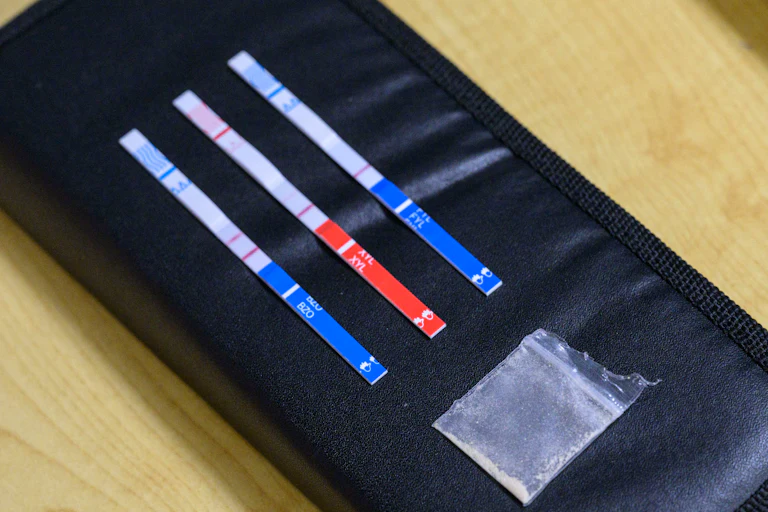
Test strips used to detect the presence of fentanyl
ANGELA WEISS/AFP/Getty Images
Test strips used to detect the presence of fentanyl

The Trump administration has canceled federal funding for test strips used to find out if a substance contains fentanyl. 

CBS News, citing a letter from the Substance Abuse and Mental Health Services Administration, reports that government funds can’t be used to purchase the strips anymore, increasing the risk of drug overdoses. The strips also test for other dangerous substances such as xylazine and medetomidine, which are normally used to sedate animals and have been linked to overdose deaths in people. 

Public health organizations are shocked at the move, because test strips only cost about $1 each and can be used to check illicit drugs in powder or pill form. The director of federal policy  at the Drug Policy Alliance, Maritza Perez Medina, called them a “critical, lifesaving tool.” 

“People are just astonished,” Medina told CBS. “There has been a lot of confusion about where this came from.”

The letter cites a July 2025 executive order from President Trump that prohibits SAMHSA, a branch of the Department of Health and Human Services, from using its funding for programs that “only facilitate illegal drug use.” An HHS spokesperson told CBS that the letter clarifies what SAMHSA funding can be used for, which excludes “practices that facilitate illicit drug use and are incompatible with federal laws.”

In 45 states as well as Washington, D.C., test strips are not considered drug paraphernalia, and Nevada as well as California provide information on where to find them online. Congress protected their use in 2018, and as of last July, the agency still allowed its funding to pay for test strips. 

But that’s over now, and organizations around the country will lose badly needed money to prevent drug overdoses. The executive director of the Kentucky Harm Reduction Coalition, Shreeta Waldon, told CBS that the organization was told it would lose a $400,000 grant, and only has a month’s supply of test strips left after distributing 48,465 strips in the first quarter of 2026. 

“It doesn’t make sense that one day something is an evidence-based protocol, and you decide, because of political climate, it is no longer evidence-based,” Waldon said. “If they follow the science and the data, we would never move in this direction.” 

The Trump administration’s public health decisions, from discouraging vaccines to cutting cancer research, don’t seem to be based on preventing deaths. Drug overdoses occur everywhere, including in rural areas where support for the president is strongest. Now many of those places won’t have a critical tool to save lives. 

Louisiana Drowns in Lawsuits Over Republicans’ Election Power Grab

Louisiana Governor Jeff Landry has been hit with lawsuit after lawsuit over his decision to halt the state’s primary elections.

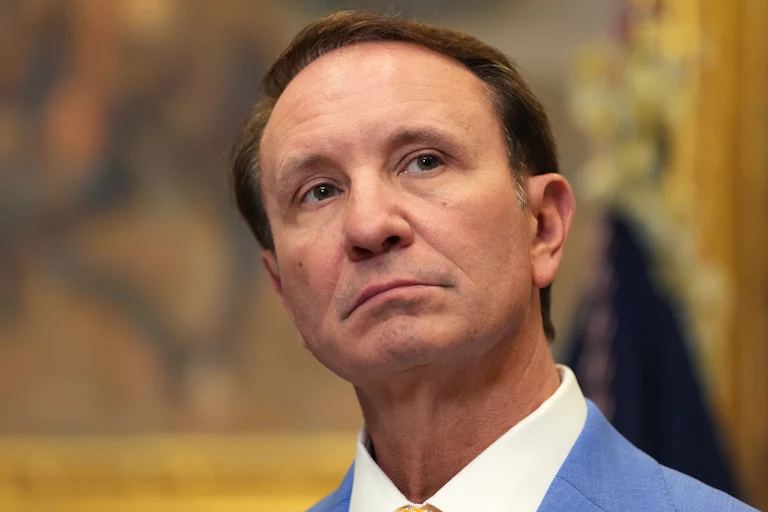
Louisiana Governor Jeff Landry
Win McNamee/Getty Images
Louisiana Governor Jeff Landry

Louisiana Governor Jeff Landry has been hit with multiple lawsuits in the 24 hours since he announced a halt on statewide primaries so that Republicans can redraw favorable congressional districts in the wake of the Supreme Court’s decision to gut the Voting Rights Act in Louisiana v. Callais.

On Friday, several civil rights organizations, including the ACLU, the Louisiana chapter of the NAACP, and the National Council of Jewish Women, sued to block Landry from suspending the May 16 primary election.

“Under Louisiana law, the legislature, not the Governor or the Secretary of State, sets the state’s election schedule. Yet, Governor Jeff Landry, aided by Secretary of State Nancy Landry, has purported to unilaterally cancel Louisiana’s 2026 congressional primary election after it has already begun,” read the lawsuit from the National Council of Jewish Women and Louisiana voters. “Ballots were sent to military voters and overseas voters as required by federal law a month ago. Mail ballots were sent to other voters entitled to vote by mail under Louisiana law almost a week ago. As a result, many voters—including among the Petitioners here—have already voted.”

The lawsuit also cited other Supreme Court decisions to argue that Landry cannot change the map this close to the election. “Quite to the contrary, the Supreme Court has historically found that when voting in an election is within months of beginning—and, here, it has already begun—the state must proceed under the invalidated map, and any infirmities must be corrected for future elections,” the suit read.

The lawsuit from the ACLU, the NAACP, and other voting rights organizations is requesting that a state court block Landry’s decision on the grounds that the Supreme Court ruling did not constitute an “emergency” under state law. Landry had already been hit with another lawsuit on Thursday from Democratic House candidate Lindsay Garcia, who argued the suspension infringes on the First, Fourteenth, and Fifteen Amendments.

The aggressive backlash is no surprise, given that this is perhaps the most egregious example of the GOP’s attempt to force through its own congressional maps, no matter how many Black and brown voters are disenfranchised. Prepare for more to come, and from both sides.