Breaking News
Breaking News
from Washington and beyond

Trump Hasn’t Told GOP Anything About Iran Deal—and They’re Pissed

Senator Lindsey Graham is just as confused about the deal as the rest of us.

Senator Lindsey Graham looks to the side while walking in the Capitol
Aaron Schwartz/Bloomberg/Getty Images

Republican senators are being kept in the dark about the exact terms of Donald Trump’s deal with Iran—and they’re not happy.

The Trump administration has yet to release the text of the memorandum of understanding officials signed with Iran, leaving senior GOP members frustrated at everything they don’t know, Politico reported Monday.

Senator Lindsey Graham, a defense and Iran hawk, voiced concern about discrepancies between different parties’ descriptions of the deal. “The MOU being described by us sounds really very good; the MOU being described by Iran sounds awful,” he told Politico.

The South Carolina Republican fretted that the deal would resemble former President Barack Obama’s Joint Comprehensive Plan of Action, which defense hawks despised.

“If they can enrich [uranium] anywhere at all, then it’s the same as JCPOA. If they can’t enrich, then that makes it a good deal,” he continued, and added in a separate conversation that he was “skeptical that Iran will ever go there.”

It seems that the similarities between Trump’s deal and the JCPOA are already coming into sharp relief: Defense Secretary Pete Hegseth crumbled on live television when trying to explain the difference.

Some Republican senators are wary of the deal, believing they will have to review and vote on it.

“If you want a deal to last, it can’t be an executive agreement,” said Oklahoma Senator James Lankford. “We’ve got to have a vote of Congress to be able to solidify [it] long term.”

But others suspect that, like the JCPOA, the deal will be a political agreement.

“They’ll try to write it around the treaty requirements, so I don’t expect we’ll vote on it,” said Texas Senator John Cornyn.

GOP lawmakers aren’t the only ones wary of Trump’s deal with Iran: Even his own Cabinet members seem to hate it. Trump has claimed he will release the text of the deal on Friday, after the formal signing ceremony.
You’re Paying for President Trump’s Ballroom

A bombshell report suggests taxpayers will be paying half the cost for the lavish eyesore.

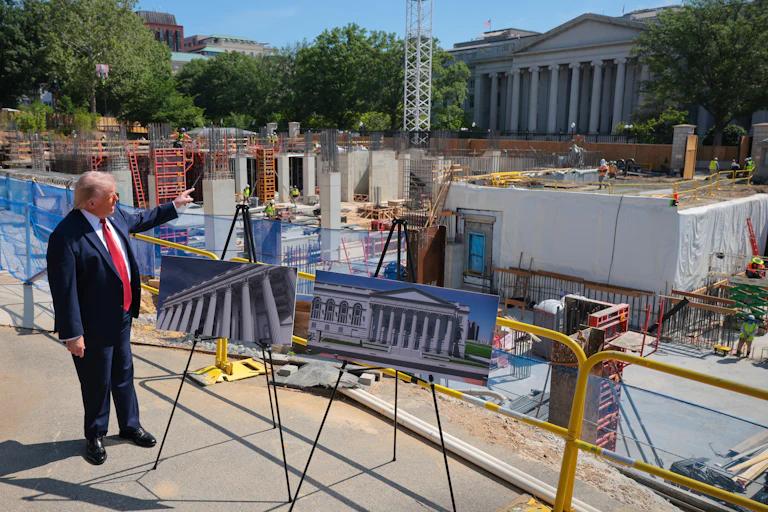
Trump in front of ballroom construction
Kent NISHIMURA/AFP/Getty Images

Half the cost of President Trump’s $600 million ballroom will be placed on the shoulders of U.S. taxpayers like you. This development, based on financial records obtained by The Washington Post, comes just two months after Trump promised the project would be “taxpayer free,” with no U.S. citizen paying even “10 cents.”

The ballroom has already eclipsed the $400 million Trump originally said it would cost. And while Trump has defended the necessity of the ballroom profusely, it’s become abundantly clear that this is simply another vanity project for him to feel like he’s actually done something successful, even as there’s no real need or demand for the ballroom—especially not if Americans are paying for $300 million of its price. And the wealthy individuals who are actually paying for it are getting government contract kickbacks for doing so.

“I guess ‘privately funded’ meant Trump was keeping it private that he’s stealing hundreds of millions of the public’s money for his ballroom. All this while gutting health care and raising costs,” Democratic Representative Gabe Amo wrote on X. “Shame. We have to stop this grift.”

Vance Desperately Tries to Calm Uproar Over $300 Billion Gift to Iran

JD Vance is trying to quell outrage over the $300 billion Iran is receiving as part of Donald Trump’s deal.

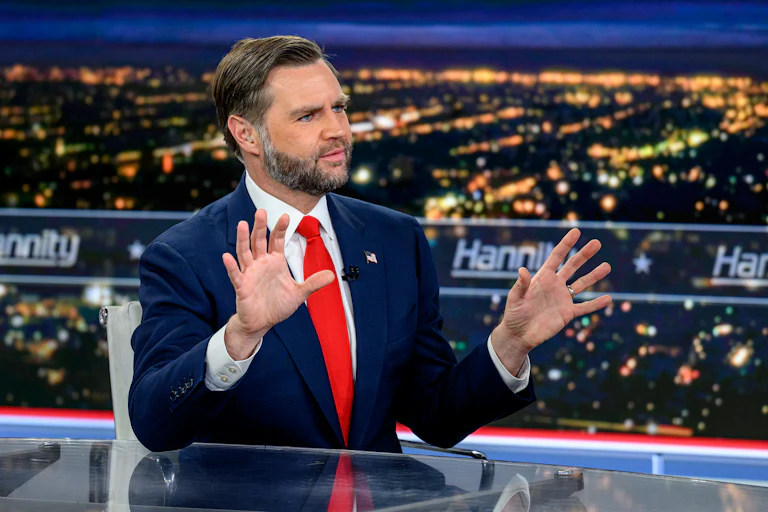
Vice President JD Vance holds up his hands while sitting on the set of Hannity
Roy Rochlin/Getty Images

Vice President JD Vance is attempting to temper backlash one day after he confirmed a key proposal in the Trump administration’s reported peace deal with Iran: a $300 billion reconstruction fund for the country.

Vance confirmed to CBS’s Ed O’Keefe Monday morning that the $300 billion was a real proposal in the Iran peace deal. Yet within hours—and after some monumental backlash from his party—Vance tried to stress that Iran would not receive a “single dime” of U.S. money.

“The agreement says they are not getting a single dime of American money, that’s just not what this is,” Vance said on Fox News Monday night. “What the agreement does say, Sean, is again, if the Iranians behave, and if there are sanctions relief, and if the Iranians are integrated into the world economy, we would invite other countries—not us—but other countries to invest in their country.

“That’s fine, but only if they comply with the terms of the agreement,” Vance added.

Vance did not elaborate on how the administration planned to manage or gatekeep foreign aid packages intended for Iran.

The White House and Tehran have already signed a peace deal, though the exact specifications of the agreement have not yet been revealed (and are still being hashed out). The final draft reportedly proposes the immediate reopening of the Strait of Hormuz under Iran’s direction, a commitment from the U.S. not to interfere in Iranian affairs, and a reiteration of Iran’s commitment not to produce nuclear weapons, echoing language included in the 2015 Joint Comprehensive Plan of Action, according to a senior Iranian official who spoke with Reuters.

The most contentious point of the plan, however, is a reported $300 billion reconstruction fund—which the U.S. is set to facilitate with the help of Gulf allies. There are no details as to which countries are paying how much.

President Trump similarly tried to cast doubt on the proposal Monday evening, claiming on Truth Social that “the story that the U.S. is paying Iran 300 million Dollars is Fake News, put out by the Dumocrats!!!”

But not everyone in the administration is on the same page. Earlier that day, a U.S. official told reporters that the White House had “discussed the possibility of releasing frozen funds, sanctions relief, you know, a big $300 billion fund to rebuild their country, and all of these things are going to be tied to performance.”

This story has been updated.

Tired Trump Makes Pathetic Iran Deal Sales Pitch

Trump says “we’re not investing any money” about a deal that could give Iran $300 billion.

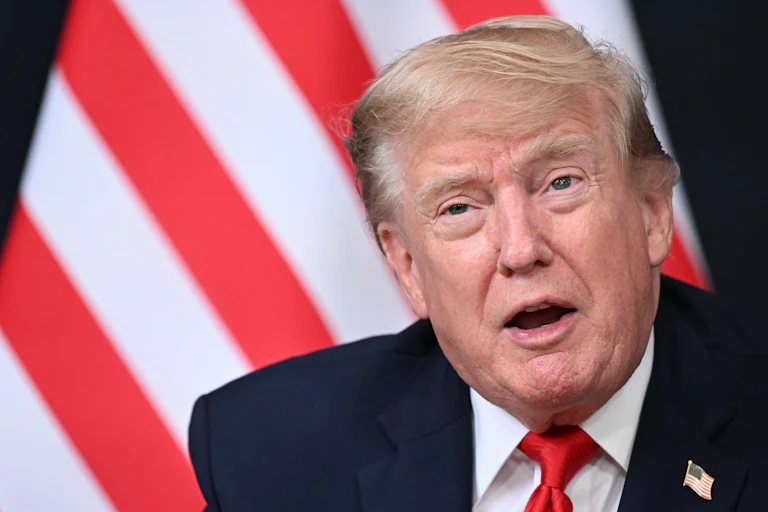
Trump opens mouth in front of US flag
Mandel NGAN/AFP/Getty Images

President Trump is defending America’s tentative deal with Iran, claiming that the U.S. is not “investing any money.”

Trump told reporters at the G7 summit in France Tuesday morning that unlike with 2015 JCPOA agreement with Iran, the U.S. was not transferring cash to Iran, ignoring the fact that reports of the still-unpublished deal include Iranian access to $300 billion in reconstruction funds and releasing $25 billion in Iranian assets.

“We’re not investing any money. We have the right to if we want, but we’re not investing any money. We didn’t pay for it like Obama did. He paid billions of dollars, he paid $1.7 billion from an airplane, all green cash. I watched that, I couldn’t believe it,” Trump said. “But the one that’s happening that’s of note, frankly the only thing that matters to me is that Iran will never have a nuclear weapon.”

The JCPOA also included a commitment from Iran that it would not pursue a nuclear weapon. Plus, it included the U.S. lifting sanctions and sending Iran $1.7 billion to settle decades-old failed contracts between the two countries. In Trump’s new deal, the funding sources for the $300 billion reconstruction fund for Iran are unclear, although Vice President JD Vance said Monday that they would come from the “Gulf coast coalition.”

Is that some combination of Persian Gulf countries and the U.S., or did Vance actually mean to refer to the Gulf Cooperation Council? If some of that money does come from American taxpayers, that’s not going to go over well with most of Congress, except a few of Trump’s most sycophantic supporters.

Even Trump’s Cabinet Hates the Iran Deal

CIA Director John Ratcliffe, Secretary of State Marco Rubio, and Secretary of War Pete Hegseth all have voiced doubts about Iran’s commitment not to build a nuclear weapon.

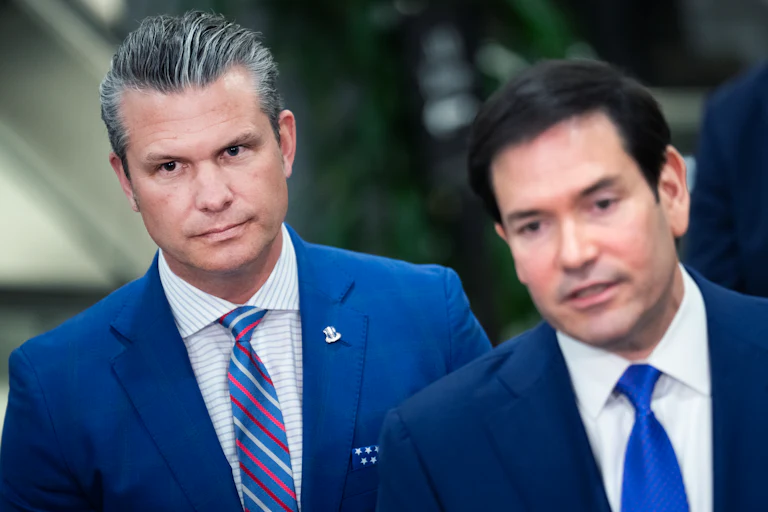
Rubio and Hegseth speak to press
Tom Williams/CQ-Roll Call, Inc/Getty Images
Hegseth and Rubio speak to the press.

CIA Director John Ratcliffe and others within the Trump administration don’t think Iran is being serious about its promise not to develop or attain nuclear weapons, according to anonymous sources from Axios.

Secretary of State Marco Rubio, Secretary of War Pete Hegseth, and Ratcliffe each voiced their doubts regarding Iran’s commitment to the memorandum of understanding announced on Sunday, as each detailed “intel” that led them to doubt Iran’s side of the MOU agreement.

“The intelligence reflects that the Iranian intentions are not in line with their commitments under the deal,” one source told Axios.

While the full text of the deal has yet to be released, it is understood that the MOU requires that Iran reopen the Strait of Hormuz for 60 days and refuse to develop nuclear weapons, while the U.S. must end its blockade of Iranian ships in the strait and Israel must withdraw from Lebanon. It’s important to note that the strait was already open before the war, and this commitment to no nukes from Iran was already in the original deal from 2015—a deal that Trump canceled in 2018.

It’s also not clear just how seriously Trump will take this “intel” from Rubio, Ratcliffe, and Hegseth, as his son-in-law Jared Kushner and envoy Steve Witkoff are supportive of the MOU.