Breaking News
Breaking News
from Washington and beyond

Ohio Sues Norfolk Southern for Environmental and Economic Damage After Toxic Train Derailment

Ohio Attorney General David Yost announced the lawsuit against the massive rail company.

Ohio EPA and EPA contractors collect soil and air samples from the derailment site on March 9 in East Palestine, Ohio.
Michael Swensen/Getty Images

The state of Ohio is suing rail giant Norfolk Southern after the company’s disastrous train derailment in East Palestine, Ohio, last month.

“The derailment was entirely avoidable and the direct result of Norfolk Southern’s practice of putting its own profits above the health, safety and welfare of the communities in which Norfolk Southern operates,” the lawsuit reads.

The lawsuit, which was announced Tuesday, cites Norfolk Southern’s escalating accident rate, which has risen 80 percent in the past 10 years. At least 20 Norfolk Southern derailments since 2015 have involved chemical discharges. The entire industry is responsible for over 1,000 derailments every year.

The lawsuit strikes Norfolk Southern on 58 violations of federal and state laws. Ohio is seeking the recovery of the costs of natural resource and property damages, economic harm to the state and residents, and present and future state expenses made in response to environmental and public health concerns. The state also seeks a baseline “declaratory judgment holding Norfolk Southern responsible.”

The suit names an array of particular laws violated, including the Comprehensive Environmental Response, Compensation, and Liability Act (CERCLA, otherwise known as Superfund), enables federal support to clean up hazardous disasters like the derailment while pursuing liability charges against the actual actors responsible. The suit acts as a vessel for Ohio to secure guarantees that Norfolk Southern will be held liable to the costs incurred by the state while mitigating the disaster.

Last week, Norfolk Southern CEO Alan Shaw pledged to a Senate panel that the company is committed to doing “what’s best” for the community.

Meanwhile, people in and outside of East Palestine have reported an array of symptoms ranging from sore throats and staying migraines to bloody stools and skin rashes. Animals and family pets have died. And Norfolk Southern workers compelled to work to clean up the site without adequate PPE have reported ongoing symptoms.

“Ohio shouldn’t have to bear the tremendous financial burden of Norfolk Southern’s glaring negligence,” state Attorney General Dave Yost said Tuesday. “The fallout from this highly preventable incident may continue for years to come, and there’s still so much we don’t know about the long-term effects on our air, water and soil.”

This post has been updated.
Ron DeSantis Is Now Attacking the Hyatt Regency Because It Hosted a Drag Show

The Florida governor has been waging a war on drag and on LGBTQ people in his state.

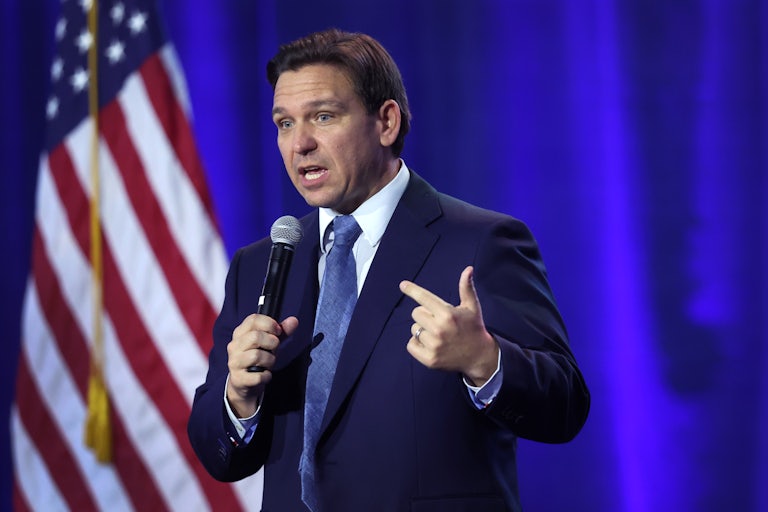
Ron DeSantis
Scott Olson/Getty Images

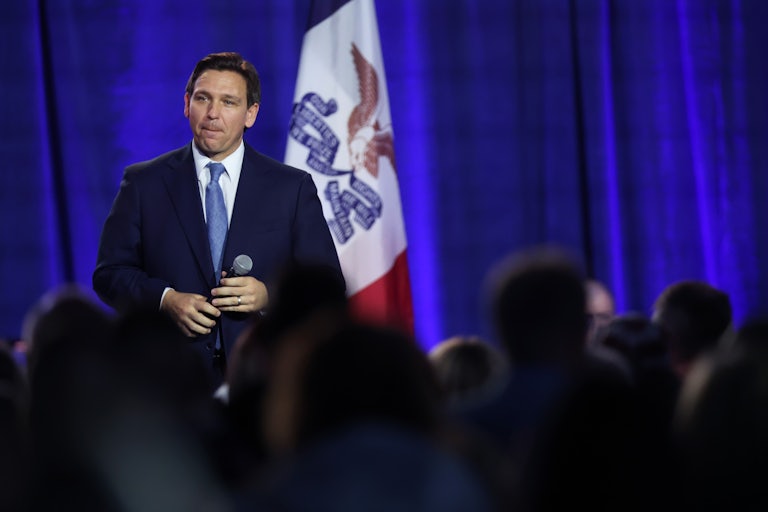
Florida Governor Ron DeSantis moved Tuesday to strip the Hyatt Regency of its liquor license for allegedly allowing minors to attend a Christmastime drag show.

DeSantis, who has been cracking down on LGBTQ rights, filed an administrative complaint through the state Department of Business and Professional Regulation accusing the hotel in Miami of allowing people under age 18 to attend a “sexually explicit” drag performance.

The complaint did not provide any evidence that minors had been in attendance other than one blurry photograph of a person’s face.

DeSantis had previously warned any venues that hosted the touring show A Drag Queen Christmas that his administration would seek legal action against them. He has also mentioned the possibility of having child protective services investigate parents who take their children to drag shows. A Drag Queen Christmas required individuals under the age of 18 to be accompanied by an adult in order to attend.

In February, DeSantis threatened to strip the Orlando Philharmonic Plaza Foundation of its liquor license for allegedly allowing children to attend its production of A Drag Queen Christmas.

DeSantis has gone to all-out war with anything he deems “woke,” and with LGBTQ rights in particular. He enacted the state’s infamous “Don’t Say Gay” law, banned transgender women from playing women’s sports, and vowed to defund diversity, equity, and inclusion programs on college campuses.

He is also part of a larger trend of Republicans demonizing drag queens and trans people. Tennessee recently became the first state to ban drag performances in public, while more than 20 similar bills move through state legislatures across the country.

Republicans accuse drag performers and trans people of being pedophiles as a way to fearmonger about the LGBTQ community. Many on the right say that attacking the LGBTQ community is a means to protect children, but their actions actually expose people—including children—to violence.

Ron DeSantis Wants to Make It a Felony to Have an Undocumented Person in Your Home or Car

A new Florida bill criminalizes not just undocumented Floridians but anyone who associates with them.

Ron DeSantis
Scott Olson/Getty Images

Around 772,000 Florida workers, students, and community members are undocumented. And Governor Ron DeSantis wants to make it a felony for anyone to have them in their home or even give them a ride.

Senate Bill 1718, part of Desantis’s broad repressive legislative agenda this year, targets not just undocumented people but also anyone associated with them. The bill, which is likely to pass the Republican-controlled state legislature, criminalizes anyone who transports an undocumented person “into or within this state.” In other words, anyone—co-worker, friend, neighbor, classmate—giving a simple ride to someone they know or care about who is undocumented would be guilty of a third-degree felony.

The bill also criminalizes anyone who “conceals, harbors, or shields” (or “attempts” to do so) an undocumented person in “any place within this state.” Nearly 4 percent of Floridians are undocumented. The bill text, reading like an edict issued in Margaret Peterson Haddix’s Shadow Children series, foments fear about these hundreds of thousands of people. It isn’t hard to imagine law enforcement agencies conflating a house party or simple afternoon cup of tea with a secret migrant-harboring operation.

Under the framework, any person with a prior conviction who commits the “crime” of hosting an undocumented person would be liable to an even higher second-degree felony.

The bill imposes thousands of dollars of fines on private employers who give work to undocumented people; employers are not allowed to continue employing someone if they find out they are undocumented. And any undocumented person who works without appropriate identification papers would be liable to a third-degree felony. The bill also prohibits undocumented people from being admitted to the Florida bar, overturning standing law that currently allows it.

If the bill is passed into law, Florida would also refuse to recognize any out-of-state licenses issued to undocumented people. Authorities would be directed to take DNA samples from undocumented people who are booked into jails or detention facilities per orders from the Immigration and Customs Enforcement.

Finally, the bill orders Medicaid-accepting hospitals to ask patients to indicate their citizenship status. Ostensibly meant as a cost-tracker for undocumented patient care, the bill reads that the question must be accompanied with an assurance that the patient’s response will not affect care or result in a report to immigration authorities. However, given the extremity of the rest of the bill, even with regard to criminalizing people who host undocumented people in “any place,” the assurance does not welcome complete trust.

“Governor Ron DeSantis and his Republican colleagues continue to show that they are more focused on attacking and vilifying immigrants and Latinos to advance their political agenda than solving the real problems hurting Floridians,” said Congressional Hispanic Caucus Chair Nanette Barragán and Vice Chair of Policy Darren Soto, who represents Florida’s 9th district, in a statement.

Republicans hold supermajorities in both the Senate and House, and, of course, the governorship; the repressive bill that further criminalizes undocumented people—and the co-workers and classmates, neighbors, and friends with whom they’ve developed relationships—is set to pass.

“This should be the model for all 50 states going forward,” boasted state Senator Blaise Ingoglia, the sponsor of the draconian bill.

After Largest Bank Failure Since 2008, Nancy Mace Says Now Is Not the Time for Politics

The South Carolina representative seems to want to “thoughts-and-prayers” bank regulation.

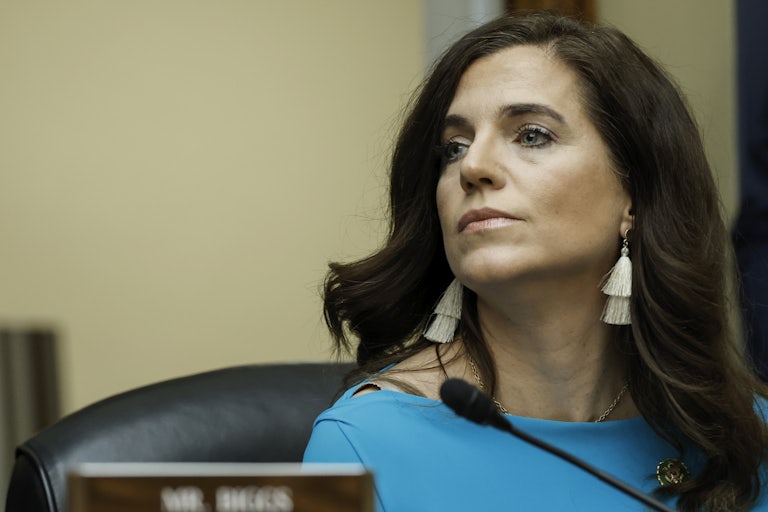
Nancy Mace
Anna Moneymaker/Getty Images
Representative Nancy Mace

As federal and state regulators rush to contain the fallout from the collapse of Silicon Valley Bank and Signature Bank, Representative Nancy Mace wants to make sure that we don’t politicize the situation.

The South Carolina Republican called out Elizabeth Warren on Monday night for discussing the inherently political issue of bank regulation. Warren, a.k.a. the person who would know best, slammed Congress and the Federal Reserve in a New York Times op-ed for failing to step in and prevent the banks’ failures.

Idk, probably shouldn’t politicize such a serious issue. Also your statements are irresponsible, false and poorly timed,” Mace tweeted.

Republicans have already been fast to blame literally anything but deregulation of the financial industry for the SVB and Signature breakdowns, particularly (mind-blowingly) diversity. But Mace is the first to say that rather than place blame anywhere at all, we should just thoughts-and-prayers away the problem.

Naturally, the internet had some thoughts.

Mace has developed a reputation for pandering to the left while voting staunchly with the right. She condemned Donald Trump’s role in January 6 but didn’t vote to impeach him. She says her party is becoming too anti-choice but continues to vote for anti-abortion measures.

But it’s not entirely clear what she hopes to achieve with her tweet. It’s not as if there’s a “little guy” to stick up for here. If anything, Mace is the one making “irresponsible, false and poorly timed” quips.

The New Inflation Report Has Some Signs of Hope

Here’s what you need to know about the Bureau of Labor Statistics’ new consumer price index report.

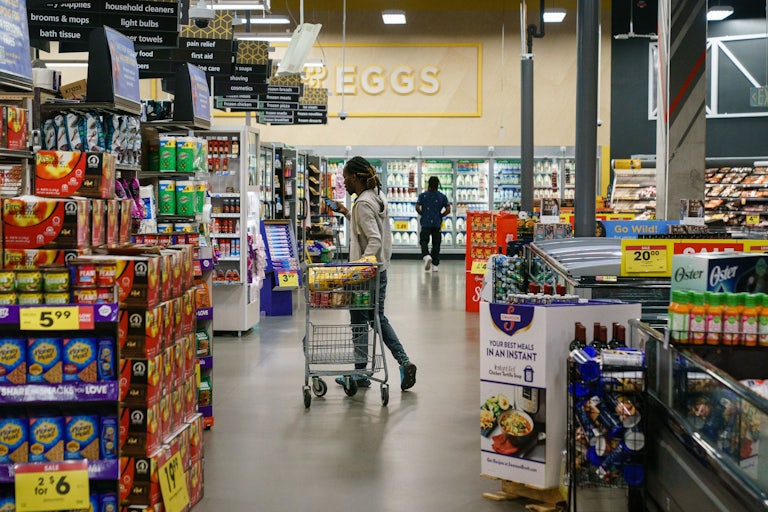
Shoppers are seen in a supermarket.
ELIJAH NOUVELAGE/AFP/Getty Images

Inflation is slowly but steadily going down, the consumer price index showed, according to a report released Tuesday by the Bureau of Labor Statistics.

The CPI measures the monthly change in prices that U.S. consumers pay for certain goods. It’s a key government indicator of inflation.

Here are three things to know about the inflation report and what it might mean going forward.

1. It has some of the lowest increases in more than a year.

Prices rose 6 percent in February compared to a year earlier. This is a decent slowdown from January, which saw prices go up 6.4 percent compared to the year before. This is the eighth consecutive month that the inflation rate has dropped and the smallest yearlong increase since September 2021.

Obviously, 6 percent is still high, especially considering the Federal Reserve’s target of 2 percent inflation. But the pace of inflation is slowing, decreasing to a 0.4 percent increase in February compared to 0.5 percent in January.

Removing the price increases for food and energy, which are always volatile even before the Covid-19 pandemic and the war in Ukraine tied up supply chains, prices rose 5.5 percent compared to last February. This is the smallest yearlong increase since December 2021.

Mark Zandi, the chief economist at economic research group Moody’s Analytics, said inflation was “headed in the right direction.”

Inflation is painfully high, but steadily receding. It is on track to be closer to 3% by year’s end, and the Fed’s inflation target by next summer,” he said on Twitter.

2. But inflation in key areas remains high.

Energy prices have been steadily decreasing over the past few months, which has contributed to the slowing inflation. Prices for fuel, gas, and electricity fell 0.6 percent from January.

But prices for food and shelter increased. Shelter, in particular, was the biggest contributor to prices hikes in February, with housing costs going up 0.8 percent. Part of that is due to the Fed’s aggressive campaign of raising interest rates, which has driven up mortgages even as home prices go down. People who own property are having to pay more, while people who can’t afford to buy are having to stay in the rental market. While rent costs have started to ease up, they’re still high due to high demand.

Costs for groceries went up 0.4 percent in February, and the price of eating out went up 0.3 percent.

3. What does this mean looking forward?

The Fed begins its policy-setting meeting Tuesday and was widely expected to hike interest rates by 0.25 percent for the second time.

The new CPI report is unlikely to affect that decision, but the Fed could be influenced by the recent closures of Silicon Valley Bank and Signature Bank. Regulators in California and New York, respectively, swooped in to shut down both banks after panicked customers began to withdraw their funds en masse.

Goldman Sachs chief economist Jan Hatzius predicted Sunday that the SVB and Signature failures would prompt the Fed to hold off on raising interest rates for now.

But Ian Shepherdson, chief economist at the consulting firm Pantheon Macroeconomics, thinks the Fed will stay the course.

“Assuming markets stay calm and no more banks fail, we think the Fed will hike” by 0.25 percent, he wrote in an analysis Tuesday.

“To be clear, we think further hikes are now unnecessary; the lagged effect of the increases over the past year are enough to push inflation back to target, but Fed officials have been unwilling so far to accept this argument.”

The U.S. central bank is scrambling to achieve a so-called soft landing, or a decrease in inflation without tipping the economy into a recession. The labor market has remained strong overall, causing concerns that the economy has not slowed sufficiently to avoid a downturn.

Dean Baker, senior economist at the Center for Economic Policy and Research, put the likelihood of a 0.25 percent hike at “50-50.”

“I think we have a very good shot [at a soft landing] as long as the Fed doesn’t get carried away,” he told The New Republic.

This post has been updated.