Breaking News
Breaking News
from Washington and beyond

CFPB Comes to a Halt as Trump Continues War on Federal Government

The Consumer Financial Protection Bureau has come to a screeching halt under its new acting head, Scott Bessent.

Treasury Secretary Scott Bessent and Commerce Secretary nominee Howard Lutnick stand and flank Trump, who is sitting at his desk in the Oval Office
Anna Moneymaker/Getty Images
Treasury Secretary Scott Bessent, Donald Trump, and commerce secretary nominee Howard Lutnick in the Oval Office on February 3

The Consumer Finance Protection Bureau stopped performing its oversight duties as soon as Trump appointed Scott Bessent as acting head, fulfilling the wishes of the country’s most powerful civilian, billionaire Elon Musk.

Bessent, who also serves as treasury secretary, sent a mass email to CFPB staff instructing them to stop all regulatory work, stop enforcing any rules, and stop conducting investigations, due to the need to “promote consistency” and align politically with the rest of the Trump administration, according to The Washington Post. The agency has also halted all public communications.

After Trump’s reelection, Musk called for lawmakers to “delete” the CFPB, stating that there were “too many duplicative regulatory agencies.” Republicans have long taken aim at the CFPB, with Texas Senator Ted Cruz recently introducing a bill to defund what he called an “unelected, unaccountable bureaucratic agency.”

The CFPB took initiative against predatory lending and hidden fees under its previous head, Rohit Chopra, and also increased its surveillance of large tech companies like Apple and Google. But with Chopra out and Bessent in, those days are over.

“Shutting down CFPB enforcement actions that are on the verge of delivering money into the pockets of working people is at odds with President Trump’s claim that he wants to lower costs for families—which he has done next to nothing on so far,” said Senator Elizabeth Warren, who played a key role in creating the CFPB in the aftermath of the Great Recession.

The actions Warren mentioned are now essentially null and void, as Trump’s mass deregulation efforts continue.
More on Trump’s war on the federal government:

JD Vance Hit With Brutal Fact-Check on Trump and Mexico Tariffs

The vice president tried to claim a Trump win on Mexico tariffs. That’s not exactly the case.

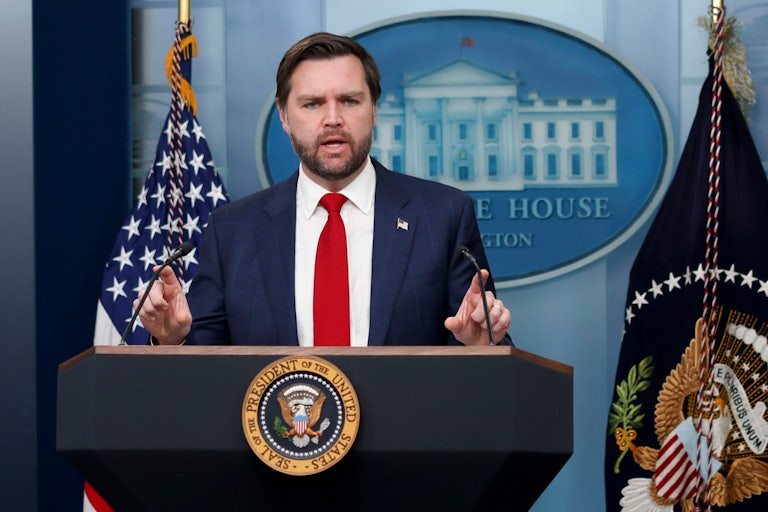
JD Vance in the White House briefing room
Tierney L. Cross/Bloomberg/Getty Images

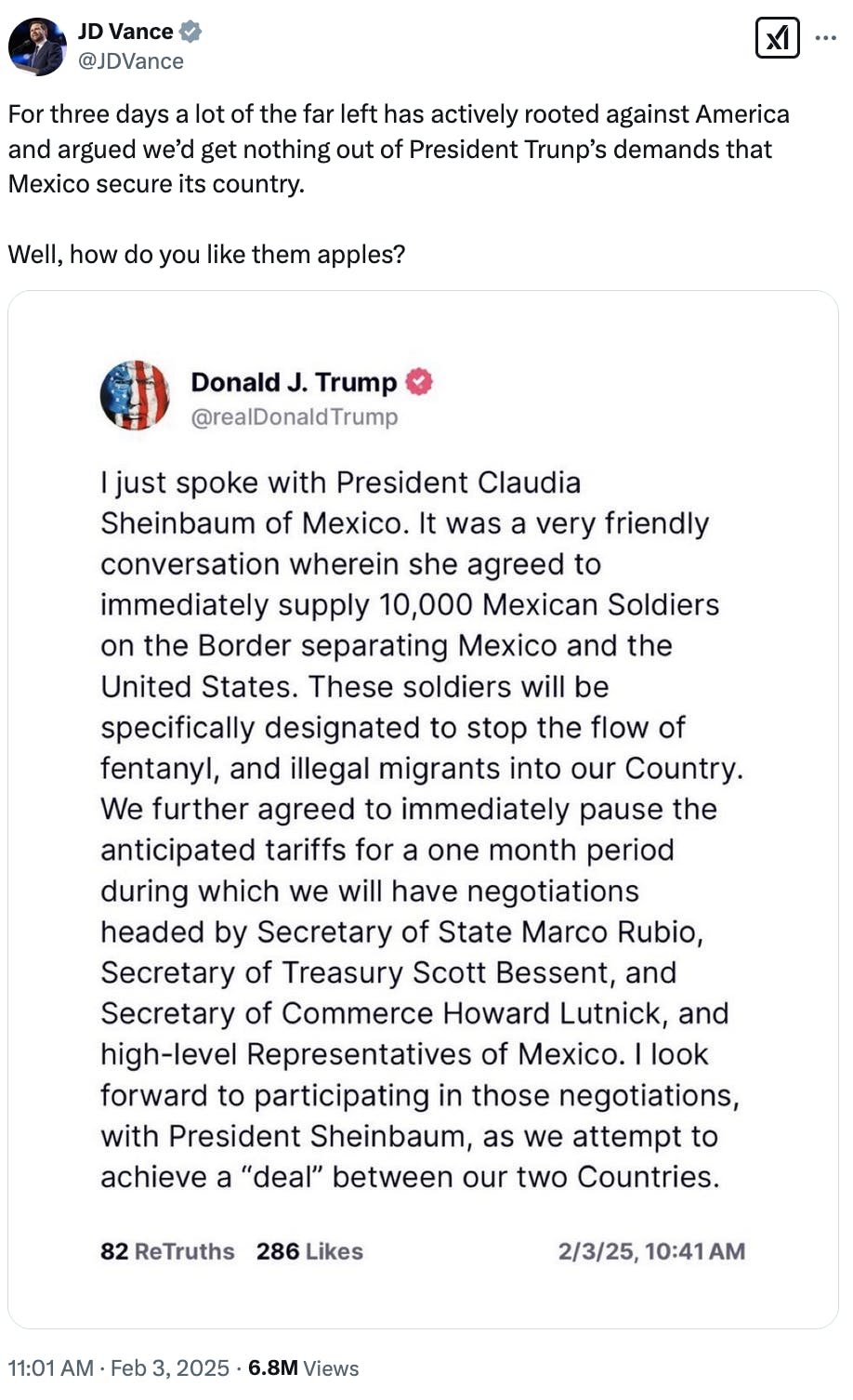
JD Vance tried to defend Donald Trump’s tariffs Monday with an X post claiming that Mexico gave in to Trump’s demands in order to stall economic harm. However, the post quickly backfired on him.

Aside from the glaring mistake of spelling the president’s last name as “Trunp,” the vice president’s post included a screenshot of Trump bragging about Mexico sending 10,000 soldiers to the southern U.S. border. But there’s one problem with that: Mexico also deployed 10,000 troops to the border in 2021, under President Biden.

X screenshot JD Vance @JDVance For three days a lot of the far left has actively rooted against America and argued we’d get nothing out of President Trunp’s demands that Mexico secure its country. Well, how do you like them apples? (screenshot of Trump's Truth Social post)

Commentators on X quickly seized on Vance’s attempt to seek praise over something Biden had also achieved without heavy tariffs.

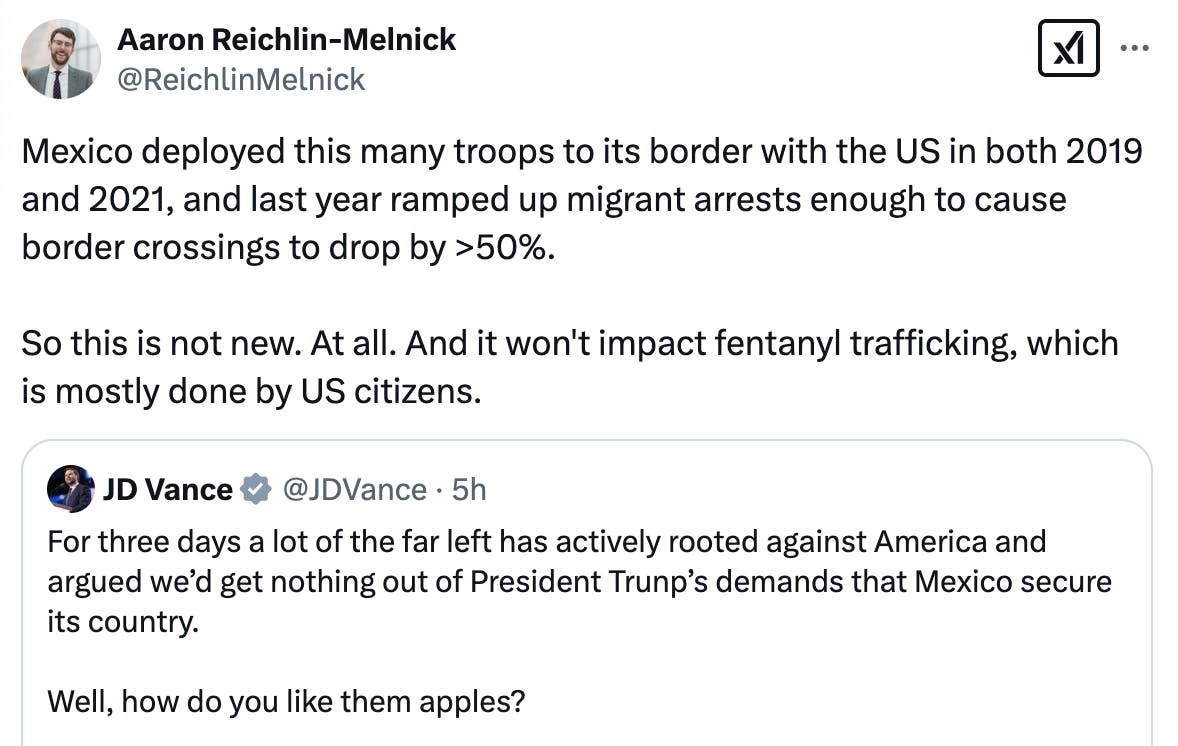
X screenshot Aaron Reichlin-Melnick @ReichlinMelnick: Mexico deployed this many troops to its border with the US in both 2019 and 2021, and last year ramped up migrant arrests enough to cause border crossings to drop by >50%. So this is not new. At all. And it won't impact fentanyl trafficking, which is mostly done by US citizens.

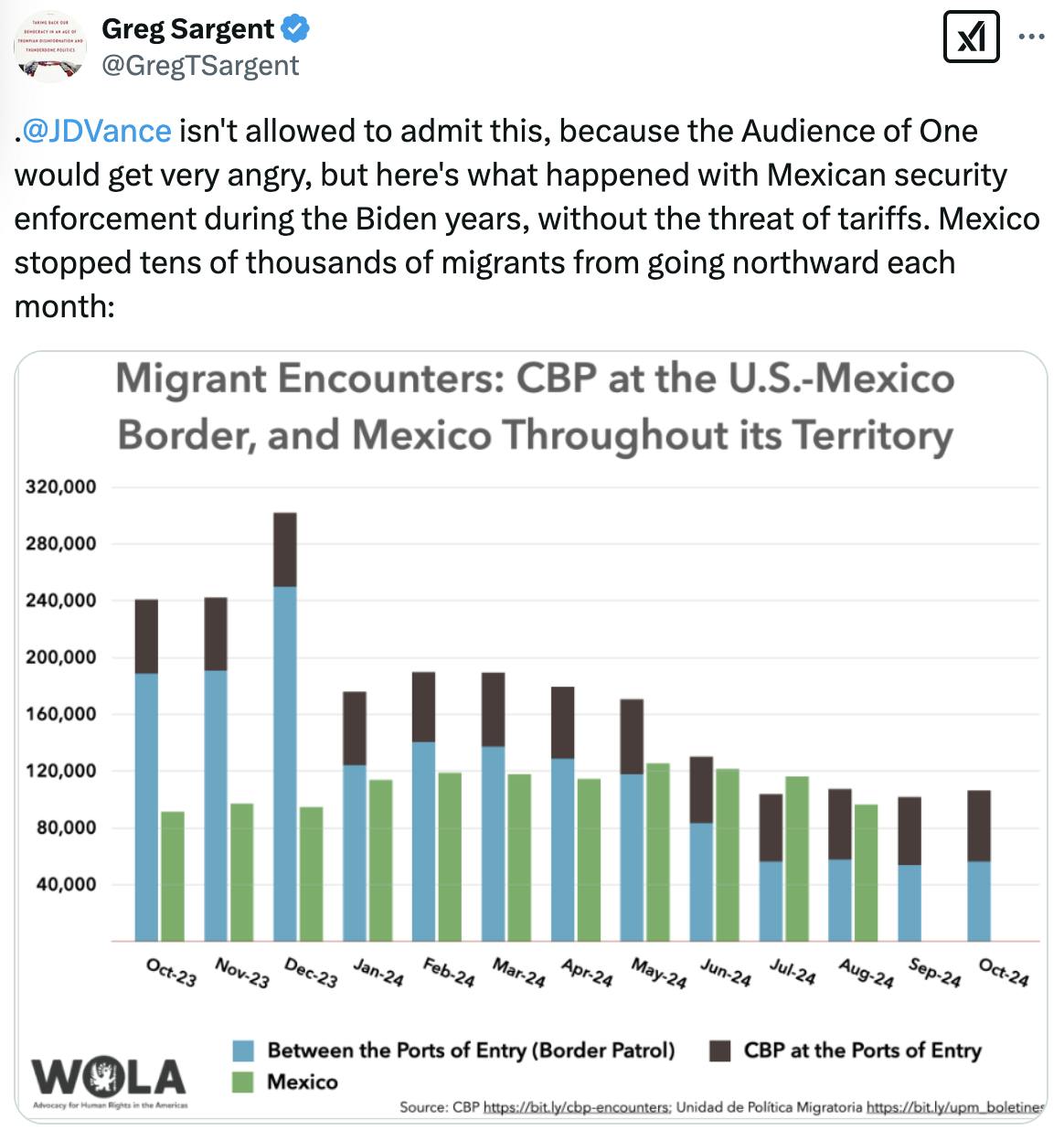
X screenshot Greg Sargent @GregTSargent: .@JDVance isn't allowed to admit this, because the Audience of One would get very angry, but here's what happened with Mexican security enforcement during the Biden years, without the threat of tariffs. Mexico stopped tens of thousands of migrants from going northward each month:

Vance’s talking point even made it to Fox News, with commentator Marie Harf, a Democratic commentator, telling the right-wing network’s audience that Mexico’s troop deployment was nothing new.

Harf: Mexico sent 10,000 troops to the border in 2021 when Joe Biden was president.

[image or embed]

— Barbara Sobel (@barbarasobel.bsky.social) February 3, 2025 at 12:47 PM

Trump’s tariffs have already caused stocks to plummet and are drawing criticism from his fellow Republicans as well as retaliatory tariffs from Canada, with China threatening to take action with the World Trade Organization. Even if Trump claims that his tariffs have achieved something with Mexico (they haven’t), their full effects will be felt in the coming weeks and months, and experts say they won’t be good. Vance and the MAGA right may soon be struggling to find any silver lining.

More on the truth about Trump’s “win” on Mexico tariffs:

Trump Has Extreme New Demand for Ukraine If It Wants to See Any Aid

After halting all federal aid, Donald Trump wants access to Ukraine’s land.

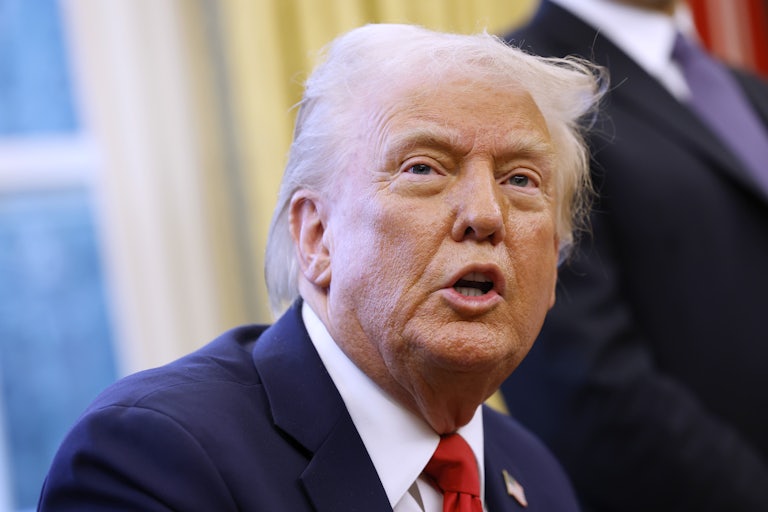
Donald Trump in the Oval Office
Anna Moneymaker/Getty Images

Trump is placing a new condition on aid to war-torn Ukraine: guaranteed access to Ukraine’s valuable rare minerals in exchange for military support against Russia.

“We’re telling Ukraine they have very valuable rare earth; we want what we put up to go in terms of a guarantee. We want a guarantee, we’re handing them money hand over fist, we’re giving them equipment, [the European Union is] not keeping up with us,” Trump told reporters in the Oval Office on Monday. “We have an ocean in between, they don’t. It’s more important for them than it is for us … so we’re looking to do a deal with Ukraine where they’re going to secure what we’re giving them with their rare earth and other things.”

“I want to have security of rare earth,” Trump added. “We’re putting in hundreds of billions of dollars. They have great rare earth. And I want security of the rare earth, and they’re willing to do it.”

Rare earths are minerals that go into making various technologies like phones and computers.

One of Trump’s biggest campaign promises was a swift and peaceful end to the war in Ukraine, even saying he’d end it “within 24 hours” of becoming president. Tacking on these conditions as soldiers on both sides suffer doesn’t seem to align very well with that promise.

Trump’s Latest Executive Order Makes Absolutely No Sense

Why is Donald Trump trying to make a U.S. sovereign wealth fund happen?

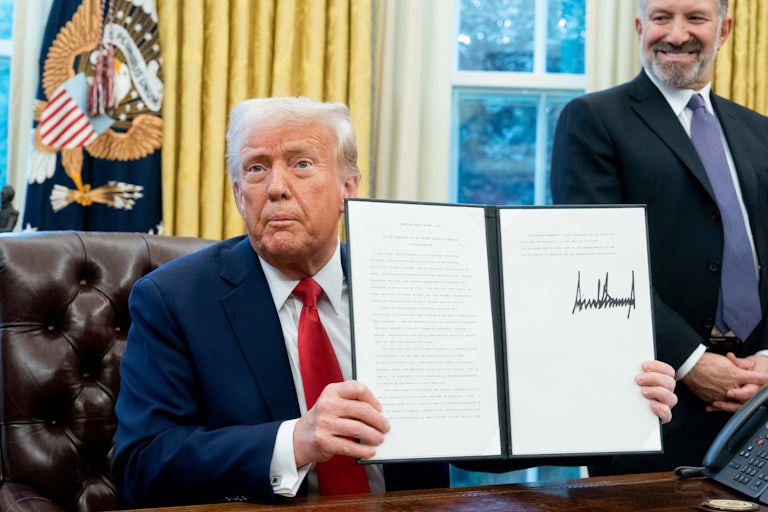
Donald Trump holds up an executive order he just signed in the Oval Office
Chris Kleponis/CNP/Bloomberg/Getty Images

Donald Trump’s latest solution to salvage TikTok for U.S. consumers includes a sovereign wealth fund, though how it would be funded isn’t exactly clear.

Trump signed an executive order Monday ordering the U.S. Treasury and Commerce departments to create the fund.

The president suggested that the fund could partially own TikTok, which has until mid-March to sell its U.S. operations or be banned from the American market.

Treasury Secretary Scott Bessent hailed the idea of a sovereign wealth fund. “We’re going to stand this thing up within the next 12 months. We’re going to monetize the asset side of the U.S. balance sheet for the American people,” he told reporters. “There’ll be a combination of liquid assets, assets that we have in this country as we work to bring them out for the American people.”

Trump pitched the idea as a presidential candidate during a speech at the Economics Club of New York in September, when he loosely said such a fund would be financed “through tariffs and other intelligent things” in order to build everything from major infrastructure projects (think airports and highways) to medical research. But exactly what the U.S. would gain from developing a sovereign wealth fund isn’t obvious.

“A sovereign wealth fund is a worthy idea in theory, but the United States is poorly positioned to create one because it’s $35 trillion in debt, requiring annual payments of $1 trillion just to cover the interest, and running an annual budget deficit of $1.5 trillion,” Timothy Noah reported for The New Republic in September.

“Opinions vary about how serious a problem this is, but it’s very much the opposite of a budget surplus, which is what a country typically must have in order to create a sovereign wealth fund. Countries with sovereign wealth funds usually have some resource (most often oil and gas) that’s gushing revenue faster than the government knows how to spend it.”

There are approximately 90 sovereign wealth funds around the globe, with more than $8 trillion in total assets, according to data from the International Forum of Sovereign Wealth Funds. Sixty percent of those are funded by natural resource revenues.

It’s therefore unclear how the U.S. could create a sovereign wealth fund of its own, or how that fund could somehow save TikTok access in the country.

Trump has promised to restore TikTok access to the American market, despite a congressional ban, a decision to uphold the ban by the Supreme Court, and contestations from some of his allies in the legislative branch who would like to keep the popular video-sharing app offline. After entering office, Trump signed an executive order to delay the ban by 75 days—a window accounted for within the ban so long as the company is pursuing a sale.

The president has said he was in talks with multiple people over the sale of the application and has promised an update on the issue sometime in February, according to Reuters.

In January, Trump stipulated that the company’s divestment from its Chinese-owned parent company, ByteDance, would also have to result in the U.S. gaining an ownership stake in the app.

Some of Trump’s allies could be the top contenders waiting in the wings for the company’s sale. Major Republican donor Jeff Yass reportedly owns a 15 percent stake in TikTok. Trump’s former campaign manager Paul Manafort has business ties to the Chinese media industry, and former Treasury Secretary Steven Mnuchin revealed his own plans to acquire the social media company via an investor group last year, just a day after the ban passed with overwhelming bipartisan support in the House.

But other options remain should TikTok never return. When the Indian government pulled the plug on the social media app due to a violent feud with China on their shared border, TikTok dropped its 200 million users. In the app’s wake, companies with format competitors to TikTok, including Youtube and Instagram, absorbed many of TikTok’s influencers onto their own platforms.

Read more about sovereign wealth funds:

The EPA Is Trying to Terrify Employees Into Quitting

Employees were warned they could be fired at a moment’s notice.

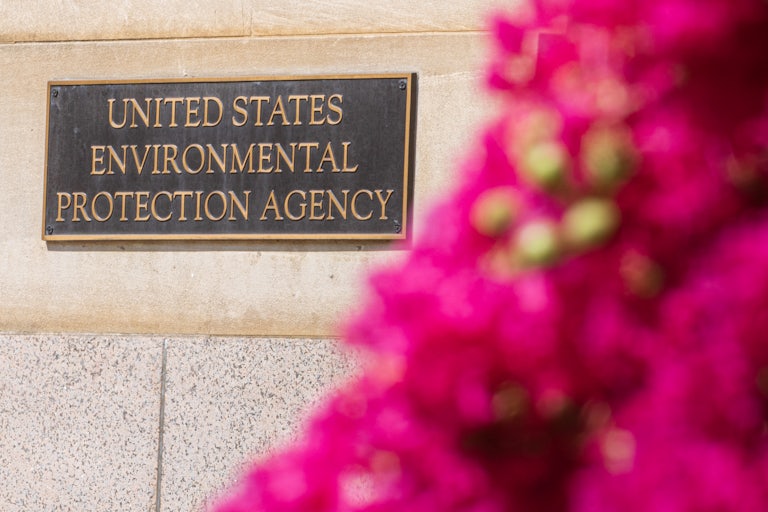
The U.S. Environmental Protection Agency building
J. David Ake/Getty Images

More than 1,100 Environmental Protection Agency employees could be at risk of spontaneously losing their jobs, according to a Trump administration memo.

Employees at risk include individuals who have spent less than a year in their current role, even if they were longtime employees of other divisions or departments.

“As a probationary/trial period employee, the agency has the right to immediately terminate you,” the email, obtained Monday by The New York Times, states.

A spokeswoman for Lee Zeldin, the newly minted administrator of the environmental agency and a longtime Trump ally, told the Times that “our goal is to be transparent.” She did not elaborate on when or why the mass layoff would begin.

“On his first day in office, [Zeldin] engaged directly with career staff across E.P.A.’s headquarters—spanning two city blocks in downtown D.C.—listening to their insights and perspectives,” the spokeswoman, Molly Vaseliou, told the publication in a statement. “Ultimately, the goal is to create a more effective and efficient federal government that serves all Americans.”

On Monday morning, agency employees were notified that their intranet was out of service, leaving them unable to do their jobs as they could not access internal documents or data, reported the Times. It is not clear if the intranet outage was directly related to efforts to cut the EPA staff.

The result: Morale at the agency is in freefall, with some employees feeling the pressure to finally consider Trump’s controversial “buyout” offer, which would pay them through September on the condition of their resignations.

“It’s bad,” Marie Owens-Powell, president of the EPA union, told CBS News on Friday. “I’ve been with the agency for over 33 years and I’ve never seen anything like this.”

“As far as we can tell, EPA workers were the only ones to receive a notice from their agency, intended to go to probationary employees to terrorize and scare them into thinking they were on their way out,” she said.

Hundreds of EPA grantees have also been locked out of their funds, according to Michelle Roos, president of the Environmental Protection Network. She told CBS that it has left organizations across the country unable to do the work for which the federal government has already approved funding.

Roos also told the Times that the EPA had long been at the center of the “bullseye” in the forty-seventh president’s mission to nix large swaths of civil servants, and that the drastic move to downsize EPA staff would be the “most chaotic and vindictive transition in the history of the Environmental Protection Agency.”

Legal experts claim that the Trump administration’s move to choke congressionally appropriated funding from federal agencies is “unconstitutional” and “unauthorized by law.”

“Ninety-five percent of the funding going to EPA has not only been appropriated but is locked in, legally obligated grant funding,” Jillian Blanchard, vice president of climate change and environmental justice for Lawyers for Good Government, told CBS. “The Constitution does not give the president a line item veto over Congress’s spending decision.”