Breaking News
Breaking News
from Washington and beyond

Senate Republicans Freak Out That Mike Johnson Is Losing Control

One senator warned that “everybody is fighting” in the House caucus.

House Speaker Mike Johnson speaks to reporters in the Capitol
Stefani Reynolds/Bloomberg/Getty Images

Insecurity about the midterms is rising—and Republicans are shoving some of the blame onto House Speaker Mike Johnson.

Concern is spreading that Johnson has “lost control of his conference,” creating an environment that is unlikely to pass meaningful legislation before the November elections, The Hill reported Monday.

North Dakota Senator Kevin Cramer warned that the caucus’s relentless infighting has hurt the GOP brand, potentially sinking both chambers of Congress.

“It’s not like these things are hard. That’s the thing,” Cramer told The Hill. “I feel like the Senate has teed up things fairly easily for them, even to the point where if they don’t like it, they can blame us. And they still haven’t taken the opportunity to actually govern, and I do think it’s hurting the brand. The House is rowdy.”

Johnson barely kept the party afloat last week amid what Texas Representative Troy Nehls aptly dubbed “hell week.” “We can’t really agree on much of anything,” Nehls said on Capitol Hill Wednesday.

Republicans in the lower chamber struggled to tackle high-priority GOP issues such as extending the government’s warrantless spying powers, passing the farm bill, and funding the Department of Homeland Security. Votes stretched on for hours, and committee hearings flew off the rails. But the squabbles—and the dissent—persisted.

“We’re moving from one fire drill to the next every single week, and then half the time it feels like, why are we even here?” one House Republican told MS NOW on Friday.

Some of the bluster followed weeks of intraparty protests, in which members of the House GOP adamantly opposed bills introduced and passed by their Senate colleagues. Yet House Republicans were all too willing to bend as the clock ticked down to deadline on various policy issues, prompting scorn and criticism from the upper chamber.

“It’s like a wreck over there,” one Republican senator told The Hill on the condition of anonymity, noting that their mainstream GOP colleagues in the House shared their frustration.

“They don’t know if they’re coming or going. Everybody is fighting,” the senator said.
Hakeem Jeffries Brings New York Into Trump’s Gerrymandering Fight

The Supreme Court ruling kicked off a wave of redistricting in red states.

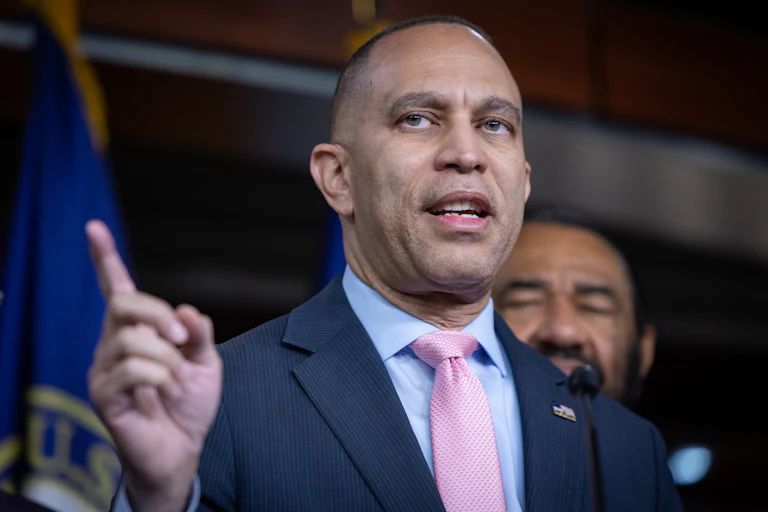
House Minority Leader Hakeem Jeffries raises a finger while speaking
Nathan Posner/Anadolu/Getty Images

House Minority Leader Hakeem Jeffries has tapped a top New York Democrat to lead redistricting efforts in the state after the Supreme Court handed the Republican Party a major advantage for the upcoming midterms.

Jeffries directed Representative Joe Morelle, the former majority leader in the New York state assembly, to meet with state leaders in order to redraw congressional districts “for the balance of the decade,” the two said in a joint statement Monday. New York currently has 19 Democrats and seven Republicans in the House of Representatives.

This directive comes less than a week after the Supreme Court ruled 6–3 along party lines in Louisiana v. Callais to effectively dismantle Section 2 of the Voting Rights Act, which prohibits discrimination based on race. The court’s conservative majority raised new hurdles for those seeking to prove a racial gerrymandering claim, and gave its blessing to those who would claim partisan gerrymandering as a legal defense.

Within hours of the decision, New York Governor Kathy Hochul had already signaled that she supported a redistricting effort in her state. “The Supreme Court has been chipping away at our elections for years. It is clearly carrying out Donald Trump’s will with this decision,” she wrote on X Wednesday. “New York has always led the fight for voting rights and we’ll lead again. I’m working with the Legislature to change New York’s redistricting process so we can fight back against Washington’s attempts to rig our democracy.”

Jeffries’s order was also given in response to Florida Governor Ron DeSantis implementing a map that his own office specifically drew in order to capture four more Republican seats in time for November’s midterm elections. Meanwhile, Trump has continued to threaten red states that refuse to rig their elections in his favor.

DeSantis Signs Gerrymandered Florida Map to Flip Seats for Republicans

Governor Ron DeSantis is hoping the new map will save Republicans in what looks like a tough midterm election.

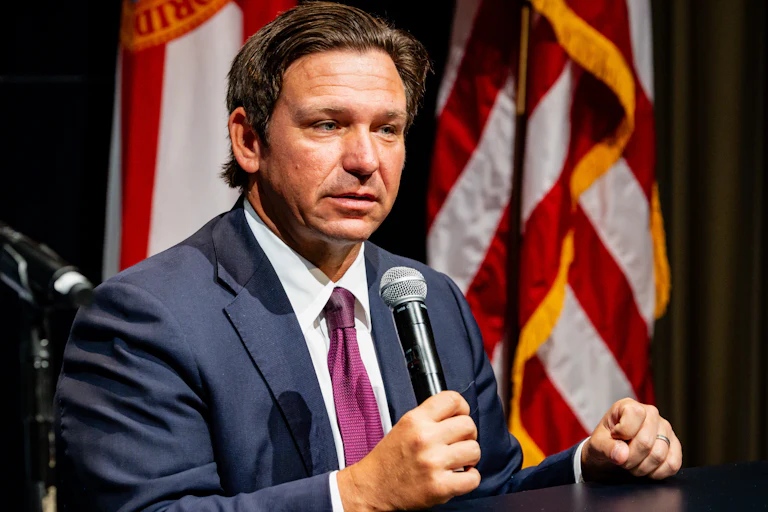
Florida Governor Ron DeSantis speaks into a handheld microphone.
Eva Marie Uzcategui/Bloomberg/Getty Images

Florida Governor Ron DeSantis made his state’s new gerrymandered congressional map official Monday.

DeSantis signed the map that his own office specifically drew in order to capture four more Republican seats in time for November’s midterm elections, hoping to prevent GOP losses as President Trump’s unpopularity continues to grow.

“Signed, Sealed, and Delivered,” DeSantis posted on X shortly after noon Monday, along with a map of the state’s new districts.

X screenshot Ron DeSantis @GovRonDeSantis Signed, Sealed, and Delivered. (map of Florida's new districts)

The move occurred without a flashy signing ceremony or press conference, less than a week after Florida’s legislature signed the map into law. That vote took place just hours after the Supreme Court gutted the Voting Rights Act. Now seats belonging to Democratic Representatives Kathy Castor, Jared Moskowitz, Darren Soto, and Debbie Wasserman Schultz are at risk.

The move is already being challenged in court, with a lawsuit filed less than 90 minutes after DeSantis’s post. Florida’s Constitution bans drawing districts with “the intent to favor or disfavor a political party or an incumbent,” and last week, Florida House Democratic Leader Fentrice Driskell called out the DeSantis staffer who drew the map, Jason Poreda.

“The man who drew this map testified under oath that he used partisan data to draw up every single district,” Driskell said. “Every single one. And when the governor’s attorney was asked whether Democratic voters were being underrepresented in our congressional delegation, his answer was that ‘this is a normative question.’”

The map, if it stands, could backfire in an election year where Trump is dragging Republican poll numbers historically low, as the new districts aren’t considered entirely safe for the GOP. Florida’s new maps, along with efforts in Republican-led states around the country, were actually spurred by Trump last year, and have set off Democratic redistricting in states like California and Virginia; others could soon join in.

Trump Threatens Iran as His Plan for Strait of Hormuz Disintegrates

Trump is warning that Iran will be “blown off the face of the earth.”

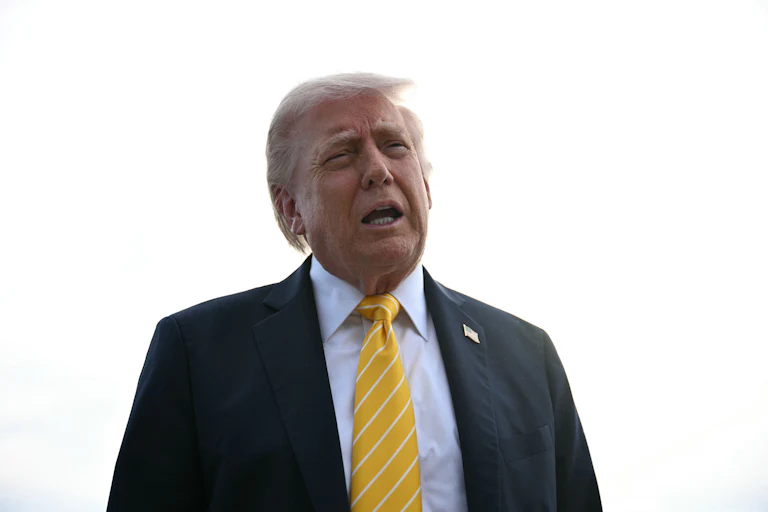
Donald Trump speaking
Jim WATSON/AFP/Getty Images

The war on Iran is very much back on, and President Trump is making more genocidal threats.

Iran on Monday bombed a South Korean ship and civilian sites in the United Arab Emirates, in the wake of President Trump’s announcement that the United States would be using its Navy to force ships through Iran’s blockade of the Strait of Hormuz as part of “Project Freedom.” The U.S. military also stated that it sank six Iranian small boats and that Iran has fired missiles and drones at other vessels in the strait.

This has sent the president into a rage.

If the Iranians try to target U.S. ships in this area, they will be “blown off the face of the earth,” Trump told Fox News’s Trey Yingst on Monday afternoon.

“We have more weapons and ammunition at a much higher grade than we had before,” he warned.

Iran’s attack on the UAE is the first since the ceasefire was declared one month ago, as escalating tensions threaten to once again reignite a wider conflict in the region.

It’s clear Trump’s plan to take control of the Strait of Hormuz wasn’t well thought out. Did Trump really expect the Iranian government to just cave to his demands?

On Monday afternoon, shortly after begging South Korea to join the war following the attack on its ship, the president announced  that Defense Secretary Pete Hegseth and Chairman of the Joint Chiefs of Staff Dan Caine will hold a press conference Tuesday morning.

Trump’s Justice Department in Crisis as Thousands of Lawyers Quit

The massive exodus has caused a huge backlog in work.

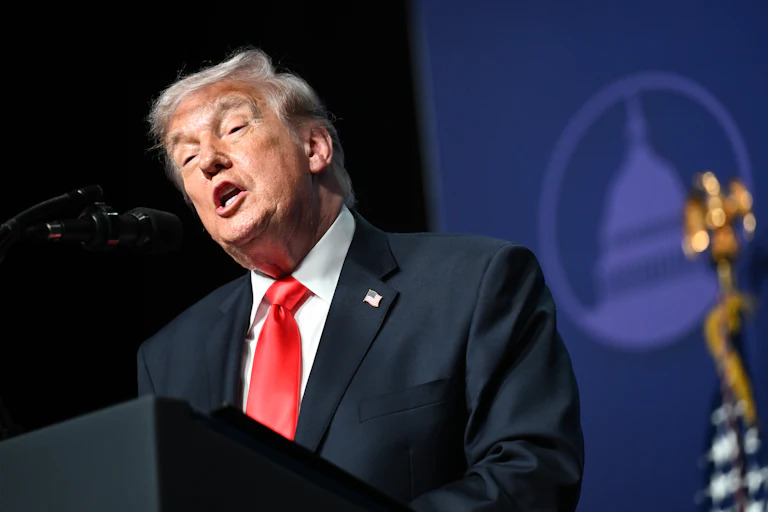
Donald Trump speaks into a microphone at a podium
Roberto Schmidt/Getty Images

The Justice Department is running out of attorneys.

The nation’s largest law office has repeatedly asked for delays in arguing its myriad cases, and in doing so has accidentally divulged a massive staffing crisis raging underneath the surface.

In an obscure civil lawsuit dug up by independent journalist Scott MacFarlane, a Justice Department attorney revealed that “the Appellate Section has lost over 40 percent of its attorneys since February 2025, due to retirement, resignation, or temporary transfer.”

“At this time, it is not possible for me to assign this case to yet another attorney, who would need to devote time to learning the issues,” she wrote in a filing dated February 19.

The overwhelming stress inside the agency has seeped through the cracks in other ways, as well. In early February, a lawyer volunteering with the short-staffed office on ICE-related cases in Minnesota begged a judge to put her in contempt of court so that she could “get 24 hours of sleep.”

“The system sucks, this job sucks, I am trying with every breath I have to get you what I need,” said attorney Julie Le when pressed as to why the government had failed to follow judicial orders. Since then, Le was removed from the temporary position and reshuffled back to ICE. She has since leveraged the notoriety of her remarks to launch a congressional bid for Minnesota’s 5th congressional district.

The DOJ’s appellate staffs vary in size but altogether account for more than 150 positions, according to a 2012 write-up in Scotusblog by Al J. Daniel Jr., a former DOJ appellate attorney.

Yet that’s just the tip of the iceberg for the department’s staffing woes. There were an estimated 10,000 attorneys working across the Justice Department before Donald Trump returned to the White House. By September 2025, that number had been nearly halved: Justice Connection, an advocacy group that tracks DOJ departures, estimated that around 5,500 people (not all of them attorneys) had left the department, either by their own volition, by accepting the Trump administration’s buyout, or by being fired.

Just a fraction of those experienced employees have been replaced, causing a massive backlog of work. The immigration court system—which has been placed under tremendous pressure as a result of Trump’s aggressive deportation agenda—has been particularly hampered, experiencing a backlog of more than 3.3 million cases by the end of February 2026, according to data from the Transactional Records Access Clearinghouse. That means that the lives of more than three million people are effectively on pause as they await legal decisions that determine whether their future will be spent inside or outside of the United States.

The Justice Department’s rightward shift toward the MAGA agenda has sparked concern inside the legal community, with former prosecutors and ethics directors arguing that the agency’s recent politicization has undermined public confidence in the country’s legal system.